
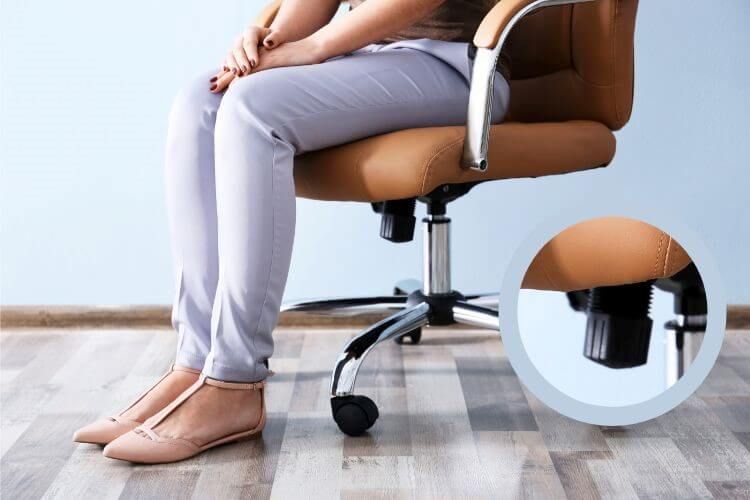
If you've ever reached under the front of an office chair and found a stubby round knob with a + and a − printed on it, that's the tilt-tension knob. It controls how much force it takes to lean back in the chair - not how far the chair reclines, but how hard you have to push to get there.
Most people never touch it. Set correctly for your weight, though, it's one of the few adjustments that actually changes how the chair feels minute-to-minute.
What the twist knob actually does
The twist knob is the tilt-tension control. It loads or unloads the spring inside the chair's tilt mechanism, which determines how much resistance the backrest pushes back with when you recline.
- Clockwise (+) - increases tension. Harder to lean back. Good for heavier users, or anyone who keeps falling backward into a recline they didn't ask for.
- Counter-clockwise (−) - decreases tension. Easier to lean back. Good for lighter users, or for chairs that feel like they're fighting you when you try to relax.
It is not the recline lock - that's usually a separate lever on the side. The tension knob always lets the chair recline; it just changes how much effort that takes.
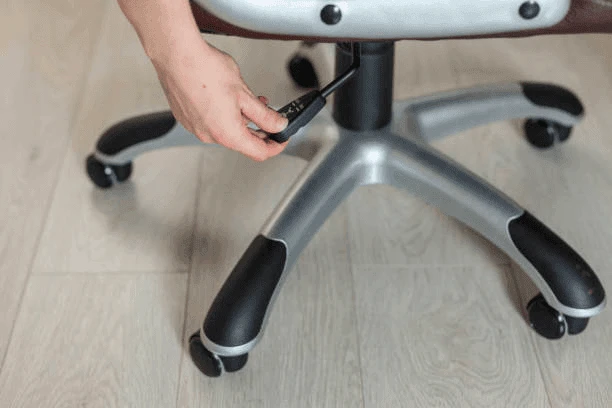
How to set it for your body
There is no single correct number of turns - the right setting depends on your weight and how upright you like to sit. A practical way to dial it in:
- Sit fully back in the chair with your feet flat.
- Loosen the knob (counter-clockwise) until you can recline with almost no effort.
- Tighten one or two turns at a time until the chair holds you in a slight, easy lean without falling backward or springing you upright.
- Re-check after a few days - what feels right at the start of a workday is often too stiff by mid-afternoon.
A well-set tension lets you shift between upright and reclined throughout the day without thinking about it, which is the point - small, frequent posture changes help more than locking into one "perfect" position.
Other controls under the same chair
The tilt-tension knob usually shares the underside of the seat with two or three other controls. Knowing which is which saves a lot of confused groping:
Seat-height lever
A paddle on the right-hand side that raises and lowers the seat via a gas cylinder. Set so feet rest flat and knees sit at roughly 90°.
Tilt-lock lever
Locks the recline at a fixed angle (upright, intermediate, or fully back, depending on the chair). Useful for focused work where you don't want the chair drifting backward.
Back-height adjustment
Found on chairs with adjustable backrests. Slides the backrest up or down so the lumbar curve lands on your lower back, not your kidneys or your shoulder blades.
When the twist knob stops working
If the knob spins forever without changing the feel, or you can't move it at all, work through these before assuming the chair is broken:
- Wound past the stop. On many chairs the knob spins freely once it hits the maximum or minimum. Reverse direction several full turns before deciding it's stuck.
- Tilt-lock engaged. Tension changes are easier to feel when the recline is unlocked. Release the tilt lock and try again.
- Knob detached from the threaded rod. Cheaper chairs use a plastic knob pressed onto a metal shaft. If the knob turns but the shaft doesn't, the press-fit has failed and the knob needs replacing.
- Mechanism worn out. On older chairs the tilt mechanism itself loses its spring tension. The whole control assembly (the metal box the seat bolts to) is replaceable, and most manufacturers sell it as a single part.
If the chair is still under warranty - Aeron, Steelcase, and most ergonomic brands carry 10-12 year coverage on the mechanism - start there before buying parts.
Twist-knob FAQ
What does the twist knob under my office chair do?
It controls tilt tension - how much force it takes to recline the backrest. Turning it clockwise makes leaning back harder; counter-clockwise makes it easier. It does not lock the recline; that's a separate lever.
Which direction loosens it?
Counter-clockwise loosens the knob and lowers tension, so the chair reclines with less effort. Most knobs are marked with a + on one side and a − on the other to indicate direction.
How tight should I set the tension?
Tight enough that you don't fall backward when you relax, loose enough that you can shift between upright and reclined without bracing. Heavier users typically need more tension; lighter users need less.
Why does my knob spin without doing anything?
Usually one of two things: you've wound it past its maximum or minimum stop (reverse direction several turns), or the plastic knob has separated from the threaded rod underneath. In the second case the knob itself can be replaced without swapping the whole mechanism.
Is the twist knob the same as the recline lock?
No. The twist knob sets the resistance of the recline; the recline lock fixes the chair at a chosen angle. Many chairs have both, usually as separate controls on different sides of the seat.