
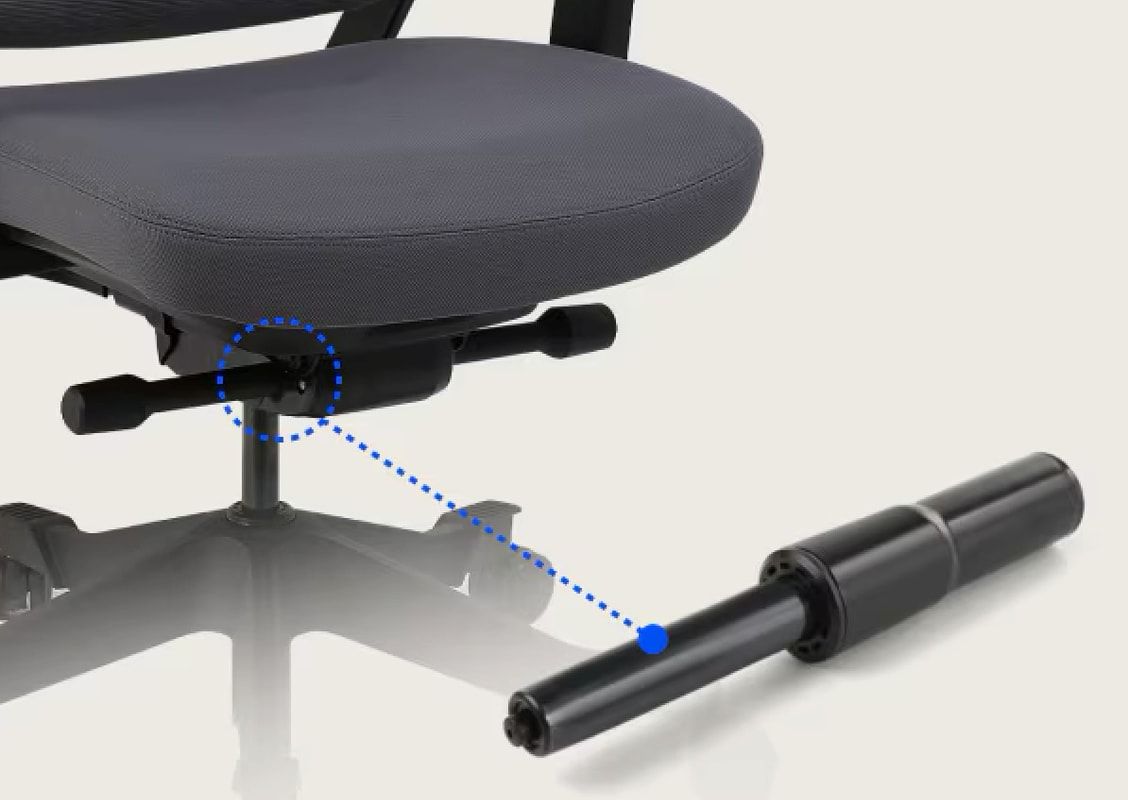
If your office chair sinks under you, wobbles, or refuses to hold its height, the gas cylinder is almost certainly the culprit. The good news: pulling the old one out is a 15-minute job with two cheap tools you probably already own. The bad news: the cylinder is pressure-fit at both ends and will fight you. Here is the method that actually works, plus the tricks for the cylinders that refuse to budge.
Tools you actually need
You only need three things, and you can do the whole job for under $25 if you have to buy a wrench.
- Rubber mallet (or a regular hammer with a scrap of 2x4 to soften the blow).
- 14-inch pipe wrench - the single most useful tool here. Adjustable wrenches and channel locks slip on the smooth cylinder housing.
- Penetrating oil (WD-40, PB Blaster, or similar) - only needed if the chair is old or the cylinder is seized.
Safety glasses are sensible. The cylinder itself contains compressed nitrogen - do not cut into it, drill it, or hit it directly on the metal shaft.
How to remove an office chair cylinder
The cylinder is held in by friction at two joints: a tapered fit into the seat mechanism at the top, and a tapered fit into the five-star base at the bottom. There are no screws, no clips, and no locking mechanism. You separate the joints one at a time.
Step 1 - Free the base from the cylinder
Flip the chair upside down on a hard floor so the wheels point at the ceiling. Take a moment to brace the seat with your knees or a wall - once you start hitting it, it will want to walk.
With the rubber mallet, hit the underside of the five-star base near the center, working around the hub. Aim for the metal hub, not the plastic arms - you want shock to travel into the joint. After 5 to 10 firm taps the base will pop loose and lift off the cylinder. Set it aside.
If it will not budge after 30 seconds of solid hitting, spray penetrating oil into the seam where the cylinder enters the base hub. Wait 10 minutes. Try again. A stuck base is the most common stopping point - patience here saves a wrecked chair later.
Step 2 - Free the cylinder from the seat mechanism
The cylinder is now sticking out of the seat plate like a metal handle. This is where the pipe wrench earns its keep.
Clamp the pipe wrench tightly onto the smooth shaft of the cylinder, as close to the seat mechanism as you can get. Twist back and forth - not all the way around, just rocking left-right to break the friction seal. After a few rocks the cylinder will start to rotate freely. Then pull straight up while continuing to twist. It will slide out.
A pipe wrench works because its teeth dig into the cylinder shaft and grip harder the more you pull. Adjustable wrenches do not - they polish the cylinder and frustrate you.
Step 3 - If the cylinder is truly seized
When the pipe wrench just spins on a glazed shaft, switch tactics. Remove the four bolts holding the seat mechanism to the underside of the seat pan (Phillips screwdriver, usually). Now you have the seat mechanism in your hand with the cylinder still attached - much easier to swing.
Flip it cylinder-down, brace the cylinder against the floor with a block of wood, and strike the seat mechanism downward with the mallet. The mechanism will walk off the cylinder taper after a few hits. This is the leverage move the YouTube videos rarely show but professional repair shops use daily.
Why your cylinder failed in the first place
Knowing what killed the old one helps the new one last longer - see how long an office chair should last under normal use.
- Seat drops under you, even just sitting still. The internal seal has failed and the nitrogen is leaking past the piston. Not repairable - replace the cylinder.
- Height lever clicks but nothing happens. The release valve at the top of the cylinder is stuck or broken. Same fix.
- Chair sinks slowly over an hour or a day. Slow leak, same diagnosis. A chair that holds for ten minutes and then sinks is not "user error" - it is a cylinder on its way out.
- Sudden drops at random. The piston is hanging up and releasing. This one is genuinely unsafe; stop using the chair until it is fixed.
Weight rating matters too. A 200-lb-rated cylinder under a 240-lb user fails in roughly half the expected lifespan. When you buy a replacement, match or exceed your weight, and check the cylinder class (Class 4 is the heavy-duty standard most office chairs need).
Buying the replacement
Office chair gas cylinders are surprisingly standardized - most use a 2-inch top taper and 28mm or 50mm bottom taper that fits the universal five-star base. Before you order:
- Measure the extended length of your old cylinder (top of shaft to bottom of base end). Standard is 9 to 13 inches.
- Note the stroke length (how far it travels). Standard is 4 to 5 inches.
- Check the weight rating - at minimum BIFMA Class 4 for adult office use.
Generic replacement cylinders run $20 to $40 on Amazon and fit 95% of chairs. Branded replacements (Herman Miller, Steelcase) cost more but are required for chairs still under warranty.
What not to do
A few moves come up constantly in DIY threads that are genuinely dangerous.
- Do not drill, cut, or puncture the cylinder. It contains gas at roughly 200 psi. Shrapnel injuries from exploded cylinders are documented in medical literature - this is not a hypothetical risk.
- Do not heat it. Same reason.
- Do not hammer directly on the chrome shaft. You will mushroom the end and the new mechanism will not seat.
- Do not skip the wrench and try to twist by hand. The friction fit at the seat plate is engineered to hold 250+ lbs of vertical load; your grip cannot break it.
Frequently asked questions
If something below sounds like your situation, the answer is probably the right place to start.
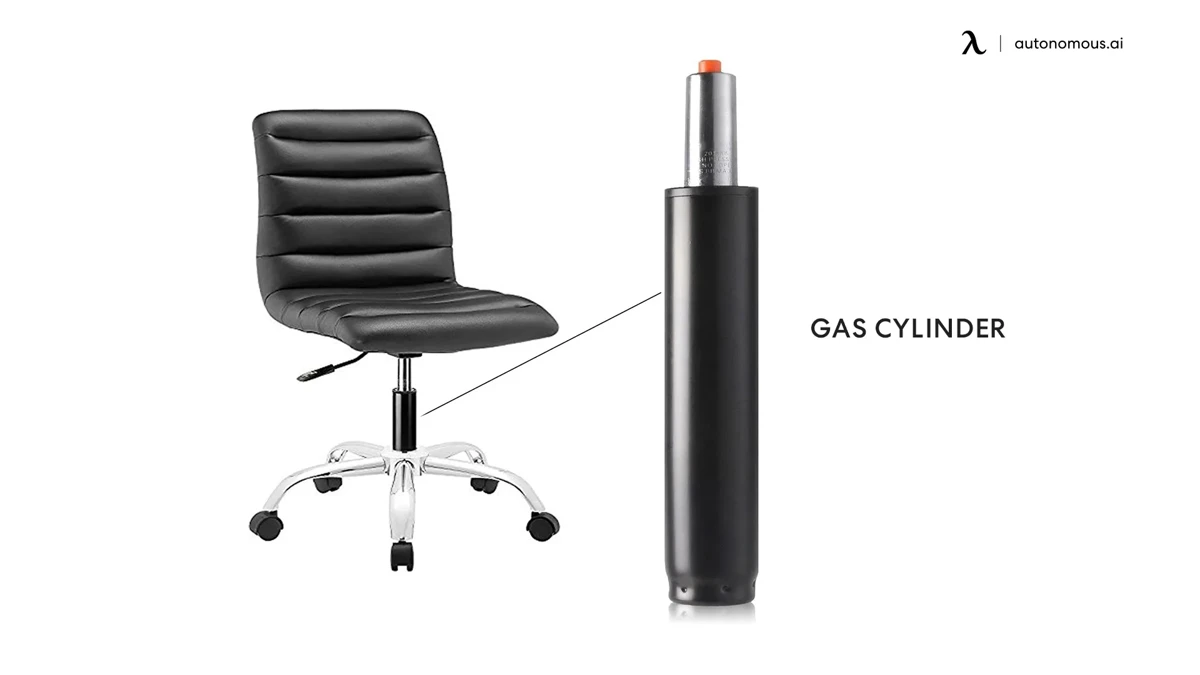
Office chair cylinder removal - quick answers
Can I remove an office chair cylinder without a pipe wrench?
Yes, but it is harder. Remove the four bolts holding the seat mechanism to the seat pan, then use a rubber mallet to drive the mechanism off the cylinder taper while bracing the cylinder against the floor. This gives you enough leverage to break the friction fit without a wrench.
Why is my office chair cylinder stuck and will not come out?
After a few years the tapered joints between the cylinder and the seat mechanism (and between the cylinder and the base) corrode and friction-weld. Penetrating oil sprayed into the seams and given 10 to 15 minutes to soak almost always frees them. Heat is not safe - the cylinder is pressurized.
Is it dangerous to remove an office chair gas cylinder?
Removing it is safe. Damaging it is not. The cylinder contains compressed nitrogen at roughly 200 psi. Never drill, cut, puncture, or heat the cylinder housing. Wear safety glasses and keep the chrome shaft pointed away from your face while working.
Are office chair cylinders universal?
Most are interchangeable. The standard is a 2-inch top taper that fits the seat mechanism and a 28mm or 50mm bottom taper that fits the five-star base. Match the extended length (9 to 13 inches) and weight rating (BIFMA Class 4 for adult office use) when ordering a replacement.
How long should an office chair cylinder last?
A properly weight-rated cylinder lasts 7 to 10 years in daily office use. Exceeding the weight rating cuts that roughly in half. Sudden drops, slow sinking, and an unresponsive height lever all mean the cylinder has failed and needs replacement - repair is not practical.