
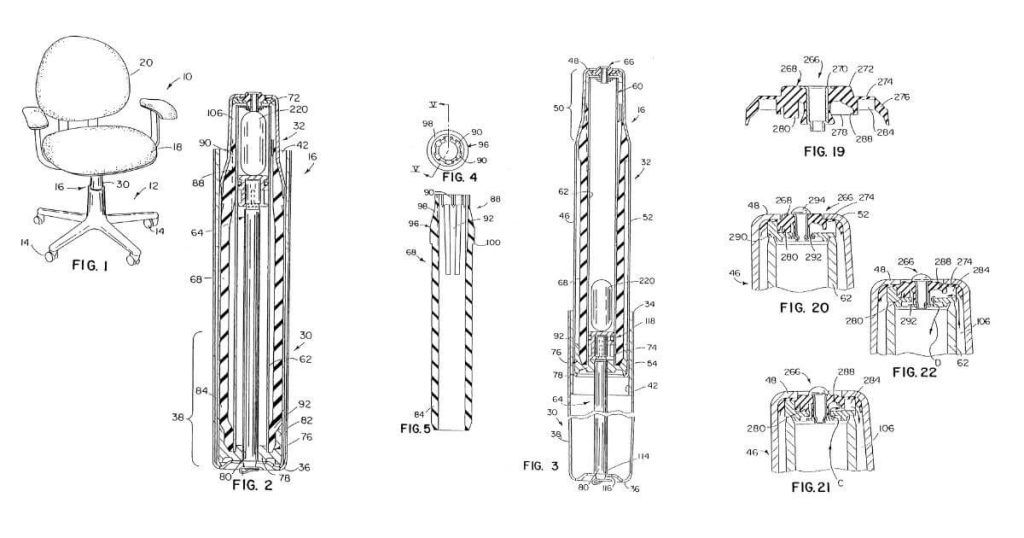
If your office chair refuses to stay at the height you set - slowly sinking through every meeting, or stuck low and unwilling to rise - the culprit is almost always the pneumatic gas cylinder (commonly called the "hydraulic"). The good news: in most cases you can fix it yourself in under an hour, often without buying a single new part. This guide walks through how the mechanism actually works, how to diagnose which part has failed, and four repair paths from a five-minute hose-clamp fix to a full cylinder replacement.
How office chair "hydraulics" actually work
Despite the name, most office chair lifts are pneumatic, not hydraulic - they use compressed nitrogen gas, not fluid. (A small number of high-end medical and salon chairs use true hydraulic oil; the repair steps below cover both, since the mechanical removal is identical.) A piston inside a sealed metal cylinder is held under pressure. Pulling the height lever opens a valve that lets gas move between chambers, raising or lowering the seat. When you release the lever, the valve closes and the piston is locked in place - if the seal still holds.
When the seal at the top of the piston wears out, gas leaks past it under your body weight, and the chair sinks. There is no service port on a consumer-grade gas cylinder - you cannot "refill" it. The fix is either to bypass the cylinder (clamp it at a fixed height) or replace the whole unit.
Diagnose the problem first
Before buying parts, spend five minutes confirming which part has actually failed. Three quick checks cover the vast majority of cases:
1. Check the lever and linkage. Sit in the chair and pull the height lever firmly. If it feels loose, travels too far, or moves with no resistance at all, the lever cable or paddle linkage is broken - not the cylinder. Flip the chair and inspect where the lever meets the cylinder valve; a dislodged actuator pin is a 30-second fix.
2. Check for a leak. With the chair empty, press the lever and listen. A faint hiss that continues for several seconds after you release the lever indicates a failed cylinder seal. A sharp, brief hiss is normal.
3. Check the base and column for damage. A bent or cracked five-star base will tilt the cylinder out of alignment, which can mimic a sinking chair. Run a finger around the base where the cylinder seats; any wobble or visible crack means the base needs replacing, not the cylinder.
If the chair sinks under your weight but raises fine when empty, the seal is the problem. If it won't rise even when empty, the gas charge is fully depleted or the valve is jammed.
Method 1: The hose-clamp fix (5 minutes, no replacement part)
If you only need the chair to hold one height - and you're willing to give up future adjustment - a stainless-steel hose clamp will keep it there indefinitely. This is the same fix recommended on the r/DIY thread that currently ranks #1 for this query, and it works on roughly 90% of office chairs.
You'll need: one adjustable hose clamp sized for ~2-inch diameter, a flat-head screwdriver, and a strip of duct tape or sandpaper for grip.
- Set the chair to the height you want it to stay at. Sit at your desk in your normal posture and have someone else mark the cylinder where the plastic skirt meets the metal.
- Slide the plastic skirt (the telescoping cover) down toward the base to expose the bare cylinder shaft.
- Rough up the metal with a strip of sandpaper or wrap one layer of duct tape around the spot where the clamp will sit. Bare chrome is too slick on its own.
- Wrap the clamp above your height mark - when the cylinder is fully extended to that mark, the clamp should rest on top of the plastic skirt and physically prevent the piston from sinking further.
- Tighten with the screwdriver until the clamp is snug. Sit down. If the chair drops below your line, lift it again and re-tighten one full turn.
This is a permanent-feeling fix but it locks the height. To raise the chair later, loosen the clamp and re-position.
Method 2: PVC pipe collar (10 minutes, also no replacement)
A length of PVC pipe slipped over the cylinder gives the same fixed-height result as the hose clamp but looks tidier and supports more weight evenly.
- Measure the exposed metal shaft when the chair is at your target height - this is the length of pipe you need.
- Buy a length of PVC slightly larger in inner diameter than your chair's cylinder (most are around 2 inches).
- Slit the pipe lengthwise with a saw so you can snap it around the cylinder without disassembling anything.
- Snap the pipe over the exposed shaft. The piston now bottoms out on the pipe instead of sinking.
Cut the pipe into two or three segments stacked together if you want to adjust height in coarse increments later.
Method 3: Clean and re-seat the cylinder (15 minutes)
If the chair adjusts but feels rough, sticky, or slow, the cylinder may just be gummed up rather than failed. This is worth trying before you buy a replacement.
- Flip the chair upside down on a towel. Detach the five-star base from the cylinder by pulling firmly - most are pressure-fit, not bolted.
- Spray a small amount of WD-40 or silicone lubricant around the top of the cylinder where it meets the seat mechanism.
- Work the piston in and out by hand a dozen times to distribute the lubricant.
- Reassemble and test. If the chair now holds height, you're done. If it still sinks, move to Method 4.
Don't use grease - it attracts grit and accelerates seal wear.
Method 4: Replace the gas cylinder (30-45 minutes)
If the seal is shot, replacement is the only true fix. Universal replacement cylinders cost $15-$30 and fit roughly 95% of mainstream office chairs (Aeron, Steelcase Leap, and a few others use proprietary cylinders - check first).
You'll need: a replacement gas cylinder (Class 4 rating for users over 220 lb), a rubber mallet, a pipe wrench or large pliers, and penetrating oil.
- Remove the wheels and base. Flip the chair, pry the wheels out with a screwdriver, then pull the cylinder out of the five-star base. The base is the easier end - it usually pops off with hand force.
- Separate the cylinder from the seat mechanism. This is the hard part. Lock a pipe wrench around the cylinder near the top, then twist while pulling down. The cylinder is wedged into the seat mount by years of weight; it may take several minutes of working it back and forth. A rubber mallet on the underside of the seat mechanism (not the cylinder itself) can break it loose.
- Drop the new cylinder into the five-star base shaft-side up.
- Lower the seat mechanism onto the top of the new cylinder. Push down - your body weight on the seat is enough to seat it permanently.
- Re-fit the wheels and test through the full height range.
If the cylinder won't budge in step 2, soak the joint with penetrating oil and wait 20 minutes. Don't strike the cylinder body directly - a dented shaft will not seal correctly even if it's new.
When to repair vs. replace the whole chair
A new universal cylinder is cheap, but it isn't always the right call. Consider replacing the chair instead if:
- The five-star base is cracked or wobbling.
- The seat foam has bottomed out (you can feel the plywood pan).
- The chair is more than 8-10 years old and was a budget model when new.
- The armrest mechanisms or recline tension have also failed.
A $20 cylinder in a $60 chair you've sat in for a decade is throwing good money after bad. A $20 cylinder in a $400 Herman Miller is an obvious win.
Preventing the next failure
Pneumatic cylinders fail because of three things, in order: excess weight, sudden drops, and contamination of the piston shaft. To extend the life of a new cylinder:
- Match the cylinder class to your weight (Class 3 to 220 lb, Class 4 above).
- Never drop into the chair from standing - the impact load can be 3-4x your body weight.
- Keep the exposed shaft clean; wipe it down with a dry cloth monthly to remove dust before sliding the skirt back up.
- Don't store the chair outdoors or in unheated spaces - temperature swings degrade the seal.
A well-treated cylinder typically lasts 5-8 years under daily use. A poorly treated one can fail in under a year.
Frequently asked questions
Can hydraulics on an office chair be fixed?
Yes. In most cases the failed part is the gas cylinder, which is a universal-fit component that costs $15-$30 and swaps in 30-45 minutes with a pipe wrench and a rubber mallet. If you only need the chair to hold one height, a stainless hose clamp on the cylinder shaft will lock it in place with no replacement part at all.
How do you fix a hydraulic office chair that won't stay up?
Set the chair at your preferred height, slide the plastic skirt down to expose the metal cylinder shaft, wrap a layer of duct tape (for grip), then tighten a stainless hose clamp around the shaft above the skirt. The clamp rests on the skirt and physically blocks the piston from sinking. The chair will be locked at that height until you loosen the clamp.
How can I tell if my office chair cylinder is bad?
Three quick checks: (1) press the lever with the chair empty - a sustained hiss after release means the seal is leaking; (2) sit down and try to raise the chair - if the lever feels limp or travels too far, the linkage is broken, not the cylinder; (3) inspect the five-star base for cracks or wobble that could mimic sinking.
Is an office chair lift hydraulic or pneumatic?
Almost all consumer and commercial office chairs use a pneumatic gas cylinder (compressed nitrogen), not true hydraulic fluid. The term "hydraulic" is used colloquially. The repair steps are identical for both because the mechanical removal of the cylinder is the same.
How long should an office chair cylinder last?
A correctly-rated cylinder under daily use typically lasts 5-8 years. Lifespan drops sharply if the user weight exceeds the cylinder class rating (Class 3 covers up to 220 lb, Class 4 above that), if the user drops into the chair from standing, or if the exposed shaft accumulates grit that damages the seal.