
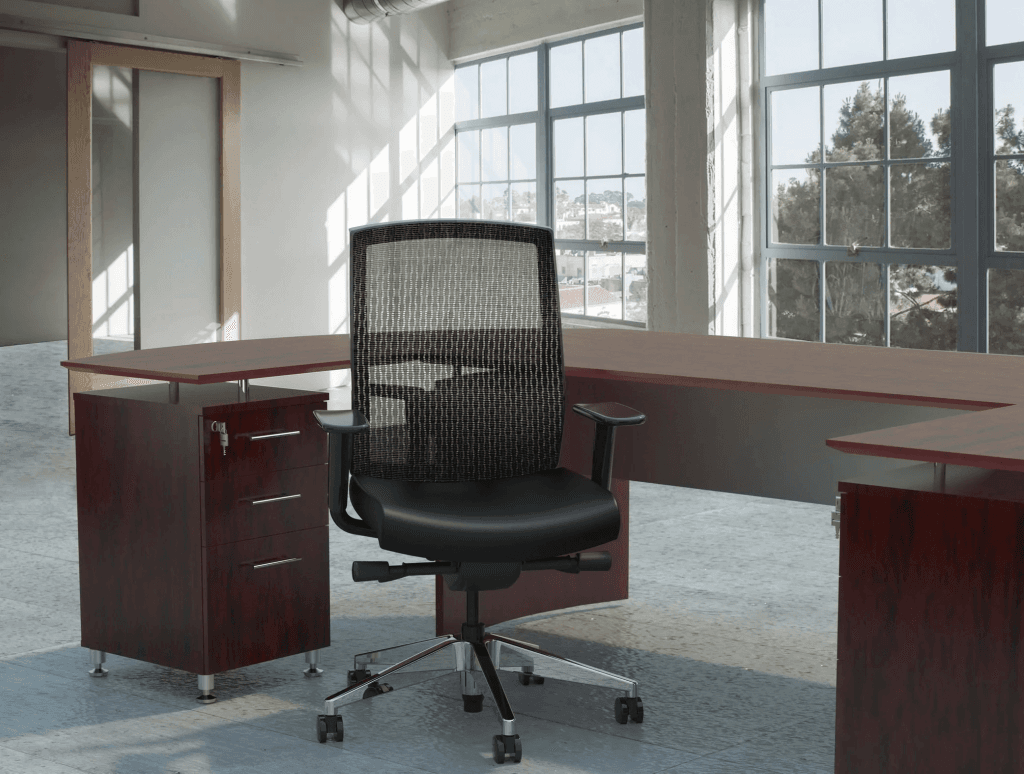
Most editorial sources put a typical office chair's lifespan at 7 to 8 years with daily use, with quality models stretching to 10+ years and budget chairs failing in 2-3 (Autonomous, CA Modern Home). But that single number hides something important: a chair that still looks fine can stop supporting you years earlier.
This guide breaks the answer into three timelines, then walks through how long each material actually holds up, the four signs it is time to replace, and the small maintenance habits that buy you years.
The three timelines: ergonomic, functional, aesthetic
Most lifespan claims conflate three different things. Separating them - a framework used by Eureka Ergonomic's clinical write-up - gives you a much more honest picture:
- Ergonomic lifespan (2-4 years). How long the seat foam and lumbar support keep their original resilience. Polyurethane foam can lose 20-40% of its supportive capacity inside 2-3 years of intensive daily use.
- Functional lifespan (5-8 years). The mechanical envelope - hydraulic cylinder, tilt mechanism, casters, armrest hardware. This is where most chairs break in a way you can feel.
- Aesthetic lifespan (7-10+ years). The frame and upholstery still look acceptable. This is the number marketing copy quotes.
A useful sanity check: a chair sold with a 5-year warranty is designed to last roughly 7-8 years; one with a 12-year warranty (Herman Miller Aeron, Steelcase Leap) is built for 12-15 (Baylor EHS). Warranty length is a better lifespan predictor than the spec sheet.
Lifespan by material
Material choice changes the math, especially for the upholstery layer. The ranges below blend the consensus from across the SERP.
Mesh: 5-10 years
Quality mesh chairs run 5-10 years before sagging becomes noticeable. Premium woven mesh (Aeron-class) regularly outlasts leather and fabric because it does not compress like foam does. The flip side: once a mesh seat-pan does start to sag, there is no fluffing it back - replacement is the only fix.
Leather: 5-10 years (with care)
Genuine leather, conditioned twice a year and kept out of direct sun, can hit 10 years (Think Office Furniture). Bonded or faux leather - what most sub-$500 "leather" chairs actually use - is closer to 2-5 years before the surface starts to flake. If you cannot tell which one you have, assume faux.
Fabric: 4-7 years
Mid-tier fabric upholstery holds up for 4-5 years; commercial-grade fabric on a steel frame can stretch to 7. Stain resistance matters more than thread count - once a coffee stain sets, the chair often gets replaced before the foam fails.
Four signs it is time to replace your chair
Calendar age is the worst replacement trigger. These four feel-it-in-your-body signs are more reliable:
Replace soon
- Slow sink - you have to re-pump the height every 20 minutes (failed gas cylinder).
- Foam does not rebound after you stand up; you can see the seat dent.
- Persistent tilt, wobble, or a loose central column when you lean back.
- Casters grind, stick, or have started gouging your floor.
- New or worsening lower-back, neck, or shoulder pain on chair-heavy days.
Probably fine
- Cosmetic scuffs on the frame; upholstery looks tired but supports you.
- Single squeaky bolt - usually a 60-second tighten-and-lubricate fix.
- One worn caster - replaceable for under $20.
- Foam feels a bit firmer than new; still rebounds within a second of standing.
If you are seeing the left column, especially the first two, the chair has crossed its ergonomic lifespan even if the warranty has years left.
The 40-50% replacement rule
A simple economic test: if a repair will cost more than 40-50% of the replacement price, replace. A new gas cylinder runs $30-60; a tilt mechanism overhaul on a premium chair can hit $200. Below the threshold, repair. Above it, the secondary failures usually arrive within a year anyway.
How to make the chair you have last longer
- Vacuum upholstery weekly. Grit is what abrades fibers - keeping it off the chair is more effective than any treatment.
- Condition leather, spot-clean fabric. Use a leather cream every 6 months on genuine hide; for fabric, blot stains immediately - never rub.
- Lubricate moving parts every 6 months. A drop of silicone lubricant on the tilt pivot and a wipe on the gas cylinder shaft prevents most squeak complaints.
- Tighten hardware quarterly. Seat-pan, armrest, and base bolts all loosen with use. A 5-minute pass with the included hex key adds years.
- Respect the weight rating. Sitting on an arm or leaning hard on the back when reaching is what breaks frames and tilt mechanisms - not normal use.
- Keep it out of direct sun. UV is the single biggest accelerator of leather cracking and fabric fading.
Frequently asked questions
How long does an office chair last with daily 8-hour use?
Plan on 5-8 years for the chair's mechanical parts and 2-4 years before the foam and lumbar support fade noticeably. A premium chair under warranty (Aeron, Leap, Gesture) can stretch the mechanical lifespan to 12+ years, but the foam still softens on the same schedule unless the chair uses a suspended-mesh seat.
Is a 10-year-old office chair safe to use?
Safe to sit on, usually - but check the gas cylinder and base. A slow-sink cylinder or hairline crack in the five-star base is a fall risk. If both look fine and the seat still rebounds, the chair is functional, but you have likely lost most of its ergonomic support.
Are mesh chairs more durable than leather or fabric?
For the seat back, yes - woven mesh resists compression in a way foam cannot, which is why high-end mesh chairs are warrantied longest. For the seat itself it is closer to a tie: mesh seat-pans either hold up indefinitely or develop a permanent sag, with little middle ground.
Should I repair my chair or buy a new one?
Use the 40-50% rule: if the repair quote exceeds 40-50% of the replacement cost, replace. Gas cylinder swaps and caster replacements almost always pencil out; tilt-mechanism rebuilds and broken bases on mid-range chairs usually do not.