
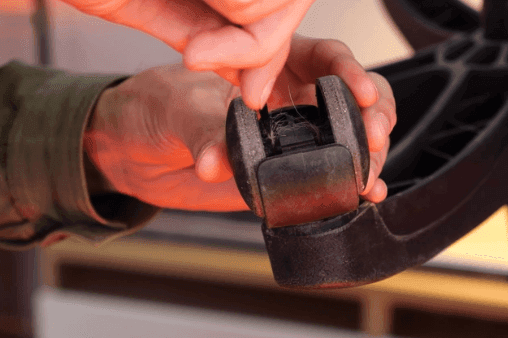
Hair tangled in office chair wheels is a slow-motion problem. Strands wind around the axle inside each caster, harden into felted bands, and eventually stop the wheel from spinning at all. The chair drags instead of rolls, the floor gets scratched, and the casters wear out years earlier than they should.
The fix is mechanical and unglamorous: get under the chair, cut the wad, pull what's left, and (for the worst cases) pop the caster open. Below is the full method, including the deep-clean option most quick guides skip.
What you'll need
- Scissors, a seam ripper, or a craft knife
- Needle-nose pliers or tweezers
- A flathead screwdriver (only for the deep-clean method)
- A damp microfiber cloth
- A vacuum with a brush attachment (optional but useful)
- A towel or piece of cardboard to lay the chair on
Method 1: Quick snip and pull (no disassembly)
This handles 90% of cases and takes about ten minutes for a five-caster chair.
1. Flip the chair over
Lay a towel or flattened cardboard on a hard floor and tip the chair upside down onto it. The towel keeps the seat, armrests, and headrest off the floor and stops the chair from sliding while you work. Flipping the chair, rather than crouching under it, is the universal first step across every major guide.
2. Inspect each caster
Spin each wheel by hand and look for the dark band wrapped around the axle - the metal pin running through the center of the wheel. A flashlight or your phone's torch makes hair visible on dark casters. Most of the buildup sits in the narrow gap between the wheel and the housing, not on the rolling surface.
3. Cut the wad
Slide the tip of small scissors, a seam ripper, or a craft knife into the gap and cut across the wrapped hair perpendicular to the axle. You're trying to slice through the bundle so it can be unwound, not trim individual strands. Work slowly - the housing plastic scratches easily, and the goal is one or two clean cuts, not sawing.
4. Pull the strands out
Grip the cut ends with needle-nose pliers or tweezers and pull steadily. Hair that's been compacted for months often comes out as a single felted disc. If a clump resists, cut it again from the opposite side and try once more.
5. Wipe and test
Wipe each caster with a damp microfiber cloth to lift the dust and skin oil that the hair was binding. Dry the wheel, flip the chair back over, and roll it on a hard surface. Smooth, silent rotation means you're done. A skip or grinding sound means a strand is still caught - flip and repeat on that wheel.
Method 2: Deep clean (pop the caster apart)
When the wheel won't spin even after cutting, or when the buildup is years old, the cleanest fix is to open the caster. Most office-chair casters are two plastic halves snapped over a central axle, and the assembly is designed to come apart with hand pressure plus a screwdriver.
- Remove the caster from the base. Grip the stem (the post that plugs into the chair base) and pull straight out. Most casters are friction-fit and will release with firm, steady force - no twisting.
- Pry the wheel halves open. Wedge the tip of a flathead screwdriver into the seam where the two halves meet and twist gently. Work around the edge until the halves separate.
- Clear everything inside. Pull out the hair, dust, and skin-oil paste that built up around the axle. A toothbrush helps with the recessed channels.
- Snap the halves back together and reinsert. Line up the axle, press firmly until you hear the click, then push the caster stem back into the chair base until it seats.
If a caster won't reassemble or the wheel surface is gouged, replacement casters are an inexpensive part - most office chairs use a standard 11mm grip-ring stem, and a five-pack of rollerblade-style replacements is usually under $30.
Why this matters
Compacted hair isn't only a rolling problem. It's the leading cause of premature caster failure on home-office chairs, and the side effects compound:
- Floor damage. A jammed wheel skids instead of rolling, scraping hardwood and shredding rug fibers.
- Posture drift. When a chair won't roll cleanly, people stop adjusting their position throughout the day and lock into one posture - exactly what ergonomic seating is designed to prevent.
- Bearing wear. Hair traps moisture and skin oil against the axle. Over time the bearing scores and the wheel develops a permanent wobble.
- Noise. The squeak that develops in a year-old chair is almost always hair plus dust against a dry axle, not a manufacturing defect.
A five-minute clean every two to three months prevents all of this. If anyone in the household has long hair or sheds heavily, set a recurring reminder - the longer it sits, the harder the wad is to extract.
How to keep it from happening as fast
- Use a chair mat on carpet. Hair settles into pile and gets re-collected by the casters every time you move. A hard mat lets it vacuum up instead.
- Vacuum the floor around the chair weekly, not just monthly. Most of the hair the casters catch was sitting within a 12-inch radius of where they roll.
- Run a lint roller around the caster housings when you do other desk cleaning. Catches loose strands before they get pulled into the axle.
- Consider rollerblade-style casters if you're replacing wheels anyway. Their larger diameter and exposed-axle design make hair easier to spot and faster to clear.
Office chair wheel hair - FAQ
What's the fastest way to remove hair from office chair wheels?
Flip the chair over, slide small scissors or a seam ripper into the gap between the wheel and the housing, and cut across the wrapped hair perpendicular to the axle. Pull the cut strands out with needle-nose pliers or tweezers. For most chairs this takes under ten minutes for all five casters.
Do I have to take the wheels off to clean them?
No - the snip-and-pull method works for the majority of cases without removing the caster. Pop the caster off the chair base and pry the wheel halves apart only when the wheel won't spin freely after cutting, or when the buildup is years old.
How do I remove an office chair caster?
Grip the stem (the post that plugs into the base) and pull straight out with firm, steady force. Most casters are friction-fit - no twisting, no tools. If a stem is stuck, work a flathead screwdriver under the caster shoulder and lever it up gently.
How often should I clean hair out of chair wheels?
Every two to three months is enough for most households. If anyone in the home has long hair or sheds heavily, monthly is safer - the wad compacts and felts the longer it sits, and a fresh tangle takes a quarter of the time of a year-old one.
Are there casters that don't catch hair?
Rollerblade-style casters with larger diameters and exposed axles catch less and clear faster than the standard small twin-wheel design, but no caster is hair-proof. The main benefit is visibility - you can see and pull buildup before it locks the wheel.