
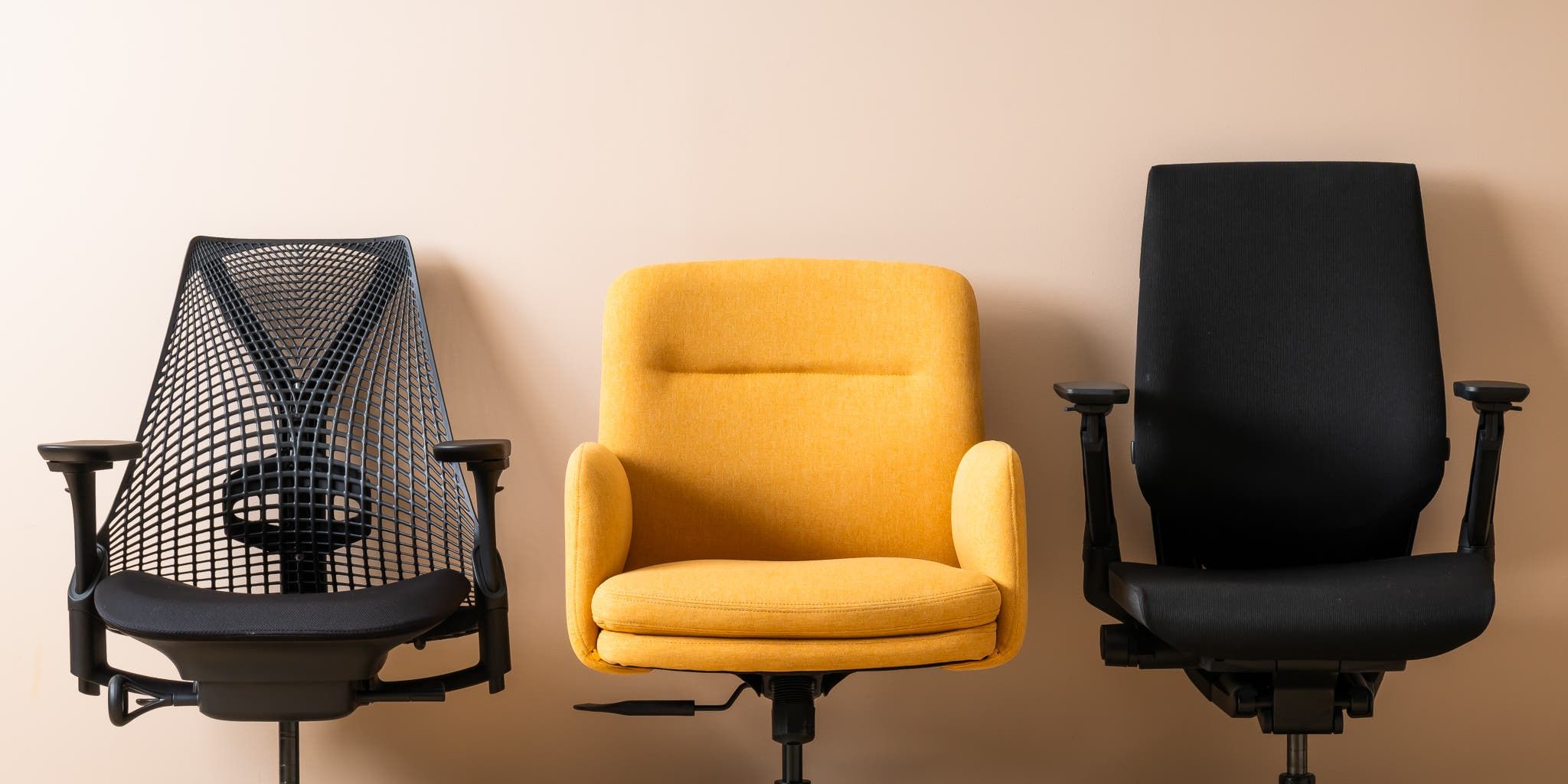
A broken office chair is one of those problems people quietly tolerate for months - the slow sink, the squeak on every lean, the wheel that drags. The good news: most office-chair failures are mechanical, not structural, which means the chair is almost always cheaper and faster to fix than to replace. The bad news: a lot of repair advice online (PVC pipes shoved over the cylinder, hose clamps on the post) is a temporary patch that turns a $30 repair into a $300 replacement six months later.
This guide walks through the six failure modes we see most often in ergonomics consultations, the tools you actually need, and how to know when repair stops being worth it. If you can hold a screwdriver and flip a chair upside-down, you can do every fix in here.
Before you start: tools, parts, and a 60-second diagnosis
Most chair repairs use the same small toolkit. Stock these once and you can fix nearly anything that goes wrong over the next decade of a chair's life.
- Phillips and flat-head screwdrivers, plus a 4 mm and 5 mm Allen key (hex wrench) - covers ~90% of office-chair fasteners.
- Rubber mallet - for separating the gas cylinder from the base and seat plate without damaging threads.
- Silicone or PTFE (dry) lubricant spray - not WD-40, which attracts dust and gums up casters.
- Pipe wrench or large adjustable wrench - for stubborn gas cylinders that won't budge from the base.
- Replacement parts as needed: a universal gas cylinder ($25-40), set of five casters ($15-25), or a new base ($30-60) all fit most standard office chairs.
Before you touch a screwdriver, sit in the chair and run through this 60-second diagnosis. Lean back - does it tilt unevenly? Push down - does the seat sink under your weight? Roll across the floor - which wheel drags or clicks? Grip each armrest and wiggle - any play? Lean against the backrest - does it flex more on one side? Whichever symptom is loudest, jump to that section below.
1. The sinking chair (gas cylinder failure)
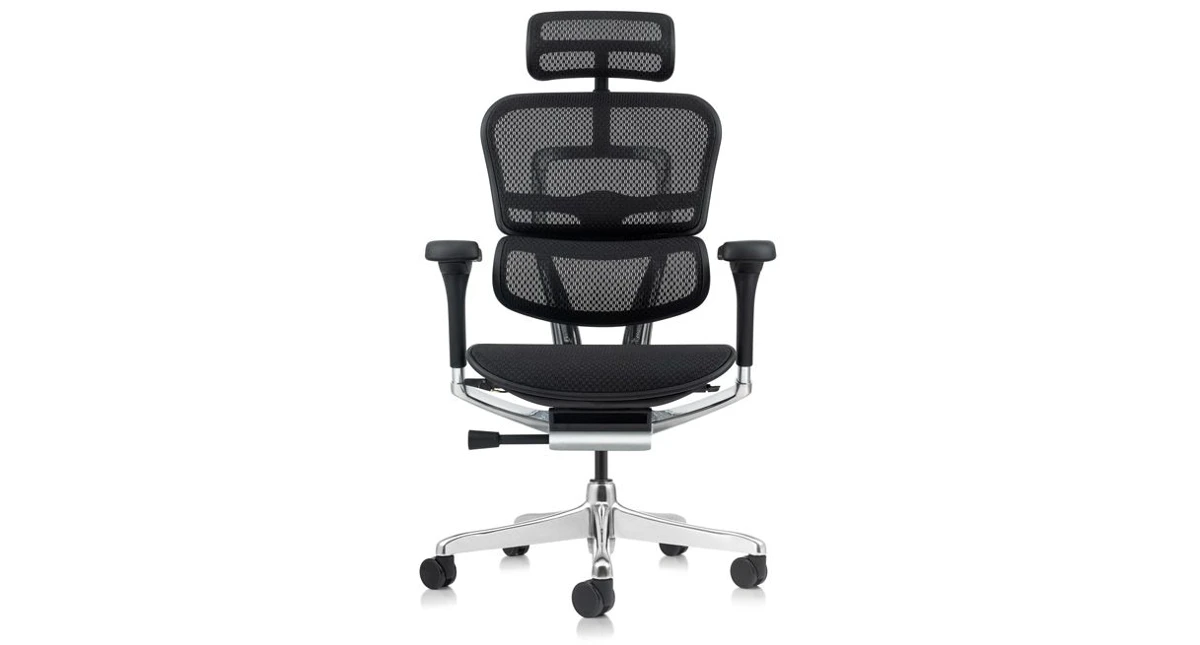
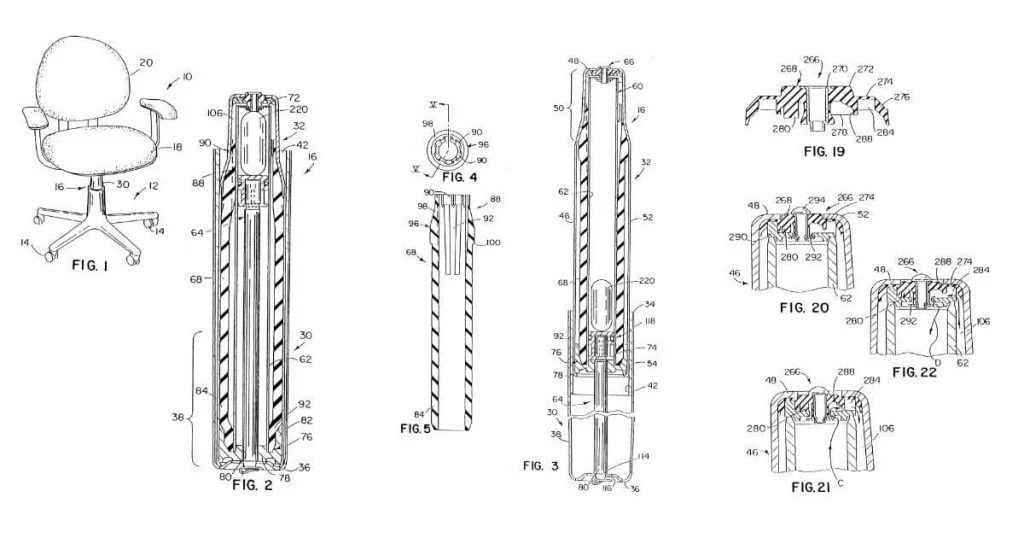
Sinking is the single most common office-chair complaint, and it's almost always the pneumatic gas cylinder - the chrome post that lets you adjust seat height. Inside is a nitrogen-charged piston with a seal at the top. After roughly 5-10 years of compression cycles (or less if the chair lives outdoors or in a humid garage), that seal weeps and the gas leaks past it. The chair slowly drops to the lowest setting and stays there.
Skip the hacks. A hose clamp or PVC sleeve will hold the chair up for a few weeks, but it locks the chair to one height and stresses the lever mechanism. The real fix is replacing the cylinder, which takes about 15 minutes and costs less than a takeout dinner.
Replacing the gas cylinder, step by step
- Flip the chair upside-down on a soft surface. Pull the five casters straight out of the star base (they're a friction fit - a flat-head screwdriver in the gap helps).
- Separate the star base from the cylinder. Tap the base near the cylinder with a rubber mallet while pulling - the taper fit will release. If it's stuck, spray a little penetrating oil at the joint and wait 10 minutes.
- Separate the cylinder from the seat plate the same way: rubber-mallet taps around the seat mount until it pops free.
- Measure the old cylinder's length and the diameter of the top and bottom tapers. Most modern chairs use the universal Class 4 size (50 mm bottom taper, 28 mm top), but always confirm before ordering a replacement.
- Drop the new cylinder into the base, slide the seat plate over the top, and reattach the casters. Sit on the chair once to seat the tapers - the friction fit will lock under load.
If your chair won't go up at all (vs. won't stay up), the lever cable or pivot is the more likely culprit - pull the cable boot off and check that pressing the valve pin under the seat plate raises the chair manually. If it does, the cable needs adjustment, not the cylinder.
2. The wobbly or cracked base
Wobble has two causes: loose hardware at the seat-plate-to-cylinder junction, or cracks in the five-armed star base itself. Plastic bases (typical of chairs under ~$250) fatigue and crack along the underside of the arms after years of uneven loading. Once a star arm cracks, retire that base - taping or bracketing a cracked plastic base is a genuine safety hazard.
To diagnose: flip the chair, look at the underside of each star arm under good light, and flex each arm gently. Cracks are usually radial, running outward from the cylinder boss. Aluminum bases almost never crack - if you have one and it wobbles, the fix is always tightening, never replacing.
The fix
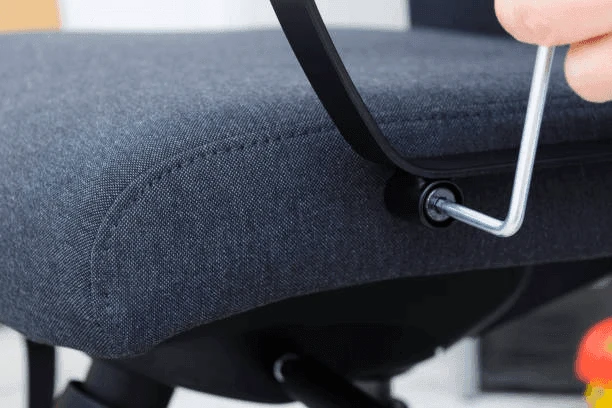
- If hardware is loose: tighten every bolt on the seat plate and the mechanism housing. Most use a 4 mm or 5 mm Allen key. Snug, then quarter-turn more - don't strip the threads in soft cast aluminum.
- If a star arm is cracked: order a replacement base sized to your cylinder taper (most are universal Class 4). Swap it using the same mallet-tap technique as a cylinder replacement.
- If you find the wobble is at the seat-to-mechanism connection, the threaded inserts in the seat may have stripped. Backing the bolts out, applying a drop of medium-strength threadlocker, and re-seating usually buys another year or two.
3. Broken, stuck, or noisy casters
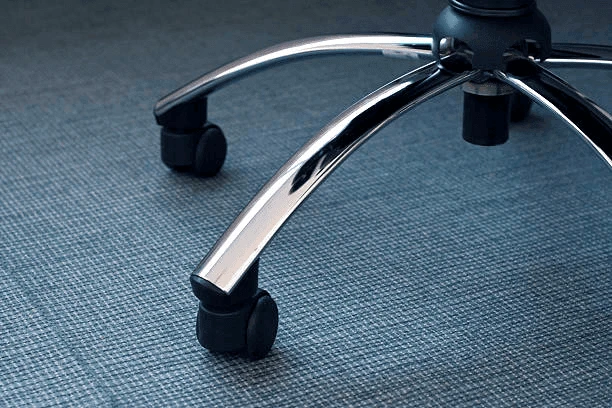
Casters die from hair, thread, and carpet fibers wrapping the axle. A chair that drags on one wheel, refuses to roll straight, or click-clicks across hard floor almost always has wrapped axles, not broken bearings.
Clean first, replace second
- Flip the chair and pull each caster straight out of the base (they're a friction fit on an 11 mm stem).
- Cut away wrapped hair and fiber with scissors or a utility knife. A small flat-head screwdriver helps pry packed lint off the axle.
- Spritz a tiny amount of dry silicone or PTFE lube on each axle. Skip oil-based sprays - they attract dust and make the problem worse within weeks.
- Push each caster back into the base until it clicks home.
If a wheel is cracked, has a flat spot, or the stem has snapped, replace it. Universal 11 mm stem casters are sold in sets of five for $15-25; upgrade to soft polyurethane rollerblade-style wheels if you've moved from carpet to hardwood - they roll quieter and won't scratch the floor.
4. The persistent squeak
Squeaks usually come from one of three places: the tilt mechanism (squeak when you lean back), the cylinder (squeak when you sit down or stand up), or a caster (squeak when you roll). Sit in the chair and reproduce the noise - let the location guide the fix.
- Tilt squeak: spray dry lube into the springs and pivot points of the mechanism housing under the seat. Work the tilt back and forth a dozen times to spread it.
- Cylinder squeak: a few drops of lube at the top of the cylinder where it enters the seat plate, then sit and stand a few times. If it persists, the cylinder is wearing and will need replacement within a year.
- Caster squeak: clean and lube the axles as described above.
If you can't isolate it, have someone push down on the seat while you put an ear near each joint - the noise will get sharply louder when you find it.
5. Loose, broken, or torn armrests
Armrests fail in three ways: the mounting bolts loosen, the height-adjust mechanism stops holding position, or the pad cracks/tears. The first two are easy fixes; the third depends on how the pad attaches.
- Loose arm: flip the chair and tighten the two bolts under the seat that hold each armrest post. If the bolts spin freely, the threaded insert in the seat is stripped - use a slightly larger bolt or apply threadlocker.
- Adjust mechanism slips: pop off the plastic shroud at the top of the armrest post. Inside is usually a spring-loaded pin and a notched bar. Clean both, lube lightly, and reassemble. If the spring has snapped, replacement adjustable armrest assemblies are widely available.
- Torn pad: most pads unscrew from underneath (look for two or four small Phillips screws). Replacement pads are $10-20. If yours is glued or molded on, a fitted aftermarket sleeve covers it for under $25 - easier than reupholstering.
6. A backrest that flexes, leans, or has detached
On most task chairs the backrest connects to the seat through a single thick metal arm (sometimes called the back support frame), bolted at one or two points. Excess flex, a backrest that leans permanently to one side, or a back that's come loose almost always means a loose or stripped bolt at that junction.
- Sit in the chair and identify where the backrest meets the seat support. Lean back and watch for movement at that joint.
- Flip the chair (or have a helper hold it) and find the bolts on the back-support arm - usually two heavy bolts inside the seat plate housing.
- Tighten with a hex key until snug. If they're already tight but the back still flexes, the back-support frame itself may be cracked - order a replacement frame matched to your chair model, or accept that the chair has reached the end of its useful life.
- On mesh backs, a torn or stretched mesh panel is a separate problem - the frame is fine, but the suspension fabric has given way. Some manufacturers (Herman Miller, Steelcase) sell replacement mesh; on most other chairs it's not a user-serviceable repair.
Repair makes sense when…
- The chair is under 7 years old and otherwise comfortable
- Only one or two parts have failed (cylinder, casters, base)
- It's a quality model (Steelcase, Herman Miller, Haworth) where parts and service are available
- Total parts cost is under 25% of an equivalent new chair
- The frame, mechanism, and seat foam are still solid
Replacement makes more sense when…
- Multiple major parts have failed within the same year
- The mechanism housing or frame itself is cracked
- Seat foam has compressed past the point of comfort (a $40 cushion is a bandaid)
- It's a sub-$150 chair where parts cost more than the original chair
- You've outgrown the chair size or it doesn't fit your body - no repair fixes fit
Preventive maintenance: ten minutes a month
Almost every repair in this guide could have been delayed by years with a small monthly habit. The chair lives under your body 40+ hours a week - it earns the attention.
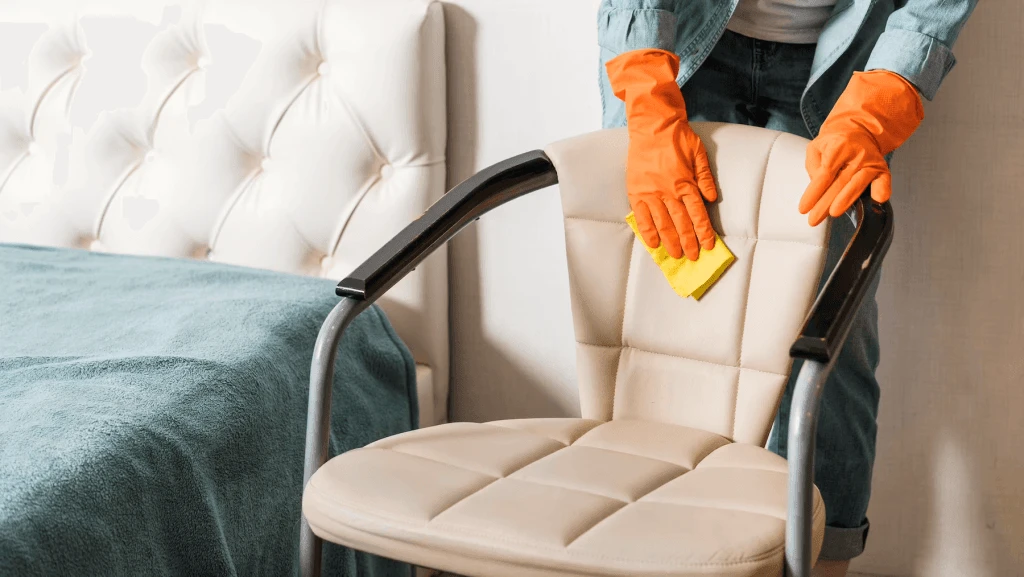
- Once a month: flip the chair and clear hair and fiber from the casters. Two minutes per chair.
- Every three months: snug up every visible bolt with the right Allen key. Don't overtighten - just confirm nothing has worked loose.
- Every six months: a single spritz of dry lube on the tilt mechanism pivots and at the top of the gas cylinder.
- Wipe fabric with a damp microfiber once a month; vacuum mesh weekly to keep dust out of the weave.
- Keep a chair mat under rolling chairs on carpet - it cuts caster wear roughly in half.
Frequently asked questions
Is it worth repairing an office chair?
Usually yes, if total parts cost is under 25% of a comparable new chair and only one or two components have failed. A $30 gas cylinder swap on a $400 task chair is obviously worth it. Replacing the cylinder, base, and casters on a $90 chair from a big-box store is not - the new parts will outlast the rest of the chair and you'll be back inside a year.
How do I stop my office chair from sinking without buying a new cylinder?
Short-term hacks like a hose clamp on the cylinder post or a PVC pipe sleeve will hold the chair at one fixed height for a few weeks. They are not real repairs - the cylinder seal has failed and will not heal. Plan on cylinder replacement (~$30, 15 minutes) within the month.
What lubricant should I use on an office chair?
Dry silicone or PTFE spray. Avoid WD-40 and standard oil-based lubricants on casters or anywhere dust can collect - they create a sticky slurry that locks bearings faster than running them dry.
Can I replace any office chair gas cylinder with any other?
Most modern office chairs use the same Class 4 size: 50 mm bottom taper into the base, 28 mm top taper into the seat plate. Always measure your existing cylinder's overall length and taper diameters before ordering. A few European and high-end chairs (some Vitra, some Herman Miller) use proprietary sizes - check the manufacturer.
How long should an office chair last?
A budget chair: 2-4 years. A mid-range task chair ($200-500): 5-8 years. A premium ergonomic chair (Aeron, Steelcase Leap, Haworth Fern): 12-15 years with routine maintenance, often longer. The gas cylinder is usually the first part to fail on any of them.
When to call it
A chair that supports your spine eight hours a day deserves more than a quick patch - but it also doesn't deserve a new $600 replacement when a $30 cylinder is the real culprit. Diagnose first, replace one part at a time, and keep a small repair kit nearby. Most chairs that get retired could have given another five years with one good evening of work.