
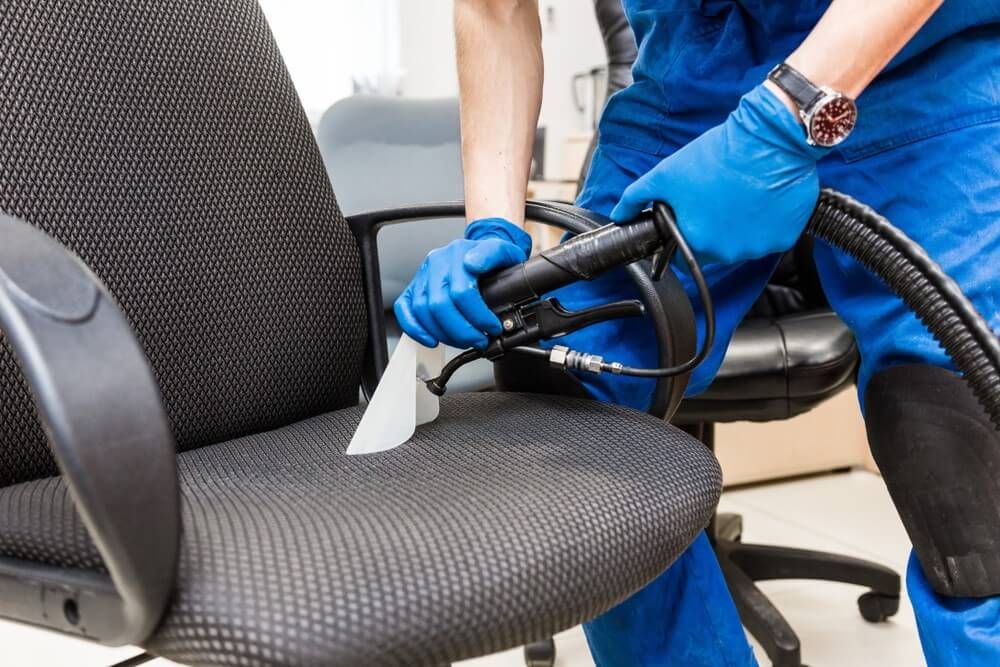
A dirty office chair quietly accumulates skin cells, food crumbs, hair, and the kind of grime that turns lumbar foam into a petri dish. The good news: most chairs can be brought back to near-new with household supplies and forty minutes of careful work. The wrong move - soaking mesh, dousing leather in disinfectant, or scrubbing fabric without checking its care code - can do permanent damage. This guide walks through cleaning by material (mesh, fabric, leather, plastic, metal) and finishes with the parts everyone forgets: casters and the gas cylinder.
Before you start: read the care tag
Flip your chair over and look for a tag on the underside of the seat. Upholstery cleaning codes are the single most important thing to check before you reach for any liquid:
- W - water-based cleaner only.
- S - solvent-based (water-free) cleaner only. Using water will leave rings.
- W/S or S/W - either is safe.
- X - vacuum only. No liquids. Aggressive cleaning will damage the fabric.
If the tag is missing, the manufacturer's care sheet usually lives on the product page. Always spot-test in a hidden area - under the seat, behind the headrest - before treating a visible surface.
What you'll need
- Vacuum with a soft-brush attachment
- Microfiber cloths (two: one for cleaning, one for drying)
- Mild dish soap and a bowl of lukewarm water
- A soft-bristled brush (an old toothbrush works for crevices)
- Baking soda - for fabric odors
- Distilled white vinegar - for leather stains
- Leather conditioner - if your chair is genuine leather
- Disinfectant wipes appropriate to your fabric type
- Tweezers or a butter knife - for hair tangled in casters
Step 1: Vacuum first, always
Loose debris turns into mud the moment it meets a damp cloth. Vacuum the entire chair with a brush attachment, paying particular attention to:
- The seam where the seat pan meets the backrest
- Under the armrests
- The base spider and gas cylinder collar
- Any tilt mechanism vents
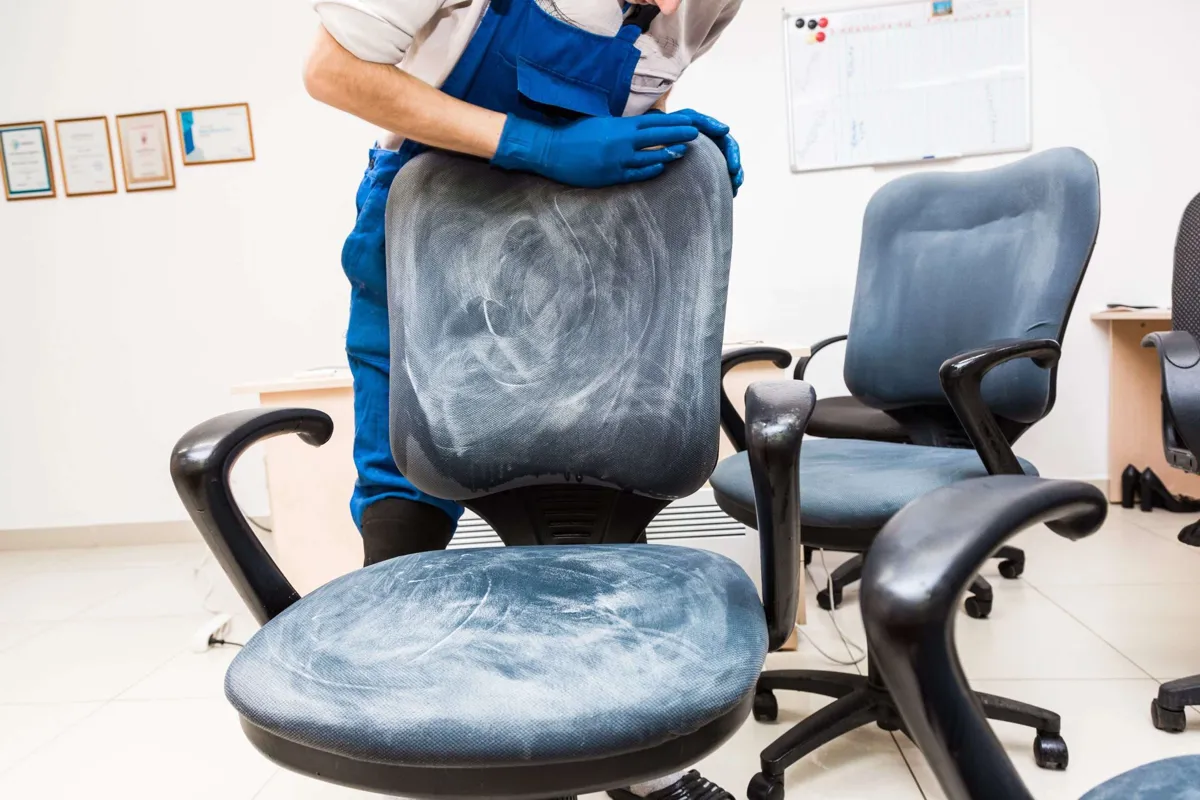
For mesh chairs, use the gentler hand-vac setting to avoid stretching the weave. Take 30 seconds to deodorize fabric: sprinkle baking soda over the seat and backrest, leave it 15 minutes, then vacuum it up. This is the single most effective step for the "old chair" smell.
Step 2: Clean by material
Different surfaces want different things. Mixing them up is how warranties get voided.
Mesh
Mesh is forgiving but easy to damage by over-scrubbing. The polyester or nylon weave will fuzz if you attack it with a stiff brush.
- Mix a few drops of dish soap into a bowl of lukewarm water.
- Dip a microfiber cloth, wring it until only damp - never dripping.
- Wipe in one direction, following the weave. Don't scrub back and forth.
- Rinse the cloth, wring again, and wipe a second pass to remove soap residue.
- Let the chair air-dry. Don't sit on it until the weave is fully dry, or you'll set body weight into still-soft fibers.
Fabric upholstery
Once the care code is confirmed as W or W/S:
- Spot-test in a hidden area. Wait 10 minutes and check for discoloration.
- Mix a teaspoon of mild laundry detergent into a cup of cool water.
- Dip a soft-bristled brush, blot the stain - don't rub. Rubbing pushes the stain deeper and frays the weave.
- Wipe off the soapy water with a clean damp cloth.
- Press a dry towel over the spot to lift moisture, then air-dry fully before reuse.
For an S-coded fabric, skip water entirely and use a water-free upholstery solvent following the can's directions.
Leather and faux leather
Real leather hates water and especially hates alcohol. Use a 50/50 distilled white vinegar and water solution for stubborn spots, or a dedicated leather cleaner.
- Wipe the chair down with a dry microfiber to remove dust.
- Dampen - barely - a neutral-colored cloth (dyed cloths can transfer pigment into the leather) with your cleaner.
- Wipe in small circles, working one panel at a time.
- Go over the same area with a second, plain-damp cloth to lift cleaner residue.
- Dry immediately with a third cloth.
- Once dry, work a pea-sized amount of leather conditioner in circular motions across the seat, back, and arms. Conditioner replaces the oils your cleaner just stripped and prevents cracking.
For faux leather (pleather, PU), use mild dish soap and water; conditioner is optional and most commercial "leather creams" won't bond to the polyurethane surface.
Plastic and painted metal frames
Spray a multi-purpose cleaner or diluted dish soap onto a cloth - never directly onto the chair, where overspray can drip into the gas cylinder seal and degrade it. Wipe arms, base, tilt knobs, and the column. Buff with a dry cloth to remove streaks.
Step 3: Clean the casters (everyone skips this)
Wheels collect hair, thread, dust, and dried liquid until they no longer spin freely. A seized caster makes a perfectly good chair feel broken.
- Flip the chair upside down.
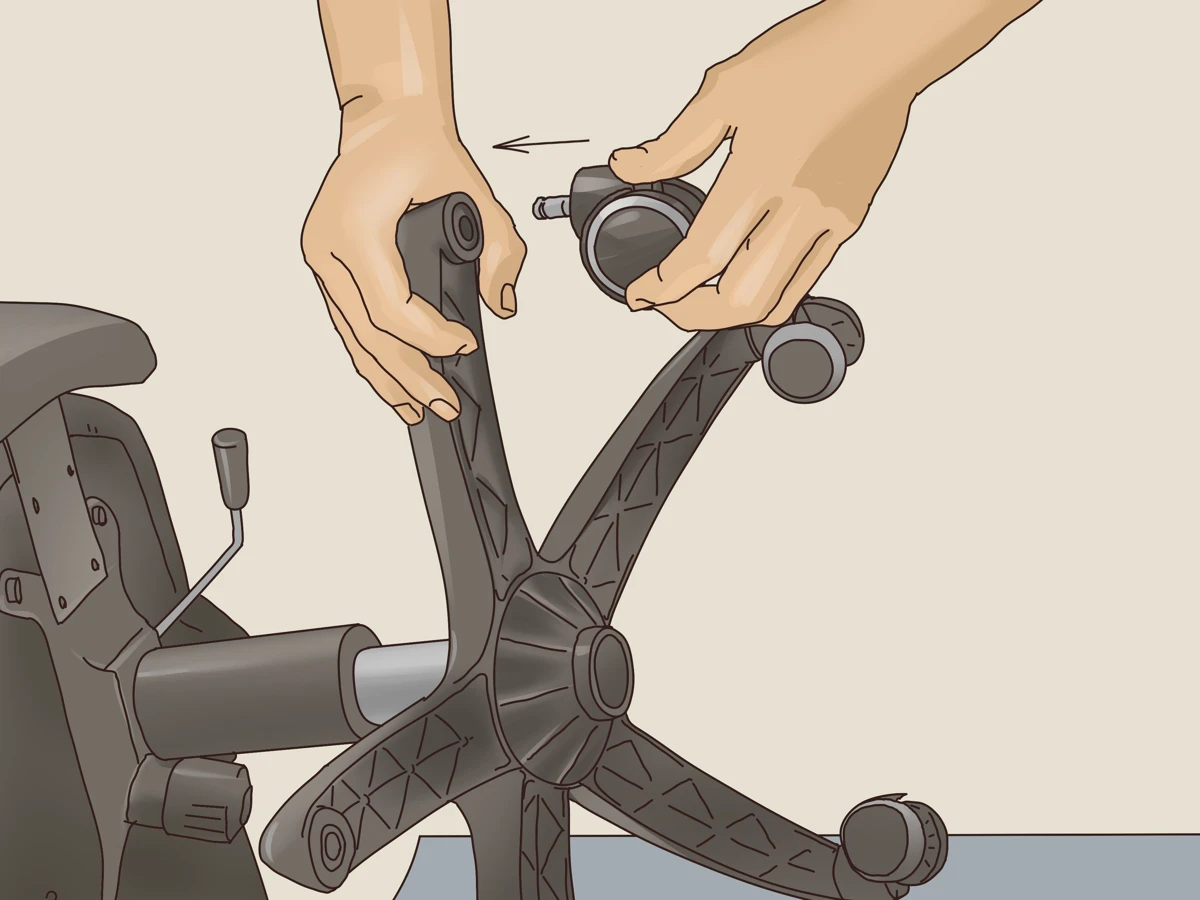
- Most modern casters pull straight out of the base socket with firm hand pressure - no tools needed. Older chairs may use a circlip or hex screw.
- Use tweezers to lift hair off the axle. A butter knife works to pry compacted lint off the wheel hub.
- Wipe the wheel surface with a soapy cloth, then a clean damp one.
- Spin each wheel by hand. If it sticks, a single drop of silicone spray on the axle (not the wheel surface) will free it. Avoid WD-40, which attracts more dust over time.
- Press the casters back into the base socket until they click.
Step 4: Disinfect, with care
A swipe with disinfectant wipes is fine on plastic, metal, and most leather. On fabric and mesh, check the manufacturer's spec - many textile warranties are voided by quaternary-ammonium disinfectants. If you do use a disinfectant on upholstery, follow with a plain-water wipe within five minutes so residue doesn't break down the fibers.
Step 5: Let it dry completely before sitting
This is the step most people rush. Sitting on damp fabric or mesh redistributes moisture into the foam, where it stays for days and starts to smell. Air-dry the chair in a well-ventilated room for two to four hours. For fabric, a fan pointed at the seat accelerates drying without damaging the material; a hair dryer on a cool, low setting works in a pinch.
How often should you clean an office chair?
Quick vacuum and arm wipe - weekly. Spot-clean spills - immediately. Full upholstery clean - quarterly. Caster check - monthly. Leather conditioning - every six months. Deep deodorize with baking soda - every three months.
Heavy users - people in their chair eight hours a day, five days a week - should bump frequencies up by roughly 30%.
When the chair is past cleaning
If the seat foam is permanently flattened, the gas cylinder won't hold height, or the casters are cracked, no amount of cleaning brings the chair back. Foam and casters are inexpensive to replace; gas cylinders are a 10-minute swap with a pipe wrench. Replace parts before you replace the whole chair - most modern task chairs are designed to be serviced.
Office chair cleaning FAQ
Can I machine-wash an office chair seat cover?
Only if the cover is removable and the care tag shows a washable code. Most modern task chairs use a glued-on or stapled fabric that can't come off without tools. If yours zips off, use a cold delicate cycle with mild detergent, then air-dry flat - never tumble dry, which shrinks foam and warps memory layers.
How do I get the smell out of an old office chair?
Sprinkle baking soda generously across the seat and backrest, let it sit for 15-30 minutes, then vacuum thoroughly. Repeat on the underside of the seat if the smell persists. For deep odors, a follow-up wipe with a 1:1 white vinegar and water solution (on W-coded fabric only) neutralizes most lingering smells. The vinegar smell itself dissipates within a few hours.
Is rubbing alcohol safe on office chairs?
On plastic and metal frames, yes - diluted to 70% it's an effective disinfectant. On leather, no - it strips the protective finish and dries out the material. On most fabric and mesh, no, unless the manufacturer specifically approves it. Always check the care tag first.
How often should I deep clean my office chair?
A quarterly deep clean is right for most home offices. If you eat at your desk, have pets, or work in a dusty environment, monthly is better. In between deep cleans, a weekly vacuum and damp wipe of the arms and base keeps grime from setting in.