
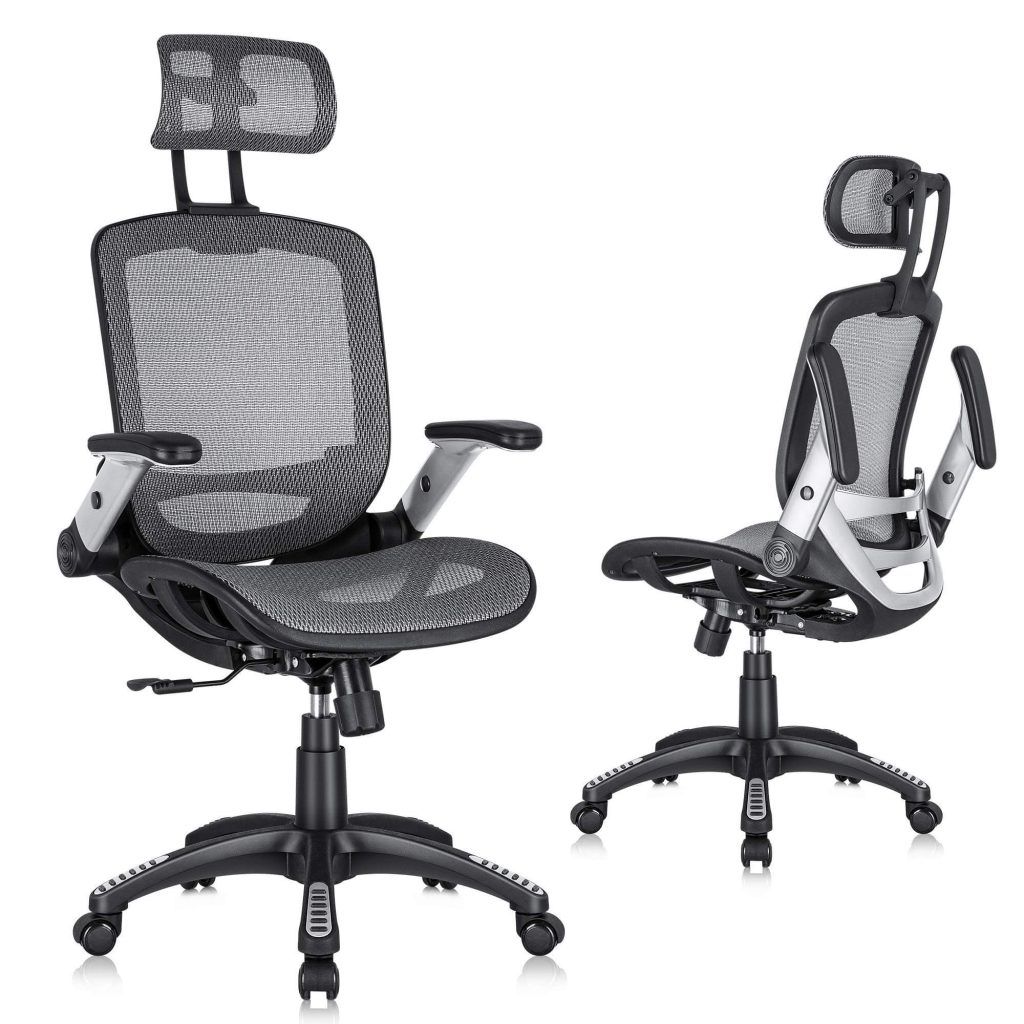
Mesh office chairs are easy to live with - until the sag sets in, the cylinder starts sinking, or an armrest goes wobbly mid-meeting. The good news: most failures on a mesh task chair are mechanical, not terminal, and almost all of them are user-serviceable in 30 minutes with a basic tool kit.
This guide walks the four failure modes that account for the majority of mesh-chair complaints - sagging mesh, sinking gas cylinder, squeaks, and loose armrests - plus the inspection and maintenance habits that keep a chair out of the landfill. It's written for the person who flipped their chair over, saw a forest of fasteners, and wanted a second opinion before they started turning screws.
A Two-Minute Inspection Before You Touch a Tool
Before you take anything apart, diagnose. Most "broken" chairs need one targeted fix, not a full rebuild.
Flip the chair onto a soft surface (a folded towel protects the upholstery) and run through this list:
- Mesh tension. Press your palm into the center of the seat and the lumbar. If it deflects more than about 2 inches with no spring-back, the elastomeric fibers have likely reached their elastic limit.
- Cylinder behavior. Set the chair to its highest position, sit normally, and time how long it holds. A drop of more than ~1 inch over 15 minutes is a failing gas seal.
- Casters and base. Spin each wheel. Listen for grinding; look for hair, cable, or carpet fiber wrapped around the axle. Inspect the five-star base for hairline cracks at the hub.
- Mechanism and bolts. Rock side-to-side and recline. Note where the squeaks or clicks originate - almost always at a metal-to-plastic interface, not in the mesh itself.
- Armrests. Push down, pull up, and twist each armrest. Slop in any direction usually means a loose screw inside the housing, not a broken post.
Write down what you find before you open the toolbox. A two-minute inspection prevents the classic mistake of replacing a perfectly good gas cylinder when the real problem was a single loose bolt.
What You'll Need
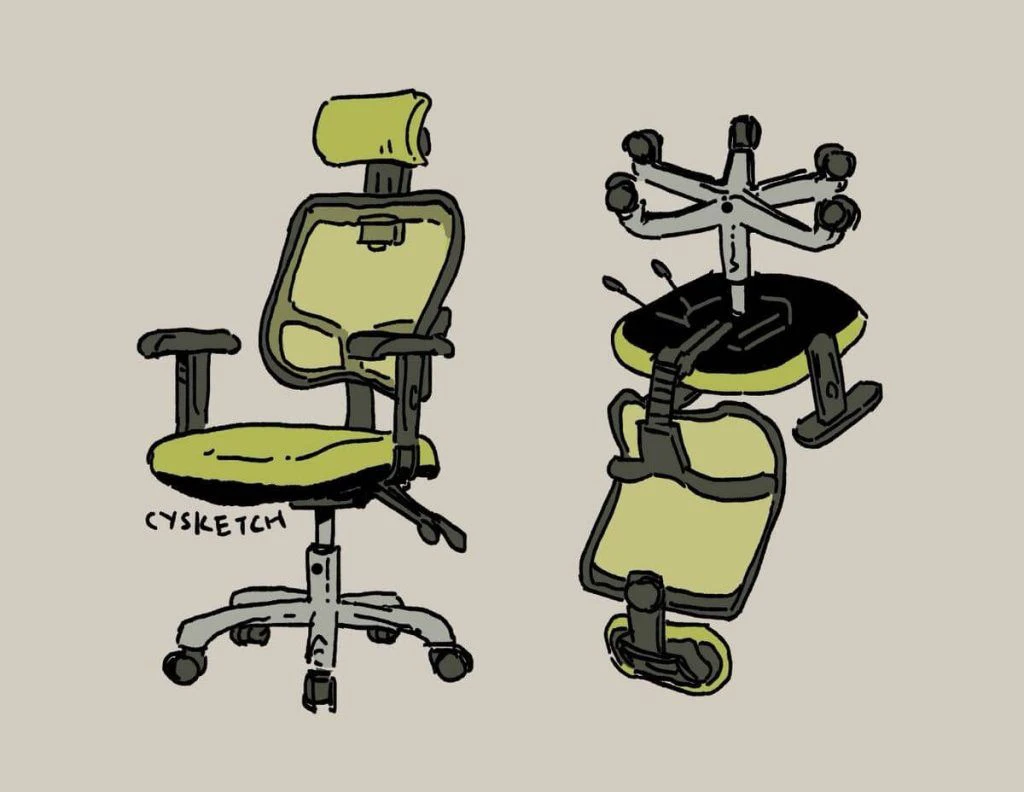
A standard home tool kit covers nearly every mesh-chair repair:
- Phillips and flathead screwdrivers
- Allen (hex) key set - most office chairs use 4 mm, 5 mm, and 6 mm
- Adjustable wrench or socket set
- Rubber mallet (for gas-cylinder removal)
- Silicone-based lubricant (not oil-based - oil attracts dust and degrades plastic over time, per the silicone-lubricant guidance widely recommended in chair-maintenance writeups)
- Replacement parts as needed: casters, gas cylinder, mesh panel, armrest pads
A few brand-specific chairs (Herman Miller Aeron, Steelcase Leap) use proprietary fasteners - check the maker's parts site before ordering generic replacements.
Fix 1 - Sagging Mesh
Sagging is the most-asked-about mesh failure, and it has a clear test. Press firmly into the center of the seat or lumbar pad. If the mesh deflects more than 2 inches without springing back, the elastic fibers have lost their tension and the seat pan or frame is now bearing load it was never meant to take. The downstream effect is a posterior pelvic tilt - pelvis rolls back, lumbar curve flattens, lower-back muscles take over - which is exactly the static loading pattern OSHA flags as a musculoskeletal-disorder risk.
What you can do:
- Check for an internal tensioning rod. Some higher-end chairs (Herman Miller Embody, certain Steelcase models) have an internal rod that re-tensions the mesh. Consult the manufacturer's service page before assuming the panel is dead.
- Replace the mesh panel. On most chairs, the mesh is stretched over a removable frame and held by a plastic retainer strip or a series of clips. Unsnap the retainer, peel the old mesh off, and stretch the replacement with about 5 inches of slack on each side so it can wrap the frame before you re-seat the retainer. Trim the excess flush.
- Replace the chair if the frame is also distorted. A sagging mesh that has pulled the frame out of square is past field repair - the new mesh will sag again within weeks.
A genuine OEM mesh panel runs $40-$120 depending on the chair. That's almost always cheaper than a new chair, especially on a $400+ task chair.
Fix 2 - The Sinking Gas Cylinder
A chair that slowly sinks over 15 to 30 minutes has a failing seal in its pneumatic cylinder. This isn't a bolt to tighten - it's a sealed pressurized component, and the only correct fix is replacement.
Internet workarounds (PVC pipe collars, hose clamps) lock the chair at a single height and defeat its ergonomic adjustability. Skip them.
To replace the cylinder:
- Flip the chair onto a towel.
- Tap the base off the cylinder with a rubber mallet, working around the perimeter so it comes off straight.
- Separate the cylinder from the seat-pan housing the same way.
- Press the new cylinder into the seat-pan housing, then drop the base on. Sitting on the chair seats the taper joints - no glue needed.
A Grade-3 or higher cylinder is rated for roughly 120,000 cycles under BIFMA testing - buy that grade or better. Generic Class-4 cylinders run $20-$40 and fit the vast majority of office chairs (Aeron and a few others use proprietary sizes - check before ordering).
Fix 3 - Squeaks, Clicks, and Rattles
Squeaks almost never come from the mesh. They originate at the interface between two materials - usually the seat pan's plastic underside and the metal mechanism, or a dry pivot point in the recline assembly.
The fix:
- Find the source. Recline slowly, rock side to side, and roll the chair. The noise will repeat at a specific point in the motion - start there.
- Tighten in a cross-pattern. When you re-snug bolts on the underside, work opposing pairs (top-left, then bottom-right, then top-right, then bottom-left) like lug nuts on a car wheel. Even pressure prevents the seat pan from warping, which is a top cause of recurring squeaks.
- Apply silicone lubricant to metal-to-plastic and metal-to-metal pivots. A small dab is enough; flood-lubricating attracts dust. Avoid WD-40 and other oil-based sprays on plastic components.
- Work the chair a few times after lubricating so the silicone migrates into the joint.
If the squeak persists after lubrication and re-tightening, look for a stripped bolt hole or a worn bushing in the mechanism - both are user-replaceable on most chairs.
Fix 4 - Loose Armrests
Wobbly armrests are usually internal screw loosening, not broken plastic. Peel back any armrest pad (often clipped or stuck with hook-and-loop), and you'll find two or three machine screws inside the housing connecting the arm to the post.
- Tighten with the appropriate hex key.
- If a thread is stripped, step up one screw size or use a thread-locking compound (Loctite Blue) - not super glue, which makes future service impossible.
- If the post itself wobbles in the seat pan, the issue is at the mounting bracket below the seat, not at the arm. Same fix - find and tighten the housing screws.
A snapped arm post is a parts replacement, not a repair - order the OEM armrest assembly.
Casters That Drag, Grind, or Won't Spin
Casters fail two ways: debris wraps the axle, or the bearing wears out. Both are easy.
- Flip the chair. Pull each caster out - most are friction-fit on a 7/16" stem and pull straight out with hand pressure or a pry under the housing.
- Pick out hair, thread, and carpet fiber from the axle. A bent paperclip helps.
- Spin the wheel. Smooth and quiet → wipe the axle, add a dab of silicone, re-seat the caster. Gritty or stuck → replace it.
- Replace as a full set (typically five) so the chair rolls evenly. Generic 2" or 3" casters with a 7/16" stem fit the vast majority of office chairs and run $15-$30 for a set of five.
If you work on hard floors, this is also a good moment to swap to soft polyurethane "rollerblade" casters - quieter, gentler on wood, and they roll about the same.
When You Should Stop and Replace the Chair
Three failure modes mean the chair has reached the end of its useful life:
- A cracked five-star base. Replacement bases exist, but a hairline crack at the cylinder hub is a structural failure. Taped or bracketed "repairs" can fail under load and cause injury.
- A warped seat pan. If the pan no longer sits flat against the mechanism, lubricant and bolt-tightening will only buy a few weeks of quiet.
- A torn or stretched-out frame on the mesh back. When the frame itself is out of square, no new panel will hold tension.
Everything else - mesh, cylinder, casters, armrest pads, mechanism bolts - is a sub-$50 replacement on most chairs.
Maintenance That Prevents Most of This
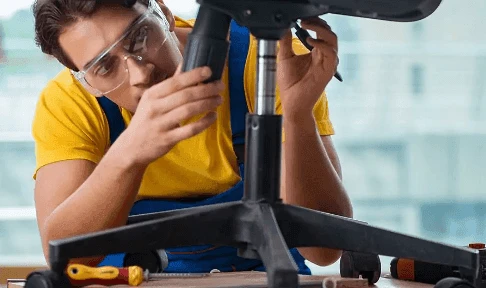
Quarterly habits keep a mesh chair out of the repair cycle:
- Tighten all underside bolts in a cross-pattern.
- Inspect mesh edges for fraying - fraying precedes a total tension failure.
- Vacuum mesh with a soft brush attachment; clean stains with mild soap and a microfiber cloth, then let air-dry fully before sitting in the chair again.
- Spin each caster and clear debris.
- Check the gas cylinder by holding height for 15 minutes once a quarter.
And one ergonomic habit that protects the chair as much as your back: the 20-8-2 rhythm - 20 minutes seated, 8 minutes standing, 2 minutes moving. Less continuous static load on the mesh and the cylinder means both last longer.
Mesh office chair repair FAQ
Can mesh material on an office chair be repaired without replacing the whole panel?
Small tears can be patched with a fabric repair tape on both sides of the mesh, but the patch is cosmetic - it does not restore tension. Once the elastic fibers lose their springiness (the 2-inch palm-press test fails to spring back), the panel itself needs to be replaced. On most chairs the mesh is held to a removable frame by a plastic retainer strip and is a 15-minute swap.
Is it worth fixing an office chair instead of buying a new one?
Almost always, yes. The most expensive sub-$50 repairs - a Class-4 gas cylinder, a set of five casters, an OEM mesh panel, or a Loctite-and-tighten on armrest screws - fix the failure modes that drive most chair replacements. The exceptions are a cracked five-star base or a warped frame, which are structural and should not be patched.
Why does my mesh office chair keep sinking down?
A chair that loses height over 15 to 30 minutes has worn internal seals in its pneumatic (gas) cylinder. The cylinder is a sealed pressurized component and cannot be repaired - only replaced. A Grade-3 or higher cylinder rated for ~120,000 cycles under BIFMA testing fits most chairs and costs $20 to $40.
How do I stop my office chair from squeaking?
Squeaks almost never originate in the mesh. Find the noise source by reclining and rocking slowly, then tighten the underside bolts in a cross-pattern and apply a small dab of silicone-based lubricant (not WD-40 or other oil sprays) to the metal-to-plastic pivots. Work the chair a few times to migrate the silicone into the joint.
Do mesh chairs wear out faster than fabric chairs?
Heavy daily use accelerates wear on any chair, and the mesh sling on a task chair is under constant tension whenever someone is seated. Heavier users also accelerate fatigue. Most quality mesh chairs hold tension for many years of full-time use; the gas cylinder and casters usually fail before the mesh does.