
A persistent squeak from an office chair isn't just an annoyance - it's an early warning. Loose hardware, dried-out pivots, and worn caster axles all start as a faint creak before they become a wobble, a stuck recline, or, worst case, a failed gas cylinder. The fix takes about fifteen minutes and three tools, but the order matters: diagnose, clean, tighten, then lubricate. Skip a step and the noise comes back within a week.
This guide walks through finding the source of the squeak, the lubricants that actually work (and the one most people misuse), and component-by-component fixes for casters, the tilt mechanism, and the gas cylinder - including the one part you should never disassemble.
Before You Start: Tools and Safety
You don't need a workshop. Gather these in one place so you aren't getting up mid-repair:
- A set of Allen keys (hex wrenches) and a Phillips-head screwdriver - between them they cover almost every fastener on a modern task chair.
- A can of compressed air for blowing dust out of pivots and caster axles.
- Isopropyl alcohol and a couple of lint-free microfiber cloths for cleaning old grime off joints.
- Silicone spray for plastic-on-plastic parts and the gas-cylinder column.
- White lithium grease for metal-on-metal contacts like tilt-mechanism pivots and springs.
- A drop cloth or piece of cardboard to protect the floor.
The one warning that matters
Your chair's height adjustment is a pneumatic gas lift cylinder - a sealed, pressurised unit. Never try to open, drill, puncture, or disassemble it. If the cylinder itself fails (it sinks under your weight, or makes noise internally) the entire cylinder is replaced as a single sealed unit. This is consistent with the OSHA computer-workstation guidance that pressurised components should not be user-serviced.
Find the Squeak First (Don't Spray Everything)
The fastest way to not fix a squeak is to spray lubricant everywhere and hope. You'll attract dust, stain fabric, and almost certainly miss the actual source. Use the "listen and load" approach - apply weight to one area at a time and listen.
Work bottom-up:
- Casters. Stand and roll the chair across a hard floor. Squeak while rolling? The wheels or stems are the issue.
- Base and swivel. Sit, plant your feet, and swivel side to side. A creak here is usually where the gas cylinder seats into the five-star base, or where it meets the seat plate.
- Tilt mechanism. Lean back and return upright several times. This is the most common source - large springs and pivots in the metal control assembly under the seat.
- Seat pan. Shift weight side to side without swivelling. Creaking points to loose bolts joining the seat pan to the control mechanism.
- Armrests and backrest. Push down on each armrest, then push back into the backrest. Noise isolates the offending fasteners.
Quick troubleshooting table
Rolling the chair: Caster wheels or stems
Swivelling left and right: Gas cylinder contact points
Reclining or leaning back: Tilt mechanism springs and pivots
Shifting weight in the seat: Seat-plate fasteners or cylinder top
Pressing on an armrest: Loose armrest bolts
Pushing on the backrest: Backrest support bolts or frame joints
Step 1: Clean Before You Lubricate
This is the step most DIY guides skip and it's the reason their fixes don't last. Applying lubricant on top of dust and grit creates an abrasive paste - the squeak comes back in days, and the joint wears faster than it would have unlubricated. Before you touch a wrench or a spray can:
- Blast the suspect area with compressed air. Get into caster axles, tilt pivots, and the space between the cylinder and the base.
- Wipe surfaces with isopropyl alcohol on a microfiber cloth to lift any old gummy lubricant.
- Let everything dry completely before moving on.
Step 2: Tighten Fasteners - Snug, Not Cranked
Loose bolts are the single most common cause of creaks. Vibration over months works hardware backwards a fraction of a turn at a time, and once parts have a few millimetres of play they squeak under load.
The principle is "snug but free": firm enough that there's no play, loose enough that pivots still move smoothly. Tighten each bolt finger-tight first, then add a quarter to half-turn with a wrench. On pivot joints, back off about 1/8 turn if movement becomes stiff. If a particular bolt keeps loosening, a single drop of medium-strength (blue) thread-locking compound on the threads will hold it without making it permanent.
Step 3: The Right Lubricant for the Right Joint
This is where most people reach for WD-40 - and it's the wrong product for the job. WD-40 is a water displacer and solvent, not a long-term lubricant. It works as a temporary degreaser to free a stuck part, but its thin film evaporates and attracts dust, often leaving the squeak worse within a week. Wipe it off after cleaning and apply a proper lubricant.
Lubricant selection guide
Silicone spray: Plastic-on-plastic joints, caster wheels, gas-cylinder column - Light even coat; wipe excess to prevent dust attraction
White lithium grease: Metal-on-metal pivots, tilt-mechanism gears and springs - Small dab at the contact point; work the joint to spread
Dry graphite: Fine mechanisms in dusty environments - Less common for chairs but won't attract grit
Less is more. A targeted application beats soaking the mechanism - excess just drips onto the floor or your clothes.
Component-by-Component Fixes
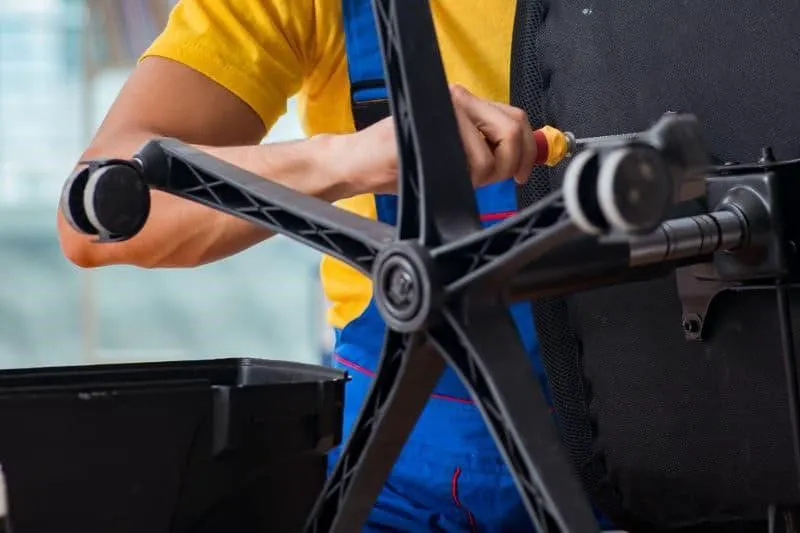
With diagnosis, cleaning, and tightening done, work the specific part that's still making noise.
Caster wheels
- Turn the chair upside down or lay it on its side.
- Pull each caster straight out of the base - they're press-fit and may need a firm tug.
- Blow out hair and carpet fibres with compressed air, then wipe the axle and metal stem.
- Apply a small amount of silicone spray to the axle and the stem.
- Push the casters firmly back into the base until they click.
Gas lift cylinder (the safe parts only)
The cylinder itself is sealed - leave it alone. The noise almost always comes from where it contacts other parts:
- Spray a small amount of silicone where the bottom of the cylinder fits into the five-star base hub.
- Raise the chair to its full height. Wipe the exposed metal column with a silicone-damp cloth - this is mostly cleaning, but it helps minor sounds.
- Apply a dab of white lithium grease where the top of the cylinder meets the tilt mechanism.
If the cylinder makes noise internally or no longer holds height, the whole cylinder gets replaced as a unit. Don't try to open it.
Tilt and recline mechanism
The most common source of persistent squeaks. It's a dense assembly of springs, pivots, and plates under the seat.
- Tip the chair on its side and identify every moving joint, pin, and visible spring.
- Thoroughly clean with compressed air.
- Tighten the bolts that fasten the mechanism to the seat bottom.
- Apply white lithium grease to the main metal pivot points.
- If the large tension spring is exposed, grease the ends where it contacts the housing.
- Work the tilt back and forth several times to spread the lubricant.
A Word on Wooden Chairs
If you're working on a wooden task chair or a wooden visitor chair that lives at a desk, the failure modes are different. Squeaks usually mean joints have loosened - dowels shrink with humidity changes, glue ages, hardware works free.
- Inspect every joint by pushing and pulling on legs and stretchers.
- For loose glued joints, work fresh wood glue into the seam and clamp for the time the glue specifies (usually 24 hours).
- For loose dowels in a leg, remove the leg and apply a wood-swelling compound to the dowel before reassembling.
- Replace hardware that's stripped or deteriorated rather than overtightening it.
Preventive Maintenance: Six-Month Check
A few minutes of care every six to twelve months prevents nearly every squeak from starting. Build it into a calendar reminder; it pays back in stable posture as much as in silence - a wobbly base or stiff recline pulls you out of the neutral position ergonomic chairs are designed for.
- Visual inspection - look for wear, cracks, or metal fatigue, especially on the base and mechanism.
- Fastener check - bolts at the seat, backrest, and armrests, tightened to snug-but-free.
- Caster cleaning - pull and clean each caster wheel and stem.
- Function test - height, tilt, swivel, armrests - anything stiff gets cleaned and lubricated.
- Final sit-test - ten minutes in the chair after maintenance, then re-check fasteners. Load reveals play.
Durability standards like ANSI/BIFMA X5.1 set the floor for how long a chair should last under normal use; routine maintenance is what gets you to that lifespan in practice.
When to Call It and Replace a Part
Some squeaks aren't a maintenance problem - they're a worn-component problem. Replace rather than repair when:
- The tilt mechanism is noisy after cleaning, tightening, and greasing - the internal bushings are likely worn.
- The gas cylinder makes noise internally, slowly sinks, or no longer reaches full height.
- Caster wheels are cracked or won't seat properly back into the base after cleaning.
- Bolts spin freely because the threads in the seat plate or armrest mount are stripped.
For a mid-range task chair, replacement casters and a replacement gas cylinder are usually under $40 combined and turn a chair you were ready to throw out into one that works for another five years.
The Short Version
Fix the squeak by sequence, not by guess: diagnose, clean, tighten, lubricate. Use silicone spray on plastic and the gas cylinder column, white lithium grease on metal pivots, and leave the sealed cylinder alone. Set a six-month reminder to check fasteners and casters, and you'll spend the next few years working in a quiet room.
Frequently Asked Questions
Will WD-40 fix a squeaky office chair?
Temporarily, yes - but it's the wrong long-term product. WD-40 is a water displacer and solvent, not a true lubricant. Its film evaporates and attracts dust, so the squeak usually returns within a week or two and the joint wears faster. Use it to clean and free a stuck part, wipe it off, then apply silicone spray (for plastics and the gas cylinder) or white lithium grease (for metal pivots).
What is the best lubricant for a squeaky office chair?
It depends on the joint. Silicone spray is best for plastic-on-plastic parts, caster wheels, and the gas-cylinder column. White lithium grease is best for metal-on-metal pivots in the tilt mechanism and for tension-spring contact points. Avoid generic 'multi-use' oils on weight-bearing joints - they don't hold up under load.
Can I lubricate the gas cylinder itself?
You can spray silicone on the exposed metal column and on the contact points at the top (where it meets the tilt mechanism) and bottom (where it seats into the five-star base). Never try to open, drill, or disassemble the sealed cylinder - it's pressurised and replacing the whole cylinder is the only safe fix if the internals fail.
Why does my chair squeak again a week after I fix it?
Almost always because lubricant was applied without cleaning first. Dust and old grime mix with the new lubricant to form an abrasive paste that wears the joint quickly and the squeak returns. Always blow out debris with compressed air and wipe joints with isopropyl alcohol before tightening and lubricating.
How often should I service my office chair?
A short check every six to twelve months prevents nearly every squeak from starting. Inspect bolts at the seat, backrest, and armrests; pull and clean each caster; test all adjustments for smooth movement; and re-tighten anything that's worked loose. Build it into a calendar reminder.