
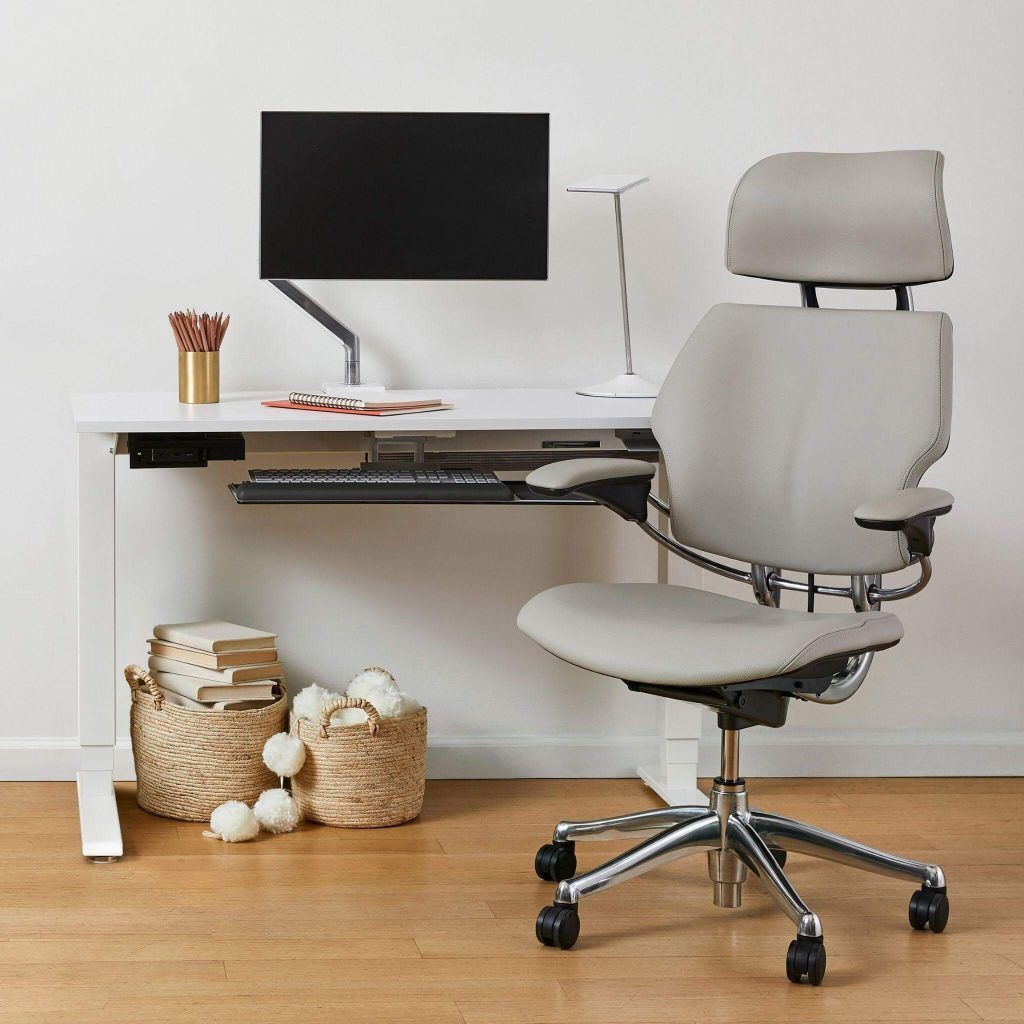
The leather-vs-cloth debate is really a question about how a material behaves under a body for eight hours a day. Both can be comfortable. Both can be ergonomic. But they fail differently — leather traps heat and moisture in warm rooms, fabric absorbs spills and odor in shared spaces — and which failure you can live with depends on your climate, your work patterns, and how much maintenance you are realistically willing to do.
This guide compares the two upholsteries on the dimensions that actually change day-to-day comfort: thermal regulation, durability, hygiene, ergonomic fit, and total cost of ownership. Where mesh is the better answer than either, we say so.
The short answer
- Pick fabric if your office runs warm or humid, you sit for long stretches, and you want a softer initial feel. It breathes better and tends to be cheaper.
- Pick leather if you want a low-maintenance wipe-clean surface, a formal aesthetic, and you keep the room climate-controlled. It lasts longer with care.
- Consider mesh if breathability is the dominant concern. As Eureka Ergonomic notes, high-tension mesh can offer multiples of the airflow of solid materials and is often the better choice for warm rooms or long sessions.
How chair upholstery affects your body
About 40% of your body's surface area is in contact with the chair when you are seated, which means the upholstery directly governs the "microclimate" between your skin and the seat. When that microclimate gets warm and damp, you shift to find relief — and those small shifts away from spinal-neutral are a documented contributor to musculoskeletal disorders (NIOSH).
In other words, the right upholstery is not the one that feels best in the showroom. It is the one that lets you forget the chair is there during hour six.
Leather chairs
What it does well
Leather is dense, wipe-clean, and ages gracefully when conditioned. Full-grain and Napa leather develop a patina rather than peeling, and the firm initial surface tends to soften and conform to body shape over months of use. For executives, client-facing offices, and boardrooms, leather's visual weight is part of the job.
It is also genuinely hypoallergenic: it does not trap dust, pet dander, or pollen the way fibers do, which matters for allergy-prone users and shared meeting rooms.
Where it fails
The microclimate is the recurring complaint. Genuine leather has some breathability but cannot match mesh for airflow, and in poorly ventilated rooms it can feel sticky after an hour of focused work. Bonded and lower-grade synthetic leathers are worse — they tend to crack and peel under the constant flexion of a swiveling, tilting office chair.
Leather also rewards specific maintenance: condition the material every 6–12 months, especially in dry, air-conditioned rooms, and keep it out of direct sunlight to prevent fading. Sharp edges on technical fabrics, denim rivets, and zippers can score the finish over time.
Cloth (fabric) chairs
What it does well
Fabric breathes. Polyester, wool blends, and woven textiles let warm air leave the contact area instead of pooling against your back, which is why most all-day ergonomic chairs in warmer climates default to fabric or mesh rather than leather.
Cloth is also the cheaper material at every quality tier and comes in a far wider range of colors, weaves, and textures than leather. If your office's look changes more often than its chairs, fabric is the safer bet — you can recover or replace pieces without spending leather money.
Where it fails
Fabric absorbs everything: spills, oils from skin and hair, fragrances, and — in humid environments — moisture from sweat. In rooms above ~60% relative humidity, that moisture retention can meaningfully increase skin-to-fabric friction and create conditions where microbes can multiply if cleaning lags.
Stains set quickly without prompt blotting. UV exposure fades color faster than it fades leather. And while high-end weaves resist pilling and tearing, lower-grade fabrics tend to wear visibly at the front edge of the seat within a couple of years of heavy use.
Side-by-side comparison
Breathability. Fabric > leather. Mesh outperforms both. If your room runs above 24°C (75°F) for much of the day, prioritize breathability.
Durability. Well-maintained genuine leather typically lasts longer than mid-grade fabric. Bonded/PU leather is usually the shortest-lived of all three because the surface flexes and cracks at stress points.
Maintenance. Leather: occasional wipe-down, condition twice a year. Fabric: regular vacuuming, prompt spot-cleaning, periodic deep-clean. Mesh: low — vacuum the panel, that is most of it.
Hygiene. Leather wipes clean and does not hold allergens. Fabric traps dust and dander, which matters for shared offices and allergy-sensitive users.
Cost. Genuine leather has the highest entry price and the highest long-term value if maintained. Fabric is cheaper up front and across most quality tiers. Faux leather sits in the middle on price but often the bottom on longevity.
Aesthetic. Leather reads formal and executive. Fabric reads softer and more residential. There are exceptions in both directions, but the default visual signal is consistent.
How to choose: a practical framework
- Climate test. If your room exceeds 24°C / 75°F for a meaningful portion of the workday, lean toward fabric — or, better, high-tension mesh.
- Session length. For sessions exceeding four hours at a stretch, breathability becomes the dominant comfort variable. Leather rarely wins this test.
- Maintenance honesty. Will you actually condition the leather twice a year? If not, choose a chair whose material survives benign neglect: durable fabric or mesh.
- Shared use. Multi-user rooms — clinics, conference rooms, shift work — favor leather for the wipe-clean hygiene story.
- Standards check. Whichever material you choose, verify the chair meets ANSI/BIFMA X5.1 for safety and durability so the structure underneath the upholstery is built for daily use.
Care guide
Leather. Dust weekly. Wipe spills immediately with a slightly damp microfiber cloth. Condition every 6–12 months with a leather-specific conditioner; avoid all-purpose household cleaners. Keep out of direct sun.
Fabric. Vacuum weekly with an upholstery attachment. Blot — never rub — spills with a pH-neutral cleaner. Steam-clean or deep-clean every few months. A fabric protector treatment extends the life of light-colored upholstery noticeably.
For wood or composite frame components, consider chairs whose materials carry low-emission certifications such as UL GREENGUARD Gold — the upholstery and its adhesives are part of indoor air quality, not just the seat under you.
Leather pros
- Wipe-clean surface; hypoallergenic — does not trap dust or pet dander.
- Formal, executive look that ages with a patina when conditioned.
- Long lifespan if it is full-grain or Napa and gets regular conditioning.
- Hygienic for shared rooms — a damp cloth handles most messes.
Leather cons
- Traps heat and feels sticky in warm or poorly ventilated rooms.
- Bonded / PU variants crack and peel under repeated tilt and swivel.
- Needs conditioning every 6–12 months and protection from direct sun.
- Higher upfront cost than most comparable fabric chairs.
Cloth pros
- Breathes better than leather — friendlier for long sessions in warm rooms.
- Softer initial feel and a wider range of colors, weaves, and textures.
- Cheaper at almost every quality tier; easier to refresh styling.
- Quality woven fabrics resist pilling and hold up across years of use.
Cloth cons
- Absorbs spills, oils, and odors; stains set quickly without prompt cleaning.
- Holds allergens — not ideal for sensitive users or pet households.
- Moisture retention above ~60% humidity increases skin-to-fabric friction.
- Lower-grade weaves wear visibly at the seat front within a few years.
Leather vs cloth office chair: common questions
Is leather or cloth better for long hours of sitting?
For sessions over four hours in a room above ~24°C / 75°F, cloth tends to be more comfortable than leather because it breathes and does not trap heat against your back. In climate-controlled rooms, the gap narrows and personal preference takes over. If breathability is the dominant concern, high-tension mesh outperforms both.
Does faux leather (PU or bonded) hold up like real leather?
Usually not. The constant flexion of a tilting, swiveling office chair causes bonded and lower-grade PU leathers to crack and peel at stress points within a few years. Full-grain or Napa leather avoids this because the surface is a continuous hide, not a coating bonded to a backing.
How often does a leather office chair need conditioning?
Every 6 to 12 months in most environments, more often in dry or heavily air-conditioned rooms. Use a leather-specific conditioner — household all-purpose cleaners can strip the finish.
Is cloth harder to keep clean than leather?
Yes for spills and odors — leather wipes clean while fabric absorbs. For routine dust and dander, fabric needs regular vacuuming whereas leather just needs a wipe. The honest question is which kind of maintenance you will actually do.
When is mesh a better choice than either?
When breathability is critical — warm rooms, long sessions, users who run hot. Mesh suspends weight across a flexible panel that lets air pass through, which neither leather nor most cloth seats can match.