
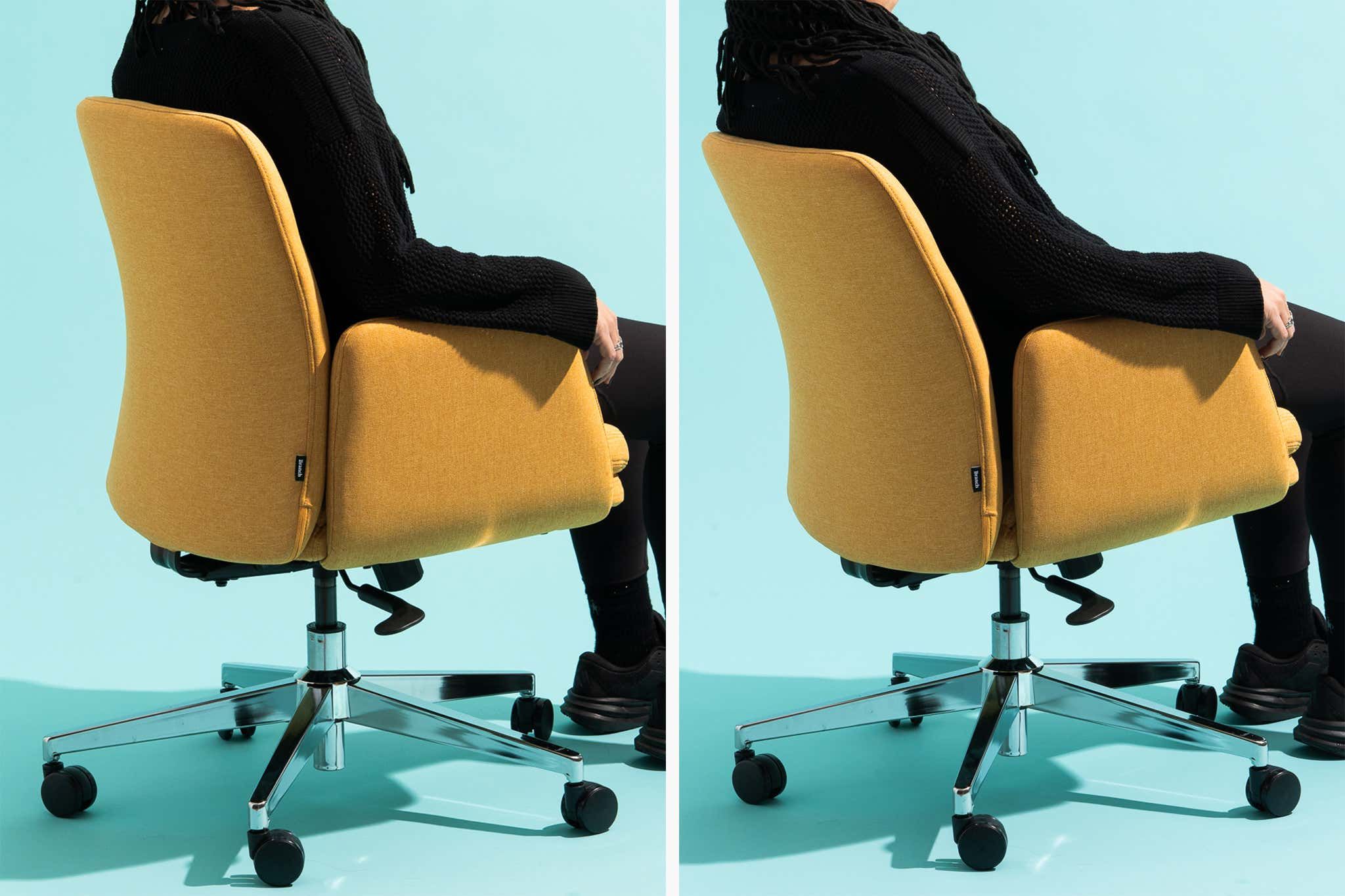
Fabric or leather is the upholstery decision most office-chair shoppers run into after they've settled the ergonomics. Both materials sit on chairs that can be perfectly adjustable; the trade-off is about how the seat feels under you for eight hours, how it ages, and how it reads in the room. This guide compares fabric and leather across the six factors that actually matter — comfort, durability, maintenance, breathability, cost, and aesthetics — and tells you which to pick for your workspace.
Disclosure: Ergoprise may earn affiliate commission on retailer links in this article. Our editorial picks are independent of those relationships.
Quick verdict
Pick fabric if you sit for long, unbroken stretches, work in a warm room, or want a softer-looking workspace. Pick leather if you take a lot of video calls, want low-effort cleaning, or have allergies aggravated by dust and dander. Fabric chairs tend to last 5–8 years in everyday use; well-cared-for leather chairs run 8–12+ years, according to Eureka Ergonomic's material breakdown.
Comfort and feel
Fabric: Modern performance weaves feel soft on contact and breathe with you. There's no sticky-skin moment in summer and no cold-shock in winter — fabric stays close to ambient temperature. For long focus blocks, that thermal neutrality is the single biggest comfort factor.
Leather: Leather starts firm and breaks in. Over months it softens and conforms to your body, producing the indulgent "my chair" feel executives talk about. The downside is temperature: leather absorbs and holds heat, so it can feel cold on a winter morning and humid in a sun-warmed room. Both fabric and leather can be paired with the same ergonomic mechanisms — material choice does not change adjustability.
Breathability
This is the lopsided category. Fabric — especially knit-back and woven performance fabrics — moves air. Leather is a solid surface; it can't. If your office runs hot, if you sit through gym clothes drying out, or if you live somewhere humid, fabric is the clear win. For air-conditioned rooms with consistent 68–72°F (20–22°C) climate control, the gap narrows enough that other factors take over.
Durability
Leather wins on lifespan and loses on damage tolerance. A quality leather chair will outlast a fabric chair, often by 3–5 years in continuous-use offices. But leather is vulnerable to point damage: a stray key, a pet claw, or a sharp belt buckle can leave a permanent mark. Fabric is more forgiving of abrasion and small accidents — it pills, fades, or thins gradually rather than gouging — but it accumulates wear faster overall.
Faux leather sits in the middle on price but underperforms both on durability. PU and bonded-leather surfaces tend to crack and peel after 2–3 years of daily use; if leather is what you want, real leather is the better long-run buy.
Maintenance and cleaning
Leather: Spills wipe off with a damp cloth. Quarterly conditioning keeps it supple and prevents cracking — budget roughly $50–$100/year in conditioner if you want it to age well, per Eureka Ergonomic's maintenance modeling. No vacuuming, no odors held in the surface.
Fabric: Vacuum regularly. Spot-clean spills before they set; many performance fabrics now ship with stain-resistant finishes that buy you a forgiving window. Plan on a deeper clean (steam or upholstery shampoo) every 6–12 months in heavy-use offices.
Allergies and hygiene
Leather is effectively hypoallergenic — it doesn't trap dust mites, pet dander, or pollen. For users with respiratory allergies, this is the strongest argument for leather. Fabric, especially deeper weaves, captures particulates and needs routine vacuuming to stay clean. Pet-friendly homes lean fabric for scratch resistance and leather for fur control — it's a real trade-off, not a clear winner.
Cost
Fabric chairs cover a much wider price range. Entry-level task chairs in fabric start under $200; premium ergonomic models (Herman Miller Aeron, Steelcase Leap) push past $1,200 with fabric upholstery. Leather chairs cluster higher: most credible options start near $400 and executive models run $800–$3,000+. Faux leather can hit fabric-level pricing, but with the durability caveat above.
Cost-per-year math usually favors leather for executive-bracket buyers who care about appearance and fabric for everyone else. Specific prices change frequently — check the manufacturer for current MSRP.
Style and design
Leather projects authority. It's the default for boardrooms, law-firm corner offices, and on-camera setups where the chair shows up in the video frame. Color options are narrow — black, brown, oxblood, tan — but the look is timeless. Fabric is the inverse: nearly unlimited colors, patterns, and textures, which suits creative workspaces and home offices that want to feel like rooms instead of cubicles. Interior designers often use a "60/40 texture rule" — your dominant surface (desk, floor) is 60% of the visual, and a contrasting upholstery makes up the 40%; fabric is usually the contrast piece in modern setups.
Sustainability
Both materials have credible sustainable options and credible greenwash. On the leather side, look for tanneries certified by the Leather Working Group (gold-rated facilities track water, energy, and chemical use). On the fabric side, look for GRS-certified recycled polyester or natural fibers like wool and hemp; many performance fabrics now use 30–100% post-consumer recycled content. Avoid PVC-based faux leather, which is the worst option environmentally on both production and end-of-life.
How to choose — a 30-second framework
- Sit longer than 6 hours/day? Fabric.
- Live somewhere hot or humid, or work without strong AC? Fabric.
- On video calls multiple times per week? Leather.
- Allergic to dust mites or pet dander? Leather.
- Have a clumsy household — kids, pets, coffee? Fabric (forgiving of abrasion) or wipe-clean leather (forgiving of spills). Pick the failure mode you can live with.
- Tight budget? Fabric. Real leather rarely makes sense under $400.
Bottom line
Most people are better off in a good fabric chair. It's more comfortable for long sits, more forgiving in different climates, and stretches a budget further. Leather is the right answer when appearance matters — on camera, in client-facing offices — or when allergies make fabric impractical. Both materials can sit on the same ergonomic chassis, so the upholstery choice doesn't have to compromise your back.
Fabric pros
- Breathable — no sweat or stick in warm rooms.
- Soft initial feel, no break-in period.
- Widest color and texture range; easy to match decor.
- Generally lower entry price.
- Absorbs sound, softens hard-surface rooms.
Fabric cons
- Traps dust, dander, and allergens.
- Stains absorb fast; spot-clean immediately.
- Shorter average lifespan (5–8 years).
- Fades in direct sunlight.
Leather pros
- Wipes clean in seconds; spills don't soak in.
- Hypoallergenic — no dust mite or dander harbor.
- Longer lifespan (8–12+ years with care).
- Executive presence on camera and in meetings.
- Develops a personal patina over time.
Leather cons
- Hot and sticky in warm or humid rooms.
- Vulnerable to scratches, punctures, and pet claws.
- Higher upfront cost; faux leather degrades fast.
- Limited color palette.
- Needs periodic conditioning to avoid cracking.
Frequently asked questions
Is faux leather worth it compared to real leather or fabric?
Faux leather (PU or bonded leather) looks like leather at fabric-level prices, but it typically cracks and peels within 2–3 years of daily use. If you want the leather look long-term, save up for real leather. If budget is the constraint, fabric outlasts faux leather almost every time and is more comfortable in the bargain.
Which material is better for video calls?
Leather. Solid surfaces read better on camera than textured fabrics, and a high-back leather chair frames you with executive presence. If you prefer fabric, pick a darker, smooth weave — heavily textured upholstery can look noisy on webcam.
Do mesh chairs count as fabric?
Mesh is a third category. It out-breathes fabric and leather both, but offers less padding and a firmer feel. If breathability is the main reason you'd pick fabric, mesh may be the better answer — it's the standard for premium ergonomic chairs like the Herman Miller Aeron and Steelcase Leap V2.
How do I clean a fabric office chair?
Vacuum weekly with an upholstery attachment. For spills, blot (don't rub) immediately with a clean cloth and a drop of mild detergent in cool water. For set stains, an upholstery shampoo or steam cleaner works on most performance fabrics — test in an inconspicuous spot first. Deep-clean every 6–12 months.
How do I clean a leather office chair?
Wipe down weekly with a dry microfiber cloth to remove dust. For spills, blot immediately with a slightly damp cloth — no soap. Every 3–4 months, apply a leather conditioner (not furniture polish) to keep the surface supple and prevent cracking. Keep leather chairs out of direct sunlight.
Does the material affect ergonomics?
No. The chair's mechanism — lumbar support, seat depth, tilt tension, armrest adjustability — drives ergonomics. Both fabric and leather can sit on excellent or poor ergonomic chassis. Choose the mechanism first, then pick the upholstery you'll enjoy sitting on for years.