
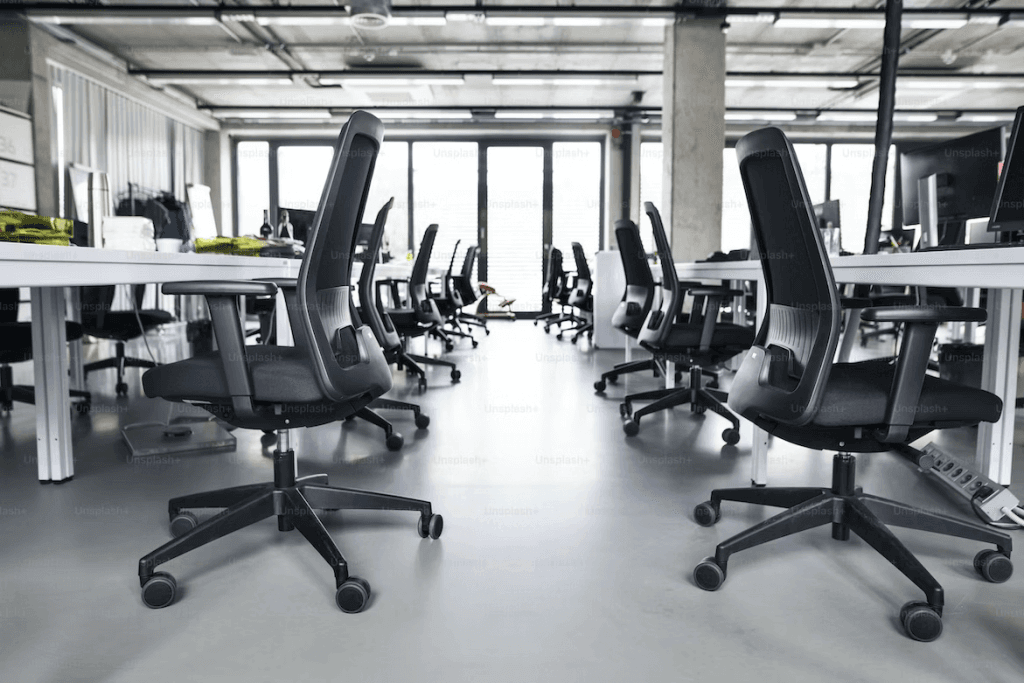
All ergonomic chairs are office chairs, but not all office chairs are ergonomic. The label "office chair" describes where the chair lives; "ergonomic chair" describes how it was engineered to support a body that sits for hours.
If you are reading this, you have probably noticed that the cheapest desk chair at the big-box store and the four-figure Aeron in a software office are sold under the same broad category. The difference is not branding. It is how many points of the chair adjust to fit you, how the lumbar curve is supported, and how the chair behaves on hour six of a workday.
This guide walks through the differences that actually matter for posture, productivity, and long-term cost - and where a plain office chair is genuinely fine.
The short version
A standard office chair is built for short, intermittent sitting. It usually has a fixed backrest, a fixed or absent armrest, basic seat-height adjustment, and a one-size cushion. It is comfortable for an hour. It is not engineered to keep you comfortable for eight.
An ergonomic chair is built around adjustability and lumbar support. The lumbar curve, seat depth, armrest height and angle, backrest tilt, tilt tension, and sometimes headrest all move independently so the chair can fit a 5'2" user and a 6'4" user without modification. The Google AI Overview for this query lists adjustable lumbar, seat depth, 3D/4D armrests, and breathable mesh as the defining features - and that lines up with what every editorial source in the top-10 SERP says.
How they actually differ
| Product | Best for | Firmness |
|---|---|---|
| 1Ergonomic chairErgonomic chair | Full-day desk work | 50 |
| 2Standard office chairOffice chair | Short, intermittent sitting | 50 |
Adjustability. A regular office chair typically gives you one or two adjustments - most often pneumatic seat height and sometimes tilt tension. An ergonomic chair stacks five to nine independent adjustments: seat height, seat depth (slide), backrest height, backrest angle, lumbar position and depth, armrest height, armrest width, armrest pivot, and sometimes a separately-tuned headrest. Each one exists because a different body proportion needs it.
Lumbar support. This is the single biggest functional difference. The lower spine has a forward curve, and unsupported sitting flattens it within 20 to 30 minutes. A flat office-chair backrest does nothing to preserve that curve. An ergonomic chair either builds the curve into the backrest geometry or adds a height- and depth-adjustable lumbar pad. Most editorial sources covering this question agree this is the line that separates "office chair" from "ergonomic chair."
Materials and breathability. Budget office chairs use foam with a fabric or bonded-leather wrap. After a few hours the foam compresses and traps heat. Ergonomic chairs at any price tier tend to use either denser high-resilience foam or suspension mesh, which spreads load and breathes. Mesh is not a gimmick - it changes how the seat pan feels at hour four.
Build and durability. The honest version of the price gap: a $120 office chair is engineered for a few hundred hours of use. A reputable ergonomic chair (Herman Miller, Steelcase, Humanscale, Branch, FlexiSpot at the higher end of their range) is engineered for 8 to 12 years of daily use, with replaceable parts and a multi-year warranty. The Herman Miller Aeron, for example, carries a 12-year warranty - that is part of what you are paying for, not just the curve of the back.
Price. Standard office chairs realistically span $80 to $300. Ergonomic chairs realistically start around $400 and run past $1,800 for premium models. Older guides - including the previous version of this article - quote ergonomic-chair starting points as low as $100; that was never quite right and is now well off-consensus. If you see a $150 chair marketed as "ergonomic," check whether the backrest, armrests, and lumbar actually adjust. Often the label is decorative.
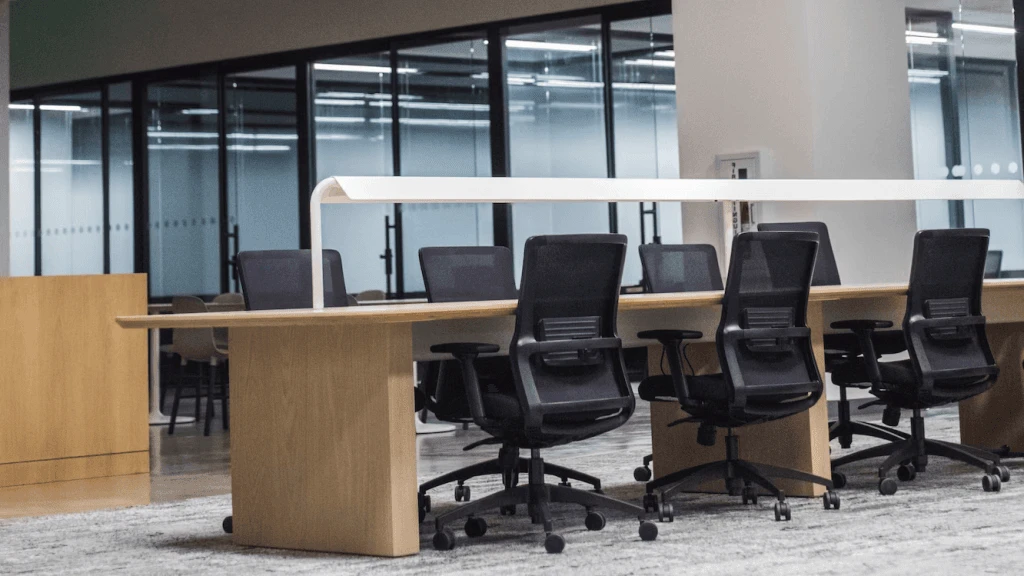
When a plain office chair is genuinely fine
There is a tendency in this space to treat any non-ergonomic chair as a back-injury waiting to happen. That overstates the case. A standard office chair is appropriate when:
- Total daily sitting is under four hours, and broken up with movement.
- The chair lives in a conference room, reception area, or guest desk.
- The user rotates through several workstations and never spends a full day in one.
- Budget is the binding constraint right now, and the alternative is sitting on a kitchen chair.
The risk profile changes when sitting becomes continuous. Long, uninterrupted sitting is associated in the published research with lower-back pain, posture fatigue, and (over years) musculoskeletal complaints - and an unadjusted chair magnifies all of that. If you are at a desk for six to ten hours a day, the chair stops being furniture and starts being equipment.
When to spend on an ergonomic chair
The case for spending is straightforward when one or more of these apply:
- You sit at a desk for six or more hours a day, five days a week.
- You already feel discomfort - lower back, neck, hips, or shoulders - by mid-afternoon.
- You are noticeably above or below average height, or carry weight differently across the seat. Standard office chairs are sized for a single average build; ergonomic chairs adjust around that.
- The chair has to support more than one user (a shared workstation, a partner who works from the same desk).
- You expect the chair to last the better part of a decade rather than be replaced every few years.
A reasonable mental model: a $1,200 ergonomic chair amortized over 10 years is $10 a month. A $200 office chair replaced every 2 to 3 years comes out near the same monthly cost - without the lumbar support or warranty.
How to tell if a chair is actually ergonomic
"Ergonomic" is not a regulated term. The label gets stuck on chairs that are not. Use this checklist when evaluating a chair in person or from a spec sheet:
- Does the lumbar support adjust in height and depth, or at minimum follow the spine when you recline?
- Does the seat slide forward and back so the front edge doesn't press into the back of your knees?
- Do the armrests adjust in height - and ideally width and pivot - so your shoulders stay down?
- Does the backrest recline independently of the seat, with tilt tension you can tune to your weight?
- Is there a multi-year warranty (typically 7 to 12 years) on moving parts?
If the answer to most of those is no, the chair is an office chair with a marketing decal. That is not a problem - it just means you should price it like a regular office chair.
How to choose between them, in order
- Audit your actual sitting time. Track it honestly for a week. Under four hours a day is a different decision than eight.
- Decide whether anyone else will use the chair. A shared chair needs to adjust; a single-user chair only needs to fit one body.
- Set a real budget. Sub-$300, you are choosing between office chairs and the lowest tier of "ergonomic-style" chairs (real ergonomic models start higher). $400 to $900 is mid-tier ergonomic. $900-plus is premium.
- Test the lumbar, then everything else. A chair that loses its lumbar curve when you lean back is the wrong chair, regardless of price.
- Check the warranty. It is the cleanest signal of how long the manufacturer expects the chair to hold up.
Bottom line
The chair is not the productivity hack. Posture, movement, and a workstation that fits you are. But the chair is the surface those things sit on for most of the workday - literally - and a chair that cannot adjust to you is forcing you to adjust to it. For light or occasional sitting, a standard office chair is fine. For full workdays, the math points to an ergonomic chair every time, and the longer you sit each day, the more decisive the math becomes.

Common questions
Are ergonomic chairs really worth the extra money?
If you sit at a desk for six or more hours a day, yes. The combination of adjustable lumbar support, seat depth, and armrest geometry reduces lower-back load over a workday, and reputable ergonomic chairs are engineered for 8 to 12 years of daily use. Amortized over that lifespan, a $1,000 ergonomic chair often costs less per month than replacing $200 office chairs every couple of years.
What is the price difference between an office chair and an ergonomic chair?
Standard office chairs typically run $80 to $300. Genuine ergonomic chairs typically start around $400 and reach $1,800 or more at the premium end (Herman Miller Aeron, Steelcase Leap, Humanscale Freedom). Anything labeled 'ergonomic' under about $300 usually lacks the adjustable lumbar, seat slide, and multi-axis armrests that define the category.
Can a regular office chair cause back pain?
It can contribute to it, especially for long, continuous sitting. Office chairs typically have fixed backrests with no real lumbar support, so the natural curve of the lower spine flattens out within 20 to 30 minutes of sitting. Over weeks of full workdays, that pattern is associated with lower-back fatigue and discomfort. Short sessions or chairs used intermittently are much lower risk.
How do I tell if a chair is genuinely ergonomic?
Check whether the lumbar adjusts in height and depth, whether the seat slides forward and back, whether the armrests adjust in height (and ideally width and pivot), whether the backrest reclines independently of the seat with tunable tension, and whether the warranty runs at least 7 years. If most of those answers are no, the chair is an office chair with an ergonomic label.
Which ergonomic chairs are most commonly recommended?
Across editorial reviews in 2026 the recurring picks are the Herman Miller Aeron and Embody, the Steelcase Leap and Gesture, the Humanscale Freedom, the Branch Ergonomic Chair (mid-tier value), and the FlexiSpot C7 (budget end of the real-ergonomic range). The right one depends on your height, weight, and the specific issues you are trying to solve.