
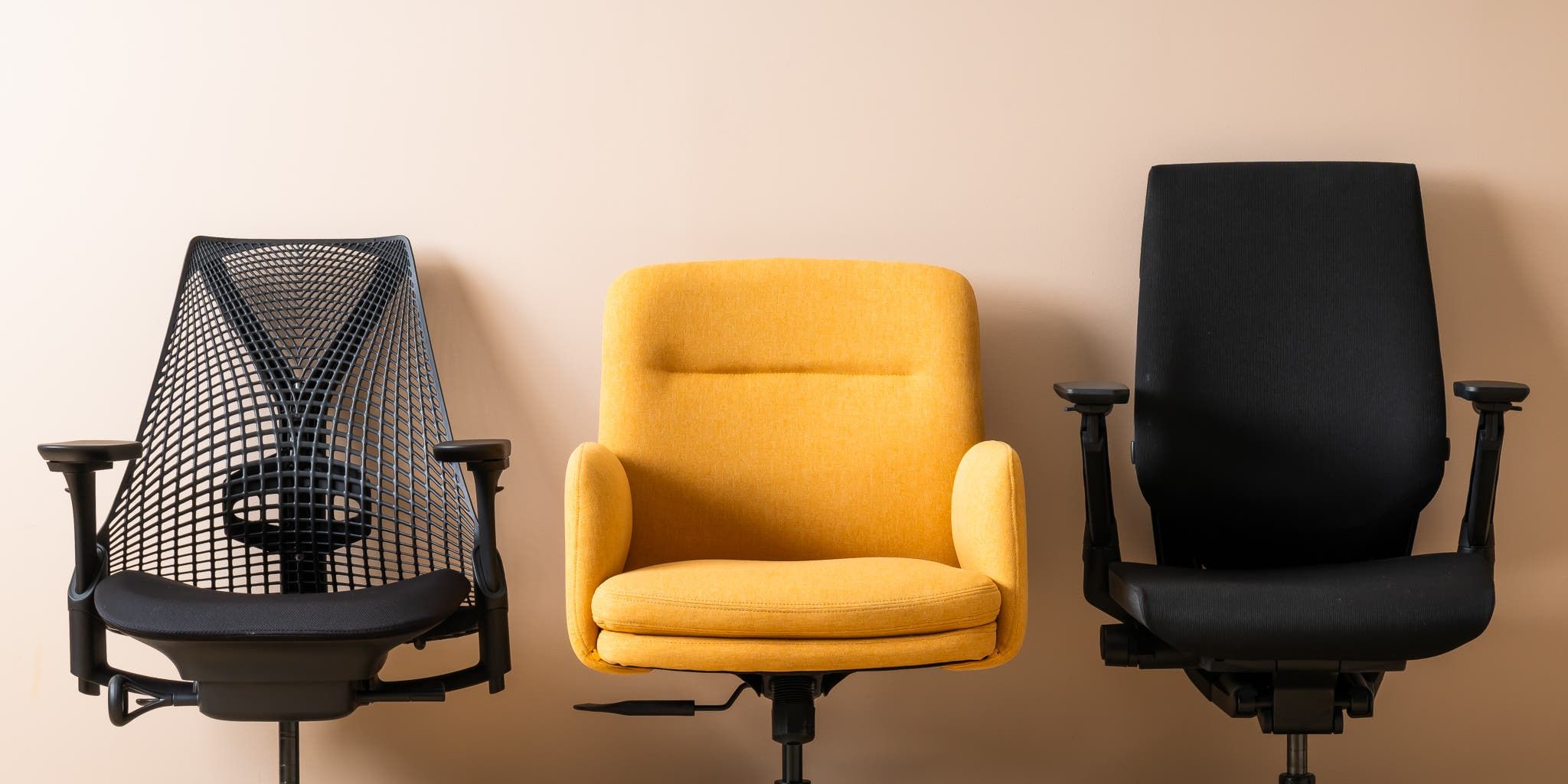
Office chairs sit under us for forty hours a week and we rarely think about how they hold us up. Most modern task chairs raise and lower on a pneumatic gas-lift cylinder - a steel tube of compressed nitrogen - and the question gets asked every few years on Reddit and YouTube: can that cylinder explode?
The short answer is yes, but rarely, and almost never with a quality chair. The longer answer is worth knowing, because the warning signs of a failing gas cylinder are easy to spot before anything dangerous happens.
Has an office chair ever actually exploded?
Documented cases exist, but they are vanishingly rare relative to the hundreds of millions of pneumatic chairs in service. The incidents that get cited in news coverage almost always involve cheap, uncertified chairs assembled with substandard cylinders - not chairs from established ergonomic brands.
The most-quoted story is the 2009 death of a 14-year-old boy in China, attributed to a gas cylinder failing under his chair. Reporting on the original incident is thin, and several ergonomic-industry analyses suggest the original story may have been embellished - but counterfeit-cylinder failures have been verifiably documented in regional markets where chair-component regulation is weak.
In other words: the risk is real but small, and it scales sharply with chair quality.
How an office chair gas cylinder actually works
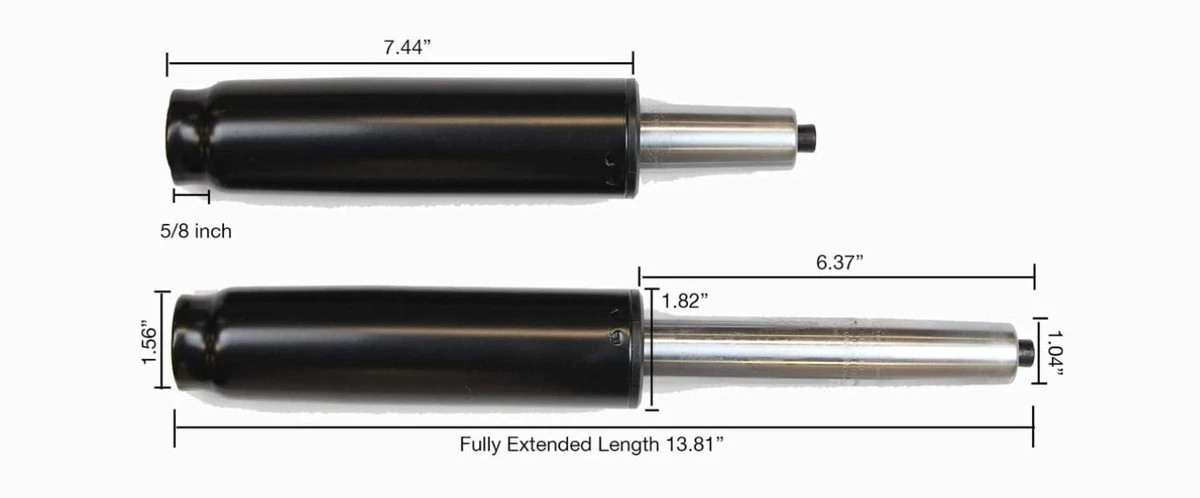
The cylinder inside your chair's base is a sealed steel tube filled with pressurized nitrogen. Pressing the height-adjust lever opens an internal valve; nitrogen moves between two chambers and you go up or down. Nitrogen is an inert gas - it doesn't react with anything, doesn't combust, and doesn't behave unpredictably under normal temperature shifts.
This is the critical detail. A properly built cylinder is no more "explosive" than a sealed soda bottle. The failure mode reported in incident cases is mechanical rupture of the cylinder housing - not chemical combustion - and it happens when either the steel casing is too thin or the gas inside is not actually inert nitrogen.
What causes an office chair to fail dangerously
Four conditions stack on top of each other. Any one alone is usually survivable; combinations are where the rare incidents happen.
Counterfeit or substandard cylinders
The single biggest factor in every documented failure. Reputable manufacturers fill cylinders with food-grade nitrogen at a controlled pressure, inside thick-walled cold-rolled steel. Counterfeit cylinders sometimes substitute plain compressed air (which contains oxygen and water vapor) or use thinner tubing that can't take a full service life of pressure cycles. Buying from brands that meet BIFMA X5.1 standards - Herman Miller, Steelcase, Haworth, Humanscale, Branch, Autonomous, HON, and most established office brands - eliminates this category of risk.
Exceeding the rated weight capacity
Every chair has a weight rating, usually 250-300 lb on standard task chairs and 350-500 lb on big-and-tall models. Sustained use above the rating fatigues the cylinder seals and the metal-on-metal contact surfaces. The failure here is almost always a slow sink (the chair won't hold its height) rather than a sudden rupture, but it's the warning sign that matters.
Heat exposure
Cylinders are rated for normal office temperatures. Storing a chair next to a radiator, in a sealed car trunk in summer, or in direct sunlight for hours can raise internal pressure enough to stress the seals. This is almost never an in-use problem; it shows up after someone moves a chair through a hot warehouse.
Physical damage and aging
Dropped chairs, dragged-by-the-armrests chairs, and chairs whose cylinder housing is visibly dented or scored should be retired. Gas cylinders also have a service life of roughly 7-10 years under daily use, after which seal degradation is normal.
Warning signs your gas cylinder is failing
You will almost always get advance notice before a gas cylinder fails outright. Watch for any of the following:
- The chair sinks on its own. You set it at the right height, sit down, and twenty minutes later you're at the lowest setting. The seal between the cylinder's chambers is leaking.
- Height adjustment becomes inconsistent. The lever feels mushy, requires more travel than it used to, or only sometimes works.
- Visible damage on the cylinder column. Look under the seat at the metal tube between the seat and the base. Rust, deep scratches, dents, or oily residue dripping from the bottom are all reasons to stop using the chair.
- Hissing or whistling. Any audible sound from the cylinder during height adjustment beyond a quiet pneumatic release.
- The chair tilts unevenly. Often the first sign of a cracked base rather than a cylinder problem, but worth catching for the same safety reason.
If any of these appear, replace the cylinder before continuing to sit in the chair. Replacement cylinders are inexpensive (typically $20-50) and the swap takes 15 minutes with a rubber mallet - most chair brands publish a how-to.
How to keep this from ever being your problem
The prevention list is short and most of it is what you would do anyway:
- Buy from a reputable brand. This is 90% of the risk reduction. BIFMA-certified chairs from established manufacturers are extensively tested.
- Respect the weight rating. If you are near or above the rating, buy the big-and-tall version of the same chair rather than the standard one. Most lines have one.
- Don't store the chair near heat sources. Radiators, space heaters, sunny windows.
- Replace the cylinder at the first warning sign. Don't keep working in a chair that sinks - even if it never ruptures, a slow drop while you're typing is a way to twist a back.
- Retire chairs at the 10-year mark. Or sooner if you sit in them daily and they no longer feel right.
Should you actually worry?
Realistically, no. If your chair comes from a brand you've heard of, hasn't been damaged, fits your weight class, and lives in a temperature-controlled room, the chance of it failing dangerously is somewhere between negligible and the chance of being struck by lightning. The far more common chair-related injury is the slow back pain that comes from sitting in a worn-out chair you should have replaced two years ago - which is its own argument for a quality chair with serviceable parts.
If you bought a $40 unbranded chair off a marketplace and the cylinder is the only thing holding you up, that is a different calculation. Replace the cylinder with a known-good part, or replace the chair.
Frequently asked questions
Can an office chair really explode?
Yes, but it is extremely rare and almost always tied to counterfeit or uncertified gas cylinders. A BIFMA-certified chair from a reputable manufacturer is filled with inert nitrogen in thick-walled steel and is not realistically at risk of rupture under normal use.
How do I know if my chair is at risk?
Watch for the chair sinking on its own, inconsistent height adjustment, visible damage or rust on the cylinder column, oily residue under the chair, or hissing sounds during adjustment. Any of these means replace the cylinder before continuing to use the chair.
Are gas cylinders filled with explosive gas?
No. Properly built cylinders are filled with inert nitrogen, which does not combust. The failure mode reported in rare incident cases is mechanical rupture of a thin or counterfeit cylinder housing - not chemical explosion.
How long does an office chair gas cylinder last?
Roughly 7 to 10 years under daily use. Seal degradation is normal after that point, and the cylinder should be replaced even if the rest of the chair is still in good shape.
Can a gaming chair explode?
The same physics applies. Gaming chairs use the same pneumatic gas-lift cylinders as office chairs, and the risk profile is identical - buy from a reputable brand, respect the weight rating, and replace the cylinder at the first warning sign.