
Yes - you can use a rolling office chair on carpet, but the stock plastic casters on most chairs will compress fibers, leave track marks, and grind debris into the pile within a few months of daily use. The fix is straightforward: swap the casters for rollerblade-style polyurethane wheels, lay a carpet-rated chair mat, or do both. Below is how an OT actually chooses between them, plus what to do if the damage is already done.
Why office chair wheels damage carpet
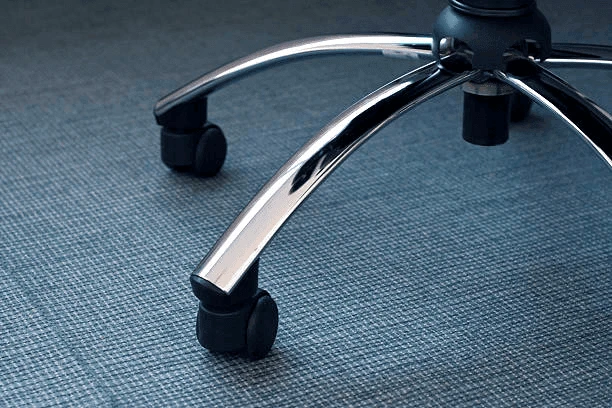
Standard office casters are small, hard plastic discs roughly 50 mm in diameter. Concentrating the load of a chair plus an adult (often 200-300 lb combined) onto two or three of those tiny contact patches creates very high local pressure. Three things happen over time:
- Fiber compression. Plush and high-pile carpets crush under the wheel and don't fully bounce back, leaving visible tracks where the chair rolls most.
- Abrasion. Hard plastic edges saw against fiber tips on every micro-movement, fraying them and dulling color.
- Embedded debris. Crumbs, grit, and pet hair lodge in the caster axle and act as a grinding compound, accelerating wear in the high-traffic zone under your desk.
Low-pile commercial carpet handles the punishment better than residential plush, but no carpet is immune.
The three real fixes (ranked by cost and effectiveness)
1. Replace the casters with rollerblade-style wheels (best value)
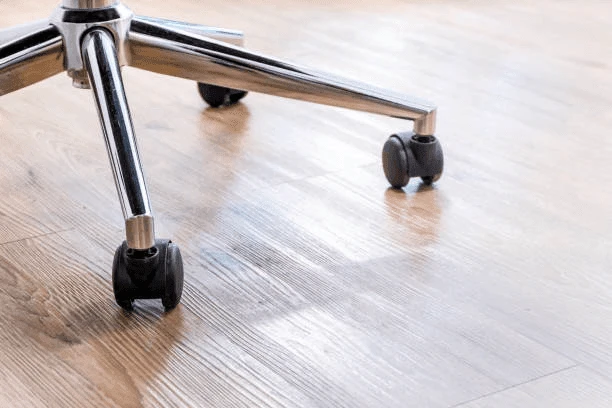
Rollerblade casters are 2.5-3 inch polyurethane wheels with a wider contact patch and softer material than stock plastic. They distribute load across more fiber, glide smoothly on low and medium pile, and almost never leave tracks. A set of five runs $25-$45 on Amazon and installs without tools - pull the old wheels out by hand, push the new ones into the same 11 mm stem socket. This is the single biggest upgrade you can make, and it improves hardwood floors at the same time.
2. Add a chair mat rated for carpet
A mat is the right call if you rent, can't replace the casters, or have plush carpet thicker than 3/4 inch. Three materials dominate the category:
- Polycarbonate. Rigid, optically clear, won't crack under chair weight. The best all-around pick for plush carpet.
- PVC (vinyl). Cheaper and more flexible, but curls at the edges and yellows in 12-24 months. Fine for low-pile, light use.
- Tempered glass. Premium, perfectly flat, lifetime-durable. Heavy and pricey ($150+) but worth it if the office is on display.
Whichever material you pick, the mat must be labeled for carpet and have small cleats on the underside - a hardwood mat will slide. Size it so the chair never rolls off the edge in any direction; rolling on and off is what causes wheel-catching and the trip hazard most people complain about.
3. Use a stationary chair or stand more often
If carpet preservation matters more than mobility, a fixed-leg task chair with felt glides eliminates wheel damage entirely. A sit-stand desk reduces seated time, which proportionally reduces carpet wear. Both are real options, but for most people the rollerblade-caster swap is the easier first step.
Chair mat
- No chair modification - works with any chair
- Also catches spills and crumbs
- Best option for plush / high-pile carpet
- Tempered glass models last decades
Rollerblade casters
- Cheaper ($25-$45 vs. $40-$200 for a mat)
- Smoother rolling - no mat edge to bump
- Invisible - preserves room aesthetic
- Improves hardwood floors too
How to pick the right chair mat thickness
The wrong thickness is the most common chair-mat mistake. Match the mat to your carpet pile, not the other way around:
- Low-pile (under 3/8 inch, no pad): standard 2.5 mm vinyl or polycarbonate.
- Standard pile (3/8 to 3/4 inch): 3 mm polycarbonate with carpet cleats.
- Plush / high-pile (over 3/4 inch with pad): premium 4-5 mm polycarbonate or tempered glass. Thinner mats flex and crack on plush carpet.
Buy a mat with a desk lip if you push your chair fully under the desk between sessions - it keeps the front edge from catching on the carpet.

Factors that change which solution is right for you
Total weight on the chair
Combined weight over 250 lb concentrates more force per caster. Prioritize a five-star base with five wheels (never four) and look for a chair rated to your weight plus 50 lb of headroom. Heavier loads accelerate every form of carpet damage, so a mat or replacement casters matter more, not less.
Wheel type and size
Carpet wants soft, large wheels: 2.5 inch or larger polyurethane casters roll easily through pile and spread weight over a wider area. Avoid hard nylon or unsoftened plastic for any carpet thicker than commercial-grade low-pile.
Carpet pile and material
Commercial loop carpet (the kind in offices) is built for rolling traffic. Residential plush, frieze, and Berber are not. If you're choosing carpet for a home office you already know will see chair use, ask for a loop or low-cut style rated for chair casters, not a plush cut-pile.
Chair base size
A 26-28 inch five-star base is the sweet spot for carpet. Narrower bases tip more easily when a caster catches on a thick fiber clump; wider bases distribute load and resist tipping when you lean.
How to repair carpet damage from a chair
If the dents are recent and not too deep, you can usually pull them out:
- Place a damp white towel over the indentation.
- Iron over the towel on a low-medium setting for 30-60 seconds, moving constantly. Or hold a steam iron 2-3 inches above the area for the same duration.
- Remove the towel and brush the fibers upright with a stiff carpet brush or a clean fork.
- Vacuum across the spot in multiple directions. Repeat once if the dent partially returns after drying.
Frayed or cut fibers won't grow back - that level of damage usually needs a patch from a closet remnant or professional repair. The trick is to catch indentations before they become permanent, which is exactly what a mat or rollerblade casters prevent.
Frequently asked questions
Is it okay to use an office chair on carpet?
Yes, as long as you protect the carpet. Stock plastic casters will eventually leave indentations and tracks, but a chair mat rated for carpet, rollerblade-style polyurethane wheels, or both, will let you use any rolling chair on carpet without long-term damage.
What can I put under an office chair on carpet?
A chair mat rated specifically for carpet (with cleats on the underside) is the standard answer. Choose polycarbonate for plush carpet, vinyl for light low-pile use, or tempered glass for premium home offices. Match thickness to pile height - 4-5 mm for plush, 2.5-3 mm for low-pile.
What office chairs don't ruin carpet?
Chairs that ship with polyurethane or rubber-coated rollerblade casters, or with felt glides on a stationary base. Most Herman Miller, Steelcase, and HumanScale chairs include carpet-safe wheels by default; budget chairs almost always ship with hard plastic that you'll want to swap.
Do rollerblade wheels work on plush carpet?
On medium-plush carpet, yes - the wider polyurethane contact patch glides better than stock plastic and leaves no marks. On very high-pile or shag carpet (over 1 inch), even rollerblade wheels bog down; in that case use a mat or move to a stationary chair.
Can I use a hardwood chair mat on carpet?
No. Hardwood mats have a smooth back and will slide on carpet, creating a trip hazard and exposing carpet to the wheels anyway. Buy a mat explicitly labeled for carpet - it has small plastic cleats that anchor into the pile.