
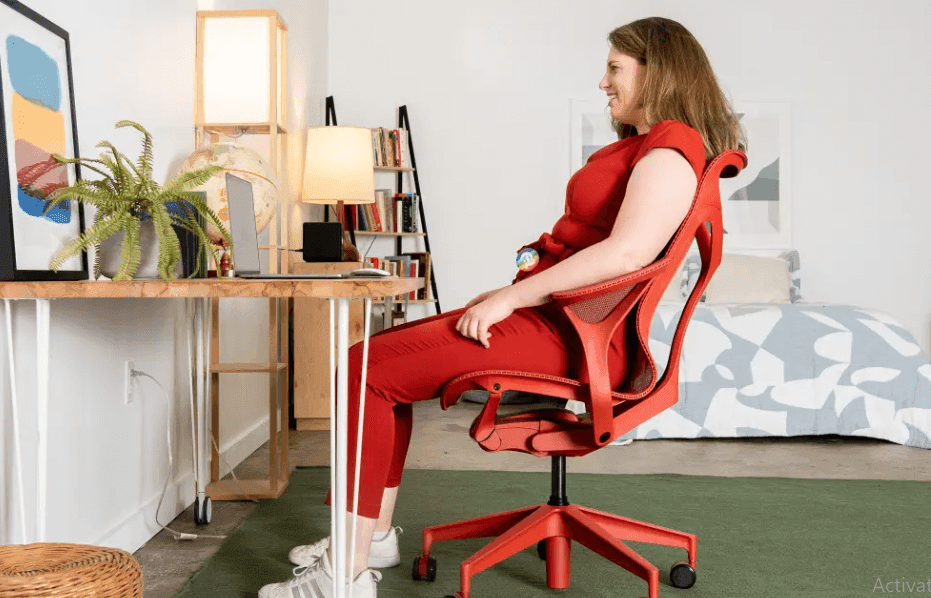
For something most of us park ourselves in for 40+ hours a week, the office chair is shockingly easy to get wrong. The cheapest dining chair from the closet and a $1,500 task chair will both hold your weight off the floor — and that's where the similarity ends. This guide breaks down what actually separates an office chair from a "normal" chair, when the upgrade is worth it, and how to tell whether what you're sitting on now is silently wrecking your back.
Short answer: A normal chair is built for short, occasional sitting — eating, talking, waiting. An office chair is built for long, sustained, focused work, with adjustability, lumbar support, mobility, and pressure distribution engineered for 8-hour days. If you sit at a desk for more than two hours a day, the office chair isn't a luxury — it's the cheaper option, once you factor in the chiropractor bills.
The Quick Comparison
Before we get into the why, here's the at-a-glance side-by-side. Use the bold labels to scan; full nuance is in the sections below.
Primary purpose — Office chair: extended focused work at a desk. Normal chair: short-duration sitting (meals, conversation, occasional reading).
Adjustability — Office chair: typically 5 to 9 adjustment points (height, tilt, recline lock, lumbar depth, seat depth, armrest height/width/depth/angle). Normal chair: zero to one (height, if it's a barstool).
Lumbar support — Office chair: a contoured or adjustable lumbar pad that follows the natural S-curve of the spine. Normal chair: a flat or slightly curved backrest that flattens your lumbar curve.
Mobility — Office chair: 5-star caster base, swivel, easy roll across hard floors and low-pile carpet. Normal chair: four static legs.
Pressure distribution — Office chair: contoured foam, mesh, or molded plastic spread your weight across 16-20 sq in of seat. Normal chair: a flat plank or thin cushion concentrates pressure on the sit bones.
Materials and durability — Office chair: high-density molded foam, breathable mesh, reinforced aluminum or steel base, rated for 8 to 24 hours per day. Normal chair: solid wood, light-gauge metal, or low-density foam — built for hours per week, not per day.
Price — Office chair: $200 (entry) to $1,800+ (premium ergonomic). Normal chair: $40 to $300.
Lifespan in heavy use — Office chair: 7-12 years of daily use for a quality model. Normal chair: 1-3 years before the seat flattens, the back loosens, or the joints wobble.
What Actually Makes a Chair "Ergonomic"
The word "ergonomic" gets slapped on anything with a wheel, so it's worth being specific. A genuinely ergonomic office chair earns the label through four things:
1. Adjustable seat height. Your knees should sit at roughly 90 to 100 degrees with your feet flat on the floor. If your chair can't reach that for your leg length, the rest doesn't matter.
2. Adjustable lumbar support. The spine is not a straight line — it has a natural inward curve at the lower back (the lordosis). A real ergonomic chair has either a height-adjustable lumbar pump or a contoured backrest deep enough to fill that curve. A flat backrest forces you to either slouch (kyphosis) or hold yourself rigid (which fatigues the paraspinal muscles in under 20 minutes).
3. Seat depth that matches your femur length. You should be able to fit two to three fingers between the front edge of the seat and the back of your knees. A seat that's too deep pulls your hips forward and cancels the lumbar support; too shallow and your thighs aren't supported.
4. Armrests that load-share with the desk. Properly adjusted armrests (height = desk height, width = shoulder-width, depth supporting the forearm not the elbow) take about 10% of your upper-body weight off the spine. Fixed or absent armrests put 100% on the lower back.
Anything missing two or more of these is, at best, a regular office chair. At worst, it's a dining chair on wheels.
When a Normal Chair Is Actually Fine
A normal chair isn't a moral failure. For these scenarios, it does the job:
- Sitting under 30 minutes at a stretch. Meal-length sitting doesn't generate enough sustained load to matter.
- Multiple short sessions, not one long one. A standing-desk user who sits for 20 minutes at a time, three or four times a day, can get away with a non-adjustable chair.
- Standing-desk-dominant setups. If you're upright 70%+ of the day, the chair is for breaks.
- Conference rooms and waiting areas. Anywhere nobody is expected to do focused, deadline-driven work.
- Children who are still growing. Most adult ergonomic chairs don't size down enough; a properly sized normal chair with a footrest is often better than a too-big office chair.
If you spend less than two hours per day in a single seated session, the marginal benefit of a $600 ergonomic chair over a $90 wooden chair with a lumbar cushion is small.
When the Upgrade Pays for Itself
Conversely, here are the situations where buying a normal chair to save money is the more expensive choice once you count physical-therapy visits and lost productivity:
- You sit four or more hours a day for work. The cumulative load on the lumbar discs in a flat-back chair is roughly 1.4 times standing pressure; in a properly reclined ergonomic chair, it's closer to 1.1x.
- You already have low back, neck, or hip pain. A flat chair can't be made supportive with a cushion alone — you can patch lumbar support, but you can't add adjustable seat depth or recline tension.
- You're outside the 50th-percentile body size. Standard chairs are built around the average. If you are notably tall, short, heavy, or have long femurs, only an adjustable chair will fit you.
- You work from home full-time. Your home office chair is now your primary chair — five days a week, no shared building-supplied alternative.
- You're prone to fidgeting. Sustained focus needs micro-movements (subtle weight shifts, recline, tilt). A static chair forces stillness, which makes the body restless and the mind worse at it.
The Hidden Costs of "Just Using a Normal Chair"
The bill for sitting on the wrong chair doesn't arrive on the day of purchase — it shows up over months in a few predictable ways.
Posture creep. Within 30-60 minutes in a flat-back chair, most people unconsciously slump forward. Over years, that pattern shortens the hip flexors, weakens the deep core, and rounds the thoracic spine.
Concentrated pressure. A flat seat puts most of your weight on the ischial tuberosities (the sit bones) and the back of the thighs, which compresses the sciatic nerve and the femoral arteries. The "pins and needles" you feel after 90 minutes isn't a comfort issue, it's reduced circulation.
Muscle fatigue masquerading as pain. Without lumbar support, the erector spinae and multifidus muscles hold the spine upright by themselves. They fatigue in under 30 minutes, then start to refer pain that feels like a "bad back" but is actually muscular exhaustion.
Reduced focus and shorter sessions. Discomfort doesn't have to be conscious to be distracting. Subjects in chair-comfort studies consistently report higher self-reported productivity and longer focused sessions when seated in an adjustable chair, even when they don't notice the chair itself.
How to Test a Chair Before You Buy
If you can sit in the chair before you commit (showroom, return-policy mail order), run this five-minute check:
- Adjust seat height first. Feet flat, knees at 90-100 degrees.
- Push your hips all the way to the back of the seat. Two to three fingers should fit between the seat's front edge and the back of your knees.
- Drop the armrests, then raise them until your shoulders are neutral. Your shoulders should not be shrugged up or pulled down.
- Find the lumbar pad's curve and adjust its height so it presses into the natural inward curve of your lower back. If you can't feel it filling the curve, the chair is wrong for your torso length.
- Recline and check the tilt tension. You should be able to lean back without the chair fighting you, but it shouldn't flop. Hold the recline for 10 seconds — your feet should stay flat.
If any of those steps can't be completed with the chair's adjustments, it isn't the chair for you, regardless of price.
A Note on Mesh vs Foam
A common follow-up question: mesh or upholstered foam? Both can be excellent. Mesh wins on breathability (good if you run warm or live somewhere humid) and on long-term shape retention (a good mesh stays flat for a decade). Foam wins on initial softness and on edge support for shorter users. Either can be ergonomic, neither is automatically — the four adjustability criteria above apply equally to both.
The Bottom Line
If your sitting day is short and unfocused, a normal chair is fine — the engineering of an office chair is overkill for the load. If your sitting day is long and focused, a normal chair is the most expensive chair in the room once you total up the pain, the lost hours, and the eventual replacement chair you'll buy anyway. The deciding factor isn't the chair's marketing copy or its price tag; it's how many hours a day you're going to sit in it and what you're trying to do while you're there.
For most desk workers in 2026 — knowledge workers, designers, programmers, students writing long-form, anyone in an 8-hour Zoom day — the honest answer is that the office chair stopped being optional somewhere around year two of the work-from-home era. Buy the one that adjusts to your body, not the one that matches the desk.
Office chair vs normal chair: FAQ
Is a normal chair really that bad for you?
Not for short sessions. For sustained sitting beyond about two hours, a flat-back normal chair forces your lower-back muscles to hold the spine in position by themselves, which fatigues them in roughly 20-30 minutes and starts to refer pain that feels like a 'bad back.' The damage is cumulative, not acute — which is why it's easy to underestimate.
Can I make a normal chair ergonomic with a lumbar cushion?
Partially. A good lumbar roll or cushion can add the missing lower-back support, which is the single most important fix. What you cannot retrofit is adjustable seat height, seat depth, armrest height, and recline tension. If those four happen to fit your body well by accident, a cushioned normal chair can be okay. If they don't, no cushion will save it.
Is a gaming chair the same as an office chair?
No. Most gaming chairs are bucket-seat racing-style designs with high side bolsters, fixed lumbar pillows, and limited true adjustability. They look ergonomic but typically lack adjustable seat depth and have armrests that don't load-share with a desk. A few brands now make hybrid chairs that genuinely are ergonomic; the rest are styling exercises.
How long should a good office chair last?
Seven to twelve years of daily 8-hour use for a quality model with replaceable parts. Cheaper office chairs (under about $200) typically last 2-4 years before the gas lift sags, the casters break, or the foam compresses. Aeron-class chairs with a 12-year warranty are often still serviceable at year 15-20 with replacement parts.
What is the minimum I should spend on an office chair if I work from home full-time?
Around $300-400 in 2026 buys an entry-level genuinely ergonomic chair (adjustable lumbar, seat depth, 4D armrests, breathable mesh). Below that, you're typically getting a regular office chair with a few extra adjustments rather than a true ergonomic chair. Buying used from office liquidators is a faster path to a premium chair at that budget.
Do I need a footrest with an office chair?
Only if your chair's minimum seat height is still too tall for your legs. Properly adjusted, an office chair lets your feet rest flat on the floor — that's the goal. A footrest is the fallback when the chair can't go low enough, which mostly affects shorter users.