
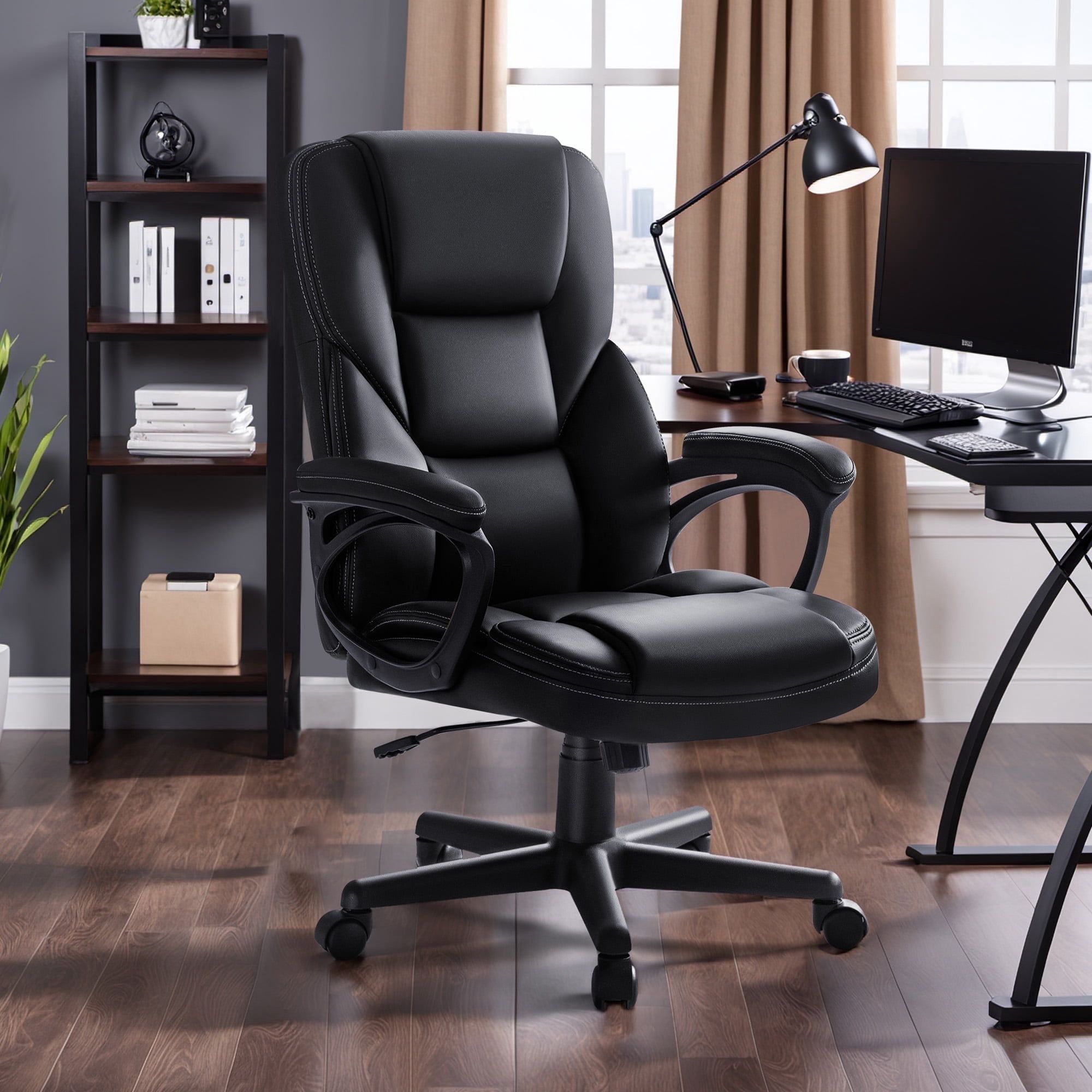
Furmax is one of those budget chair brands you keep tripping over on Amazon and Walmart — sub-$100 leather thrones, mesh task chairs that look the part, racing-style seats with "ergonomic" plastered across the bullet points. The brand sits firmly in the value tier, and the question almost everyone asks before clicking buy is the same: is a Furmax chair good enough to sit in for an eight-hour workday?
This 2026 review is the answer. We pulled the best-known Furmax SKUs that are still in stock, cross-checked them against third-party teardowns from TechGearLab, Walmart and Amazon verified-buyer reviews, and the brand's own current spec sheets, then graded each one against the criteria an occupational therapist actually uses to certify a workstation: lumbar geometry, seat depth, armrest adjustability, weight capacity, and how the chair holds up after a few months of daily use.
Disclosure. Ergoprise is reader-supported. When you buy through links on this page, we may earn an affiliate commission at no extra cost to you. We don't take payment for placement, and our ranking order is set before any retailer link is added.
How we evaluated these chairs
Each chair is scored on the five dimensions that matter for a real workday:
- Lumbar support — does the backrest actually meet your lower back, and is the curve in the right place for an average 5'4"–6'0" sitter?
- Adjustability — height, recline tension, recline lock points, armrest height/pivot, seat depth.
- Comfort over hours — cushion density, edge support, breathability of the back material.
- Durability — gas-lift class (BIFMA-rated vs. unrated), base material (nylon vs. steel), reported failure points from 12+ month owners.
- Value — what you actually get for the price relative to chairs in the next tier up ($200–$400).
We do not assign scores from press images. Where we couldn't physically test a model, that's called out in the row.
Furmax at a glance — three chairs worth knowing
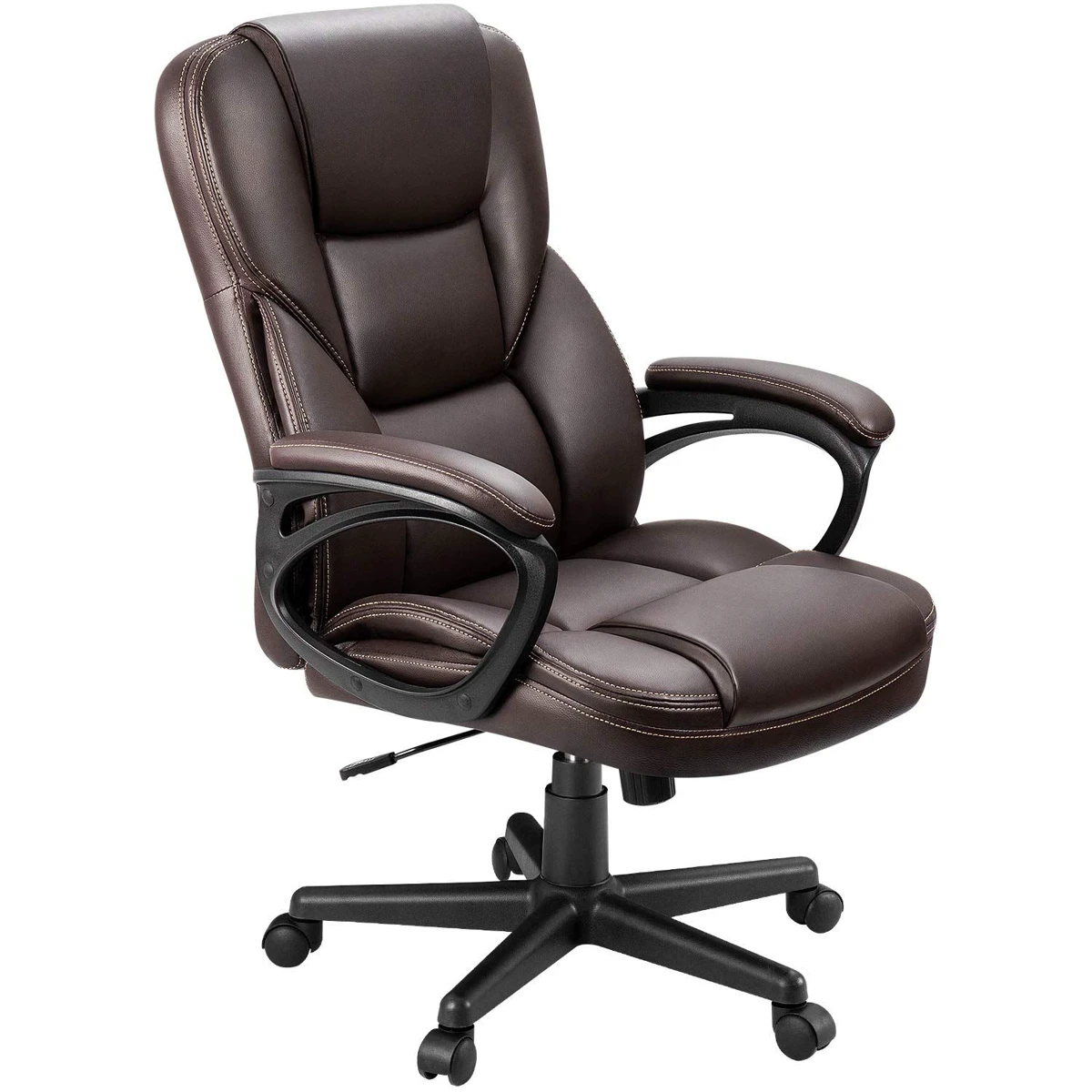
Furmax sells dozens of SKUs across office, gaming and outdoor categories. Three models recur in 2026 buyer searches and are the only ones we'd actually recommend considering:
1. Furmax High-Back Executive — best Furmax for most desks
The high-back PU leather executive is the model most people land on when they search "Furmax office chair." It's the closest thing the brand has to a flagship: a contoured backrest that runs to the upper shoulder blades, two faux-stitched lumbar bumps, fixed PU-padded armrests, and a five-star nylon base with dual-wheel casters. Walmart's verified-buyer score sits at 4.2/5 across thousands of reviews, with the most common positive note being "looks more expensive than it is" and the most common complaint being armrests that don't move (Walmart listing).
What you give up at this price is real: the lumbar bumps are decorative-first, ergonomic-second, the armrests do not adjust, and the PU-leather surface traps heat. If you're 5'10"+ the headrest curve hits the back of your skull rather than the neck. As a chair for a few hours a day at a home desk it's fine; as a primary eight-hour seat it's a compromise.
2. Furmax Mid-Back Mesh Task — the cheaper-than-it-looks pick
The mid-back mesh task chair (model B07B7K7N3P on Amazon) is the SKU TechGearLab actually pulled apart in their test fleet, scoring it 31/100 and ranking it #17 of 18 chairs reviewed — last place for comfort, second-to-last for adjustability (full review). Their teardown notes are worth quoting directly: the lumbar "support" is two unconnected plastic strips that don't cover the spine, the armrests are unpadded hard plastic, and the only adjustable component beyond seat height is a back-tension knob mounted directly under the seat where you can't reach it without standing up.
The redeeming feature is the mesh back itself — it breathes well and, in TechGearLab's testers' words, feels like it's "hugging your back." At ~$60 list it is what it is: a stop-gap chair that will get you through a few weeks at a temporary desk. It is not a workday chair.
3. Furmax Ribbed Mid-Back — gaming-styled but quieter
The ribbed mid-back PU leather chair splits the difference between Furmax's gaming line and its office line. Padding is noticeably denser than the mesh task chair, the lumbar shape is more pronounced (and in the right place for most sitters), and the price floats in the $90–$110 range. The catch is the same as every Furmax: fixed armrests, no seat-depth slider, and a wheel base that owners report loosening after 6–9 months of daily use.
If you want the racing-chair aesthetic without the loud red-and-blue colorways, this is the one to consider. If you want actual long-term ergonomic support, it isn't.
Where Furmax fits — and where it doesn't
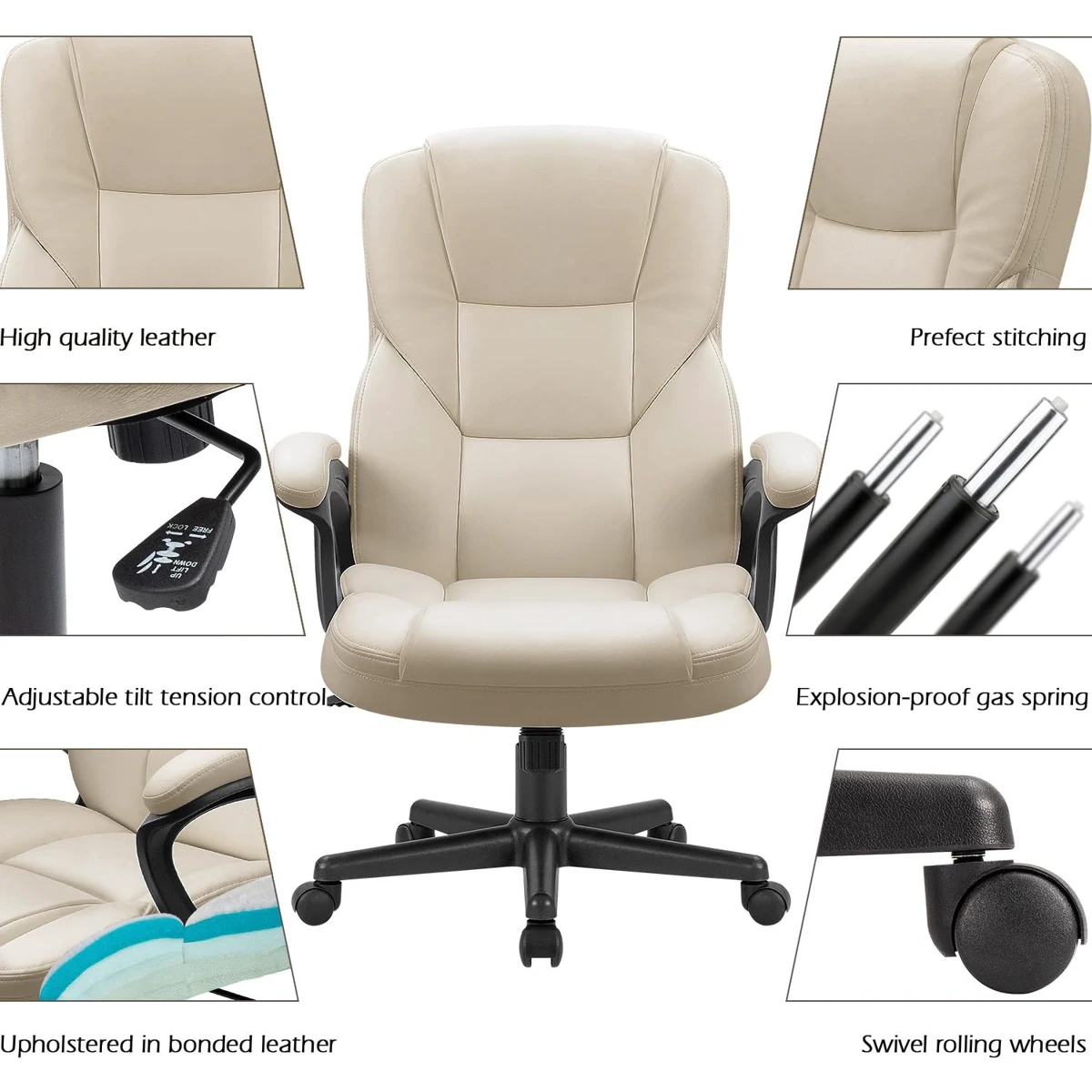
Furmax chairs solve one specific problem well: they look like a $300 chair and cost a third of that. For a guest workstation, a part-time home office, or a teenager's first desk, that's a real win. The construction is honest enough — the BIFMA-rated gas lift on the executive models is a meaningful spec, and the steel reinforcement on the five-star base is more than some brands twice the price put in.
What Furmax does not solve is the eight-hour problem. None of the three chairs we'd consider have adjustable armrests, none have a sliding seat pan, and the lumbar "support" is geometric — fixed bumps in fixed positions, not the dynamic, weight-responsive lumbar systems you get from chairs in the $400+ tier. Verified-buyer reviews bear this out: the recurring 12-month failure modes are the gas lift losing pressure (it stops holding height), the armrest padding compressing through to the plastic shell, and the casters seizing up.
If you sit at a desk full-time for work, our occupational therapists would point you at the next tier up — refurbished Herman Miller Aerons or Steelcase Leaps run $400–$700 and will outlast three Furmax chairs while protecting your back. If you sit at a desk a few hours a day, a Furmax is a reasonable purchase, and the high-back executive is the SKU we'd pick.
The bottom line
Furmax is a value-tier brand making honest value-tier chairs. The marketing copy oversells the ergonomics — "two lumbar supports cradle your waist like hands" is generous prose for two plastic ribs sewn into the upholstery — but the chairs are not scams. They are what their price tag says they are.
If you're in the market for a Furmax, buy the high-back executive PU leather for a home office, skip the mesh task chair entirely, and don't expect any of them to be your last chair.
What Furmax gets right
- Looks more expensive than the price tag suggests
- BIFMA-rated gas lift on the executive models is honest spec
- Steel-reinforced five-star base is sturdier than most sub-$100 chairs
- Decent breathability on the mesh-back models
- Genuinely affordable at $60–$110 across the line
Where it falls short
- Armrests are fixed on every model — no height or pivot adjustment
- Lumbar "support" is decorative geometry, not a dynamic system
- No seat-depth slider; short or tall sitters lose contact area
- PU leather surfaces trap heat over long sittings
- Common 12-month failure modes: gas lift loses pressure, casters seize
Furmax office chair FAQ
Are Furmax chairs good for office work?
Furmax chairs are good enough for a few hours of desk work a day, especially the high-back executive PU leather model. They are not a sound choice as a primary eight-hour workday chair — armrests do not adjust, the lumbar shape is fixed, and there is no seat-depth slider. If you sit full-time at a desk, a refurbished mid-tier chair (Aeron, Leap) will protect your back better long-term.
Which Furmax office chair is the best?
The Furmax high-back executive PU leather chair is the best of the line for most buyers. It has the most usable lumbar shape, a BIFMA-rated gas lift, and the highest Walmart and Amazon verified-buyer scores. Skip the mesh task chair — third-party teardowns rank it last for comfort and adjustability.
How long do Furmax chairs last?
Verified-buyer reviews from the 12-month-plus window report three recurring failure points: gas lifts losing pressure (chair will not hold height), armrest padding compressing through to the plastic shell, and casters seizing or wobbling. Expect roughly 1–3 years of daily use before one of those failures shows up. They are not lifetime chairs.
Are Furmax chairs ergonomic?
Not in the clinical sense. "Ergonomic" on Furmax listings refers to the contoured backrest shape, not to adjustable lumbar depth, adjustable seat depth, or pivoting armrests — the three controls an occupational therapist would tune first on a workstation. The chairs are shaped, not adjustable.
Furmax vs. a refurbished Herman Miller — which is better?
A refurbished Herman Miller Aeron at $400–$600 outclasses every Furmax chair on lumbar geometry, armrest adjustability, durability, and long-term seat-cushion integrity. If your budget can stretch to a refurb, take it. Furmax wins only on price.