
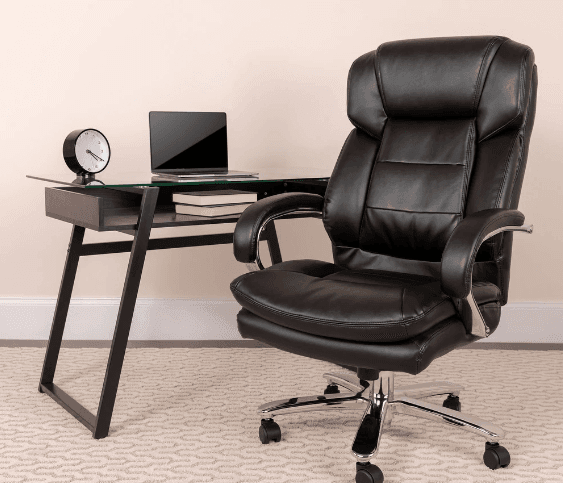
Executive chairs and standard office chairs (often called task chairs) sit side-by-side in showrooms and look like they're playing the same game. They're not. One is built around presence and plush comfort; the other is built around posture and adjustability. Most buyers don't need a lecture on luxury seating — they need to know which one will keep their back happy after eight hours of work.
Below is a side-by-side comparison of the two categories on the dimensions that actually drive day-to-day comfort, followed by guidance on which one to pick for which kind of work.
| Product | Best for | Firmness |
|---|---|---|
| 1Executive ChairHigh-back seating | Leadership / formal offices | Plush |
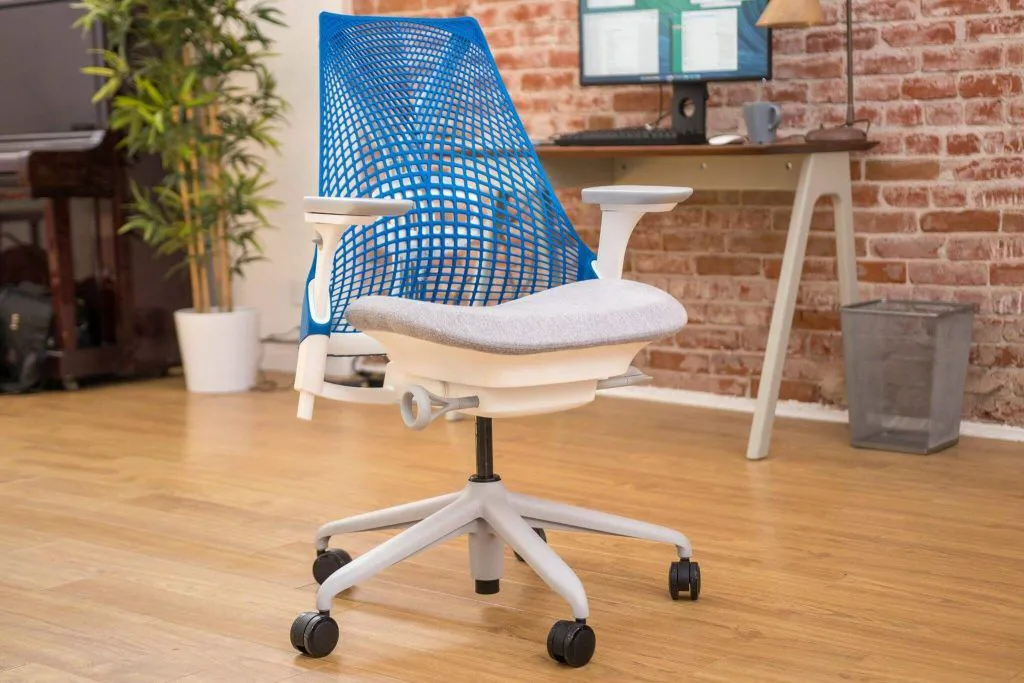
| 2Office (Task) ChairErgonomic seating | Long workdays at a desk | Firm / supportive |
What actually separates the two categories
Across editorial reviews, the consensus is consistent: executive chairs are designed around aesthetics, plush padding, and a tall "commanding" backrest, while standard office chairs are designed around fine-grained ergonomic adjustment for active, all-day computer work. Both can be comfortable — they just optimize for different things.
Comfort and padding
Executive chairs lean on thick, dense cushioning and full-body wraparound padding. That feels great for the first hour or a 30-minute meeting, but plush foam alone doesn't actively support posture. Task chairs use firmer foam or breathable mesh that holds its shape across an 8-hour workday and keeps you from sinking into a slouch.
Ergonomics and adjustability
This is the biggest functional gap. A well-designed task chair typically offers fine-grained ergonomic adjustments — seat-pan depth, multiple lumbar settings, armrest height/width/pivot, recline tension, headrest. Executive chairs usually ship with simpler controls (height, recline, basic tilt) because the design priority is the silhouette, not micro-fitting the chair to your body.
Lumbar support
Most modern task chairs include a dedicated, adjustable lumbar mechanism that you can dial to the height and depth of your own lower back. Executive chairs often rely on the shape of the backrest itself, which works fine for users it happens to fit and feels wrong for everyone else. If you have a history of low-back pain, this single factor is usually decisive.
Design and materials
Executive chairs are typically wrapped in leather (real or bonded) over a wood or heavy metal frame, with a tall headrest-integrated back. Standard office chairs more commonly use mesh, fabric, or polyurethane over an engineered polymer frame. Mesh wins on breathability across a long day; leather wins on the look of a private office or boardroom.
Portability and footprint
Task chairs are noticeably lighter and have a smaller footprint, which matters if you share a workspace, roll between desks, or work from a home office where every square foot counts. Executive chairs are heavier and intentionally take up more visual space — they're not designed to move around.
Price
Both categories span a wide range. Entry-level executive chairs start around the same price as mid-range task chairs, and premium ergonomic task chairs from brands like Herman Miller, Steelcase, and Humanscale routinely cost more than a leather executive chair — because what you're paying for is the engineering, not the upholstery. Check retailer pricing at the time you buy; this is a market where promotions move the numbers around constantly.
Which one should you buy?
The honest answer is that it depends less on which category sounds nicer and more on how you actually use the chair.
Buy an executive chair if…
- You sit for moderate stretches (meetings, video calls, occasional desk work) rather than 8+ hours of continuous typing.
- The chair lives in a private office, boardroom, or formal home office where appearance matters.
- You prefer plush, padded comfort and a tall backrest you can lean back into.
Buy a task / ergonomic office chair if…
- You work at a computer for long, continuous days and need the chair to actively support your posture.
- You have a history of lower-back, neck, or hip discomfort and want fine-grained lumbar and seat-pan adjustment.
- Your workspace is shared, small, or hot — mesh and a compact footprint will serve you better than leather.
The hybrid option
A growing slice of the market is "ergonomic executive" chairs that try to bridge the two: high-back leather styling with proper adjustable lumbar, seat-pan depth, and multi-axis armrests. They cost more than either pure category, but if you need a boardroom-grade look and 8-hour workday support in the same chair, they're usually the right answer.
Executive chair — pros
- Plush, generous cushioning out of the box
- High back and headrest for full-body support when reclining
- Premium materials (leather, wood, metal) and commanding aesthetics
- Comfortable for meetings, calls, and shorter work sessions
Executive chair — cons
- Fewer ergonomic adjustments — limited lumbar and seat-pan tuning
- Heavy, large footprint, not great for small or shared spaces
- Leather and dense padding can run warm on long workdays
- Padding can compress and lose support over years of daily use
Task / ergonomic chair — pros
- Fine-grained adjustments: lumbar, seat depth, armrests, recline tension
- Mesh options keep you cool across an 8-hour workday
- Lighter, more compact — easier to move and fit into tight spaces
- Designed for active sitting and posture support
Task / ergonomic chair — cons
- Less plush; firmer foam or mesh feels stiff at first
- Modern styling can look out of place in formal offices
- High-end ergonomic chairs (Herman Miller, Steelcase) are expensive
- More controls means a small learning curve to dial in the fit
Executive chair vs office chair — FAQ
Is an executive chair good for 8 hours of work?
It can be, but it's not what executive chairs are designed for. Without fine-grained lumbar adjustment, seat-pan depth, and active posture support, plush padding alone won't prevent the slow drift into a slouch over a long workday. If you sit for 8+ hours at a computer, an ergonomic task chair is usually the better tool — or an ergonomic executive hybrid that adds those adjustments to a high-back leather design.
Which is better for lower-back pain?
An ergonomic task chair with adjustable lumbar support is almost always the better choice if low-back pain is a concern. The combination of dialed-in lumbar height/depth, adjustable seat-pan depth, and recline tension lets you tune the chair to your own back — something a fixed-shape executive backrest can't match. If you already own an executive chair, an aftermarket lumbar cushion is a reasonable bridge.
Are executive chairs more expensive than office chairs?
Not necessarily. Both categories span a wide price range. Entry-level executive chairs sit around the same price as mid-range task chairs, and premium ergonomic chairs from Herman Miller, Steelcase, or Humanscale routinely cost more than a leather executive chair. With ergonomic chairs you're paying for engineering and adjustability; with executive chairs you're paying for materials and silhouette.
Can one chair do both — formal look and ergonomic support?
Yes. "Ergonomic executive" or hybrid chairs combine high-back leather styling with proper adjustable lumbar, seat-pan depth, and multi-axis armrests. They cost more than either pure category, but they're the right answer when you need a chair that looks at home in a boardroom and still supports an 8-hour workday.
Bottom line
If your day is mostly meetings, calls, and shorter desk sessions in a private office, an executive chair earns its keep on comfort and presence. If your day is mostly typing in front of a screen and your back already complains, a properly adjustable task chair will do more for your body than any amount of leather padding. When in doubt, prioritize adjustability — you can dress up an ergonomic chair with the right desk and room, but you can't engineer lumbar support into a chair that wasn't built with it.