
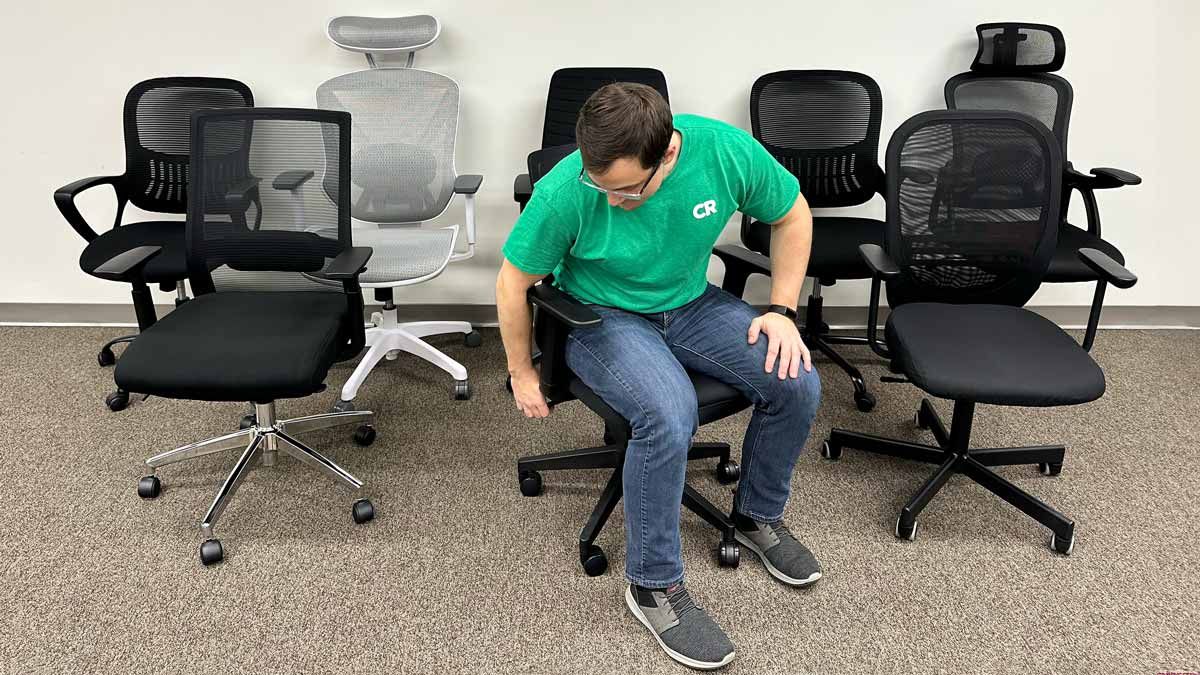
If your desk is taller than a typical 28–30 inch surface — a drafting table, a fixed-height standing desk, or a kitchen counter you've turned into a workstation — a standard office chair won't get high enough to seat you correctly. That's where the drafting chair comes in. This guide breaks down what actually separates the two categories, where each one fits, and how to choose without buying twice.
Drafting chair vs office chair at a glance
Both are task seating, but they're tuned for different desk heights and different bodies of work.
Seat height range. Office chairs typically adjust from about 16 to 21 inches off the floor, sized for desks 28 to 30 inches tall. Drafting chairs use a taller gas cylinder and a wider range — usually 24 to 34 inches, with some stools reaching higher — to match elevated work surfaces.
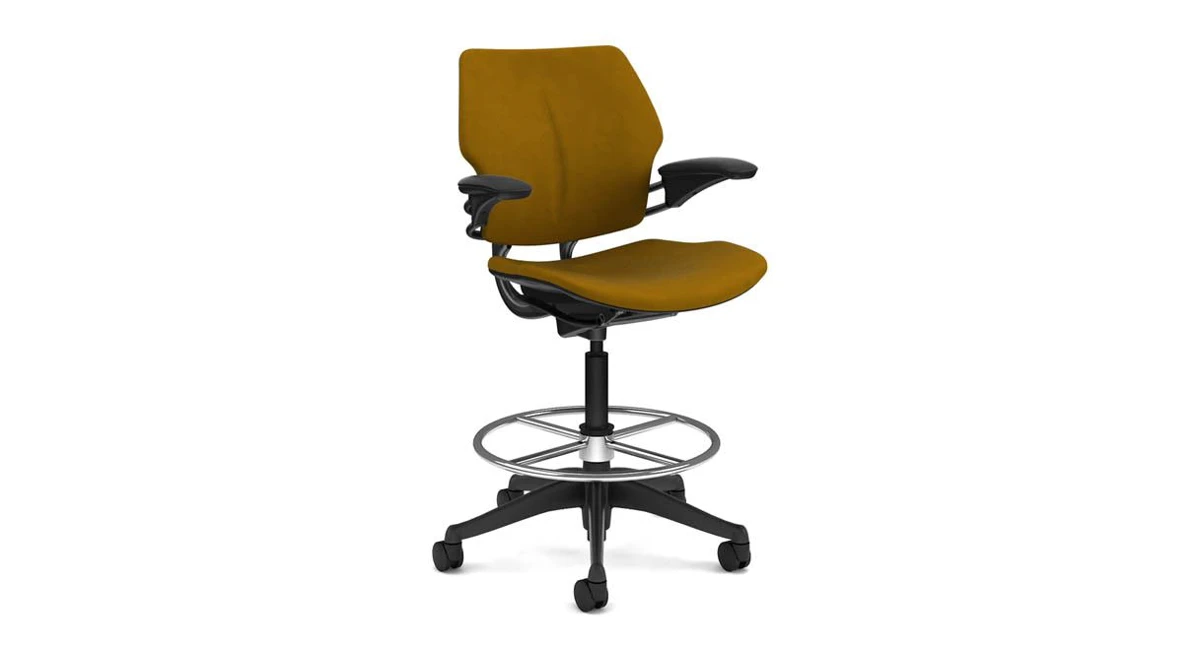
Foot support. A drafting chair almost always includes an adjustable foot ring around the base. At elevated seat heights your feet can't rest on the floor, so the ring becomes the load-bearing surface that keeps your hips and lower back from absorbing the weight.
Ergonomic depth. Office chairs generally offer more refined adjustment — multi-axis arms, deeper recline, dynamic lumbar, seat-depth slide. Drafting chairs tend to prioritize height and stability over the long-sit tuning you find in a flagship task chair.
Footprint and mobility. Drafting chairs often have a narrower silhouette and roll less aggressively (some are designed to perch or lean rather than glide), while office chairs are built to swivel and roll on a five-star base for active desk work.
Use case. Office chairs are for standard desk work and long stationary computing sessions. Drafting chairs are for elevated tables, standing desks held in the raised position, and any environment where you alternate between sitting up tall and standing.
When a drafting chair is the right call
Pick a drafting chair when the work surface is fixed above standard desk height and a normal chair would leave your shoulders hunched up to reach it. Common scenarios:
- A drafting table or architect's table that doesn't lower.
- A standing desk that you mostly keep in the standing position but occasionally want to perch at.
- A high counter or workbench used for hands-on work — soldering, sewing, jewelry, drafting by hand.
- Reception, lab, or retail stations where you want to be at eye level with people who are standing.
A foot ring is doing real ergonomic work in all of those settings. Without one, the seat pan presses against the underside of your thighs and cuts circulation; with one, you can shift load between feet and seat the way you would on a tall bar stool.
When an office chair is the right call
For a standard desk — anything in the 28 to 30 inch range that you use seated — an office chair is the better default. The reasons line up with how long the average workday actually is:
- More adjustment surface area for long sessions (recline tension, seat depth, lumbar height).
- A wheelbase and seat shape tuned for swiveling between monitors, side desks, and rolling to grab things.
- Better long-sit comfort: deeper cushioning or finer mesh tension, and a backrest tall enough to support shoulders, not just lumbar.
If the desk is height-adjustable and you split your day between sitting and standing, a good office chair plus a desk that actually drops to sitting height beats a drafting chair at a desk that never lowers. Reddit users in standing-desk communities repeatedly point this out: it's the desk's range, not the chair's, that determines comfort over a full workweek.
Where they overlap — the gray zone
A small number of chairs blur the line. Drafting versions of mainstream task chairs — the Humanscale Freedom Drafting, the Steelcase Leap drafting variant — keep most of the parent chair's ergonomic adjustments and just swap in the taller cylinder and a foot ring. If you want office-chair ergonomics at counter height, those are the chairs to look at. They are also the most expensive end of the drafting category.
At the other end, a basic drafting stool with a height-adjustable seat and minimal back is functionally a tall stool. That's fine for short stints — a coffee bar, a craft table — but it isn't a workday chair.
Height ranges and how to measure
Match seat height to desk height, not the other way around. Sit at the surface in your normal working posture; your elbows should rest at about 90 degrees with your shoulders relaxed. Roughly:
- Desk 28–30 inches: office chair, seat 16–21 inches.
- Desk 34–38 inches: drafting chair, seat 24–30 inches.
- Desk 38–42 inches (bar-height surfaces): tall drafting stool, seat 28–34 inches.
- Adjustable desk: match seat to the lowest position you'll work in, since chairs adjust within a smaller range than desks.
If the desk is in the gap between those bands (say, 31 to 33 inches), check the chair's max seat height before buying — many office chairs top out at 21 inches and won't quite reach.
Price ranges
Both categories span a wide price range. Entry-level drafting stools start around $100; brand-direct ergonomic drafting variants of flagship task chairs run $900 to $1,600. Office chairs span an even wider range, from sub-$200 budget task chairs to flagship Aeron- or Embody-class seating north of $1,500. Within the same brand, a drafting variant typically adds $100 to $200 to the standard model for the taller cylinder and foot ring.
Spend where the time goes. If you sit eight hours a day, a flagship task chair (drafting variant or standard) earns its keep on the lumbar and seat-edge tuning that cheaper chairs don't get right.
Drafting chair vs office chair: FAQ
What is the main difference between a drafting chair and an office chair?
Seat height range and foot support. Drafting chairs use a taller gas cylinder (roughly 24-34 inch seat height) and almost always include an adjustable foot ring, so you can work comfortably at elevated surfaces like drafting tables, standing desks held high, or counters. Office chairs sit lower (16-21 inches) and are tuned for standard 28-30 inch desks where your feet rest on the floor.
Can a drafting chair be used as a regular desk chair?
It can, but it isn't ideal. Even at its lowest setting a drafting chair usually sits taller than a standard office chair, so at a 28-30 inch desk your knees may end up below the desk surface and your arms angled down. If you only have a standard-height desk, choose an office chair.
Do I need a foot ring on a drafting chair?
Yes — if you'll work seated for more than short stints. At elevated seat heights your feet can't reach the floor, and without a foot ring the seat pan presses into the underside of your thighs and restricts circulation. The ring also lets you shift weight between feet and seat, which is the main thing that makes long sessions at a tall surface tolerable.
Is a drafting chair good for back pain?
It depends more on the chair's ergonomic adjustments than on whether it's a drafting model. Drafting variants of flagship task chairs (Humanscale Freedom, Steelcase Leap) keep the parent chair's lumbar and recline tuning and are reasonable choices for back pain at elevated desks. A basic drafting stool with minimal back support is not.
What chair is better for a standing desk?
If the desk lowers to true sitting height (around 28-30 inches), a regular office chair plus a sit-stand desk usually beats a drafting chair at a fixed-high desk. If the desk is fixed in the standing range or you intend to keep it raised, a drafting chair lets you perch and rest without lowering the surface.