
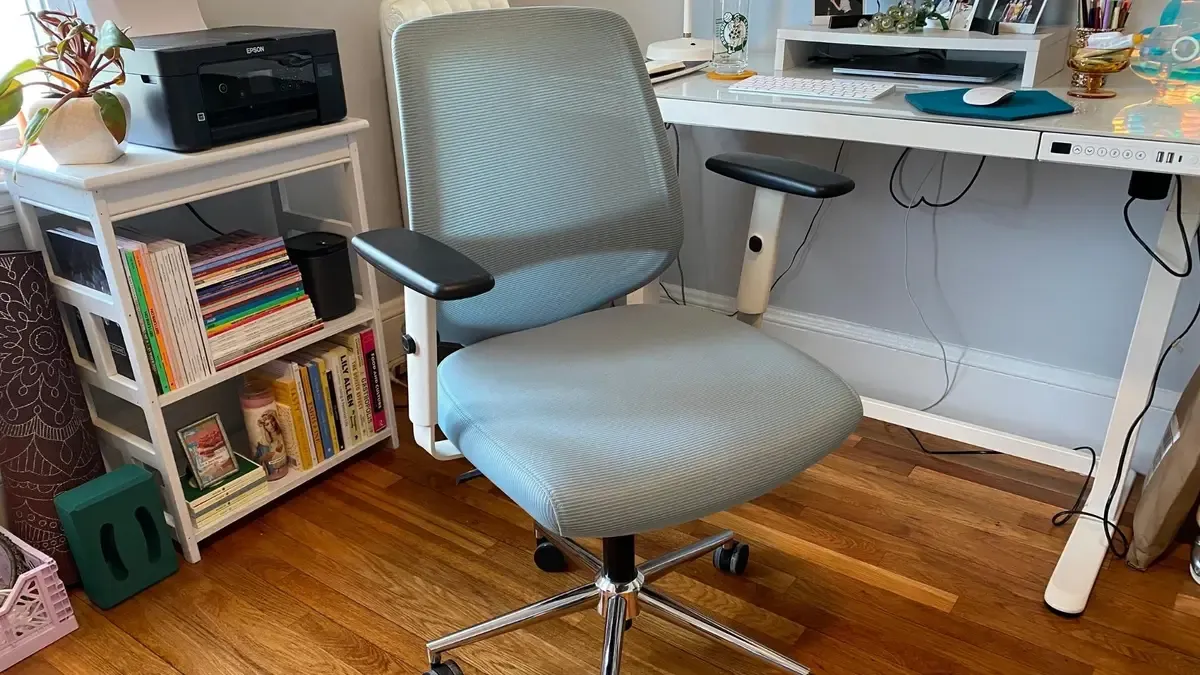
Branch Furniture has become one of the go-to brands for affordable ergonomic seating, and two models dominate the lineup: the Ergonomic Chair — Branch's most adjustable mainstream model — and the Daily Chair, a simpler, cheaper option meant for shorter sessions. They look similar in product photos, but they target very different buyers.
This guide compares the two on the things that actually matter day-to-day: adjustability, lumbar support, build quality, weight capacity, and price. It pulls from hands-on reviews at BTOD, Reviewed, and Meet&Co Furniture, plus Branch's own published specs.
Quick verdict
- Pick the Ergonomic Chair if you sit for 6+ hours, want adjustable seat depth and lumbar, weigh up to ~275 lb, or share the chair across body types.
- Pick the Daily Chair if you sit 3–5 hours, want a clean modern look, are under ~5'11", and don't want to fiddle with adjustments.
- Skip both if you're over 6'2" or over 275 lb — Branch's two flagship models top out before that. Look at the Ergonomic Chair Pro (with headrest) or a different brand.
Branch Ergonomic Chair vs Daily Chair at a glance
| Product | Best for | Firmness | Score |
|---|---|---|---|
| 1Branch Ergonomic ChairAdjustable task chair | Long work sessions | 50 | 8.5 |
| 2Branch Daily ChairLight-duty task chair | Short sessions and small offices | 50 | 8 |
Specs side by side
Specs below are Branch's published figures, cross-checked against Inova Furniture's hands-on review. Prices fluctuate with Branch's frequent sales — check the retailer for the current number.
Branch Ergonomic Chair
- Seat height: 17"–21"
- Seat depth: 18"–21" (adjustable)
- Seat width: 20"
- Weight capacity: 275 lb
- Armrests: 2D (height + width)
- Lumbar: Adjustable height
- Tilt: Adjustable tension and lockable recline
Branch Daily Chair
- Seat height: 17"–19"
- Seat depth: 19" (fixed)
- Seat width: 19"
- Weight capacity: 225 lb
- Armrests: 1D (height only)
- Lumbar: Fixed (built into backrest curve)
- Tilt: Light recline, no lock
Adjustability
Adjustability is the cleanest line between these two chairs. The Ergonomic Chair adjusts in seven places: seat height, seat depth, lumbar height, armrest height, armrest width, tilt tension, and tilt lock. The Daily Chair adjusts in two: seat height and armrest height. That's it.
For a single user with a settled posture, two adjustments is plenty. For a chair shared between people of different heights — or for anyone who hasn't yet figured out their ideal seat depth and lumbar position — the Ergonomic Chair is the safer buy.
Lumbar support and back comfort
The Ergonomic Chair has an adjustable lumbar bar that slides up and down the backrest. On paper this is the better feature. In practice, reviewers have mixed feelings: Inova Furniture's reviewer found the Ergo's backrest mesh felt stiffer and more rigid than the Daily, even with the lumbar dialed in, and preferred the softer flex of the Daily for long sessions.
The Daily's lumbar is fixed — it's built into the curve of the backrest — but the mesh itself is softer and the arch sits in a position that works for most average-height users. If you're between 5'4" and 5'10", the Daily's fixed lumbar is likely fine. Outside that range, the Ergonomic Chair's adjustability matters more.
Build quality and materials
Both chairs use plastic frames and mesh backrests — typical at this price point. Reviewers note the Ergonomic Chair actually has more visible plastic parts (the lumbar adjuster and tilt mechanism add hardware), which can read as cheaper despite the higher price. The Daily's simpler construction looks cleaner and feels more solid in everyday use.
Seat cushion: the Ergonomic Chair's cushion is thicker but firmer; the Daily's is medium-firm with more give. Several long-term reviewers reported the Ergo's seat felt hard after a few hours, while the Daily's stayed comfortable. If you're sensitive to firm seats, this is worth weighing.
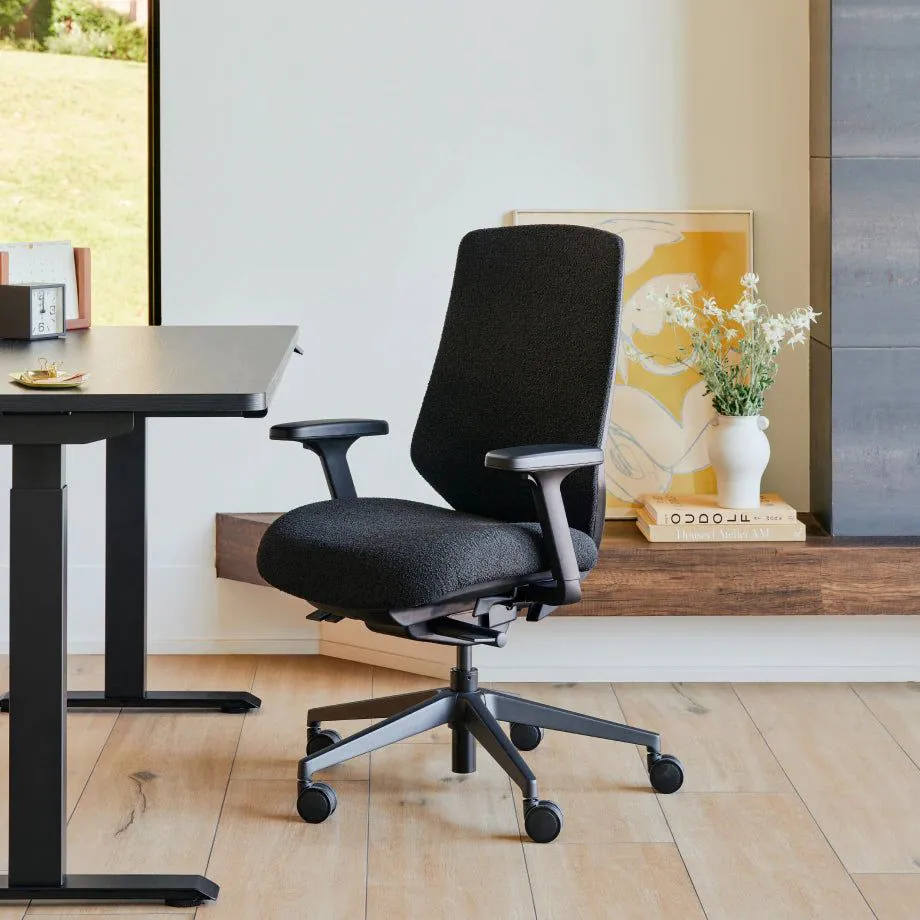
Ergo Chair pros
- Adjustable seat depth fits a wider range of body types
- Adjustable lumbar height for tailored back support
- Higher backrest accommodates users up to ~6'2"
- 275 lb weight capacity (vs Daily's 225 lb)
- Lockable recline with tension control
Ergo Chair cons
- Seat cushion firmer than expected — some users find it uncomfortable
- More plastic hardware visible at this price point
- Backrest mesh feels stiffer than the Daily's
- Headrest is a paid add-on, not included
Daily Chair pros
- Cleaner, more modern aesthetic with color options
- Softer, more forgiving mesh backrest
- Comfortable medium-firm seat cushion
- Lower price than the Ergonomic Chair
- Simpler — no fiddling required
Daily Chair cons
- Only height-adjustable armrests (1D)
- Fixed seat depth doesn't suit long legs
- 225 lb weight capacity
- Backrest height limits use for anyone over 5'11"
- Armrest material prone to light scratches
Which chair should you buy?
There isn't a single winner here — these chairs solve different problems.
Buy the Ergonomic Chair if
- You sit at your desk for 6+ hours a day.
- You're between 5'10" and 6'2" — the adjustable seat depth and taller backrest matter.
- You weigh between 225 and 275 lb.
- You share the chair with someone of a different build.
- You have specific lumbar needs that a fixed curve won't address.
Buy the Daily Chair if
- Your daily sit-time is closer to 3–5 hours.
- You're between 5'2" and 5'11".
- You weigh under 225 lb.
- You care about how the chair looks in the room — the Daily is the better-looking of the two.
- You'd rather not deal with seven adjustment levers.
Look elsewhere if
- You're taller than 6'2" — Branch's Ergonomic Chair Pro (with headrest) extends the range slightly, but you may be better served by a Herman Miller Aeron Size C or a Steelcase Leap.
- You weigh over 275 lb — neither chair will hold up long-term.
- You have an existing back condition — a heavier-duty ergonomic chair (Steelcase Gesture, Herman Miller Aeron) is a more defensible buy.
Frequently asked questions
Is the Branch Ergonomic Chair worth the extra money over the Daily Chair?
Only if you actually use its adjustments. The Ergonomic Chair's extra cost buys you adjustable seat depth, adjustable lumbar height, 2D armrests, a higher backrest, and a higher weight capacity. If you sit 6+ hours a day, share the chair with someone of a different size, or fall outside the Daily's narrow fit range (5'2"–5'11", under 225 lb), the upgrade is justified. If you're an average-height user with average sit-times, the Daily is comfortable enough that you may not notice the difference.
How tall and heavy can you be on each chair?
Branch rates the Daily Chair for users up to 225 lb and works best up to about 5'11". The Ergonomic Chair is rated for 275 lb and accommodates users up to about 6'2" — beyond that, the backrest stops providing full support even with the seat fully extended.
Which chair has better lumbar support?
The Ergonomic Chair has adjustable lumbar height, which is the better feature on paper. In practice, hands-on reviewers (Inova Furniture, Reviewed) have found the Daily's fixed lumbar more comfortable for average-height users because the backrest mesh is softer and flexes more naturally. If you're not average-height, the Ergonomic Chair's adjustability wins. If you are, the Daily can feel better.
Can you add a headrest to either chair?
Branch sells a headrest accessory for the Ergonomic Chair (sold separately). The Daily Chair does not support a headrest — its backrest isn't tall enough.
Should I look at the Branch Ergonomic Chair Pro instead?
The Ergonomic Chair Pro adds 5D armrests, a taller backrest, and an integrated headrest at a higher price point. It's worth considering if you're over 5'11" or want a one-stop chair without buying the headrest add-on. Reviewers at Meet&Co Furniture consider it Branch's most well-rounded chair, though it's no longer cheap.