
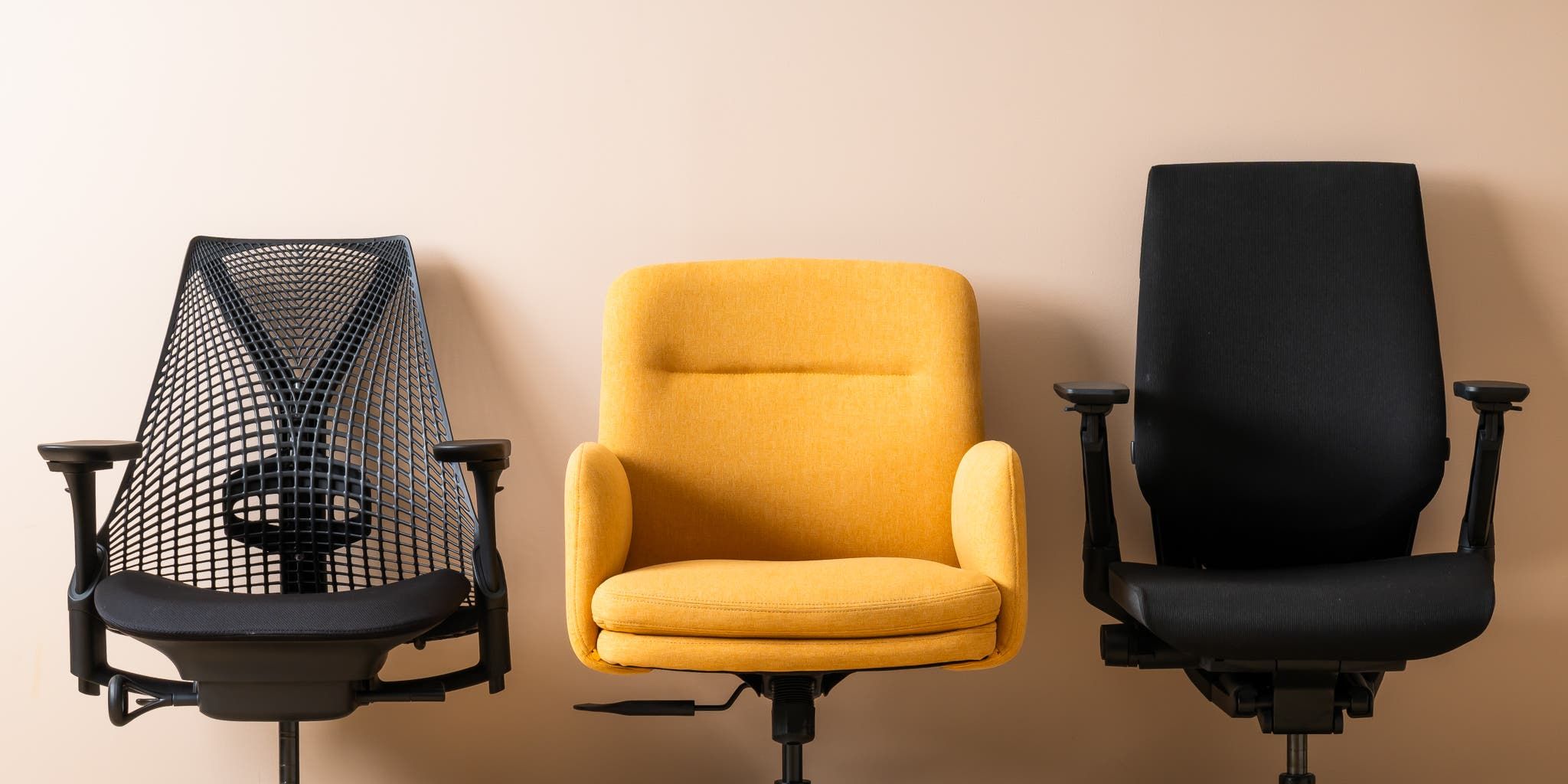
If you sit at a desk eight or more hours a day, an office chair is not a piece of furniture — it is a piece of medical equipment. Spend too little and your lumbar spine pays the rent. Spend too much and you have funded a small used car for the privilege of sitting upright.
The good news: 2026 is the sweet spot for the sub-$500 office chair. Commercial-grade ergonomics from established brands now sit at or just below the line, and a handful of newer direct-to-consumer brands have closed the gap on adjustability that used to cost twice as much. Below are seven chairs that ergonomists, long-form reviewers, and full-time desk workers keep recommending — with the trade-offs spelled out so you can pick the one that fits your body and your work.
How we picked
Every chair on this list satisfies three baseline conditions: adjustable lumbar or a backrest shape shown to support neutral spine posture, four-way (or better) armrest adjustment or a defensible reason for omitting it, and a manufacturer or retailer warranty of at least three years. We cross-referenced editorial reviews from BTOD, CNET, Architectural Digest, and the Google AI Overview's cited sources to find the picks that consistently surfaced across multiple long-form, hands-on tests.
Disclosure: Ergoprise may earn an affiliate commission on chairs purchased through retailer links. We never recommend products we would not put on our own desks. Prices below reflect typical 2026 MSRP and shift; check the retailer for current pricing.
At a glance: 7 office chairs under $500
| Product | Best for | Firmness | Trial | Score |
|---|---|---|---|---|
| 1Branch Ergonomic Chair ProErgonomic task chairEditor's Pick | Best overall | Medium | 30 days | 9 |
| 2Eurotech VeraMesh-back task chair | Best back support | Medium-soft | 60 days | 8.8 |
| 3Steelcase Series 1Commercial-grade task chair | Best warranty | Medium-firm | 30 days | 8.7 |
| 4Autonomous ErgoChair ProAdjustable ergonomic chair | Most adjustable | Medium-firm | 30 days | 8.4 |
| 5HON Ignition 2.0Mid-back mesh task chair | Best value mesh | Medium | Varies by retailer | 8.3 |
| 6SIDIZ T50S-curve ergonomic chair | Best for posture | Medium | 30 days | 8.2 |
| 7Haworth BreckMesh-back office chair | Best premium-feel | Medium | 30 days | 8.5 |
1. Branch Ergonomic Chair Pro — Best Overall
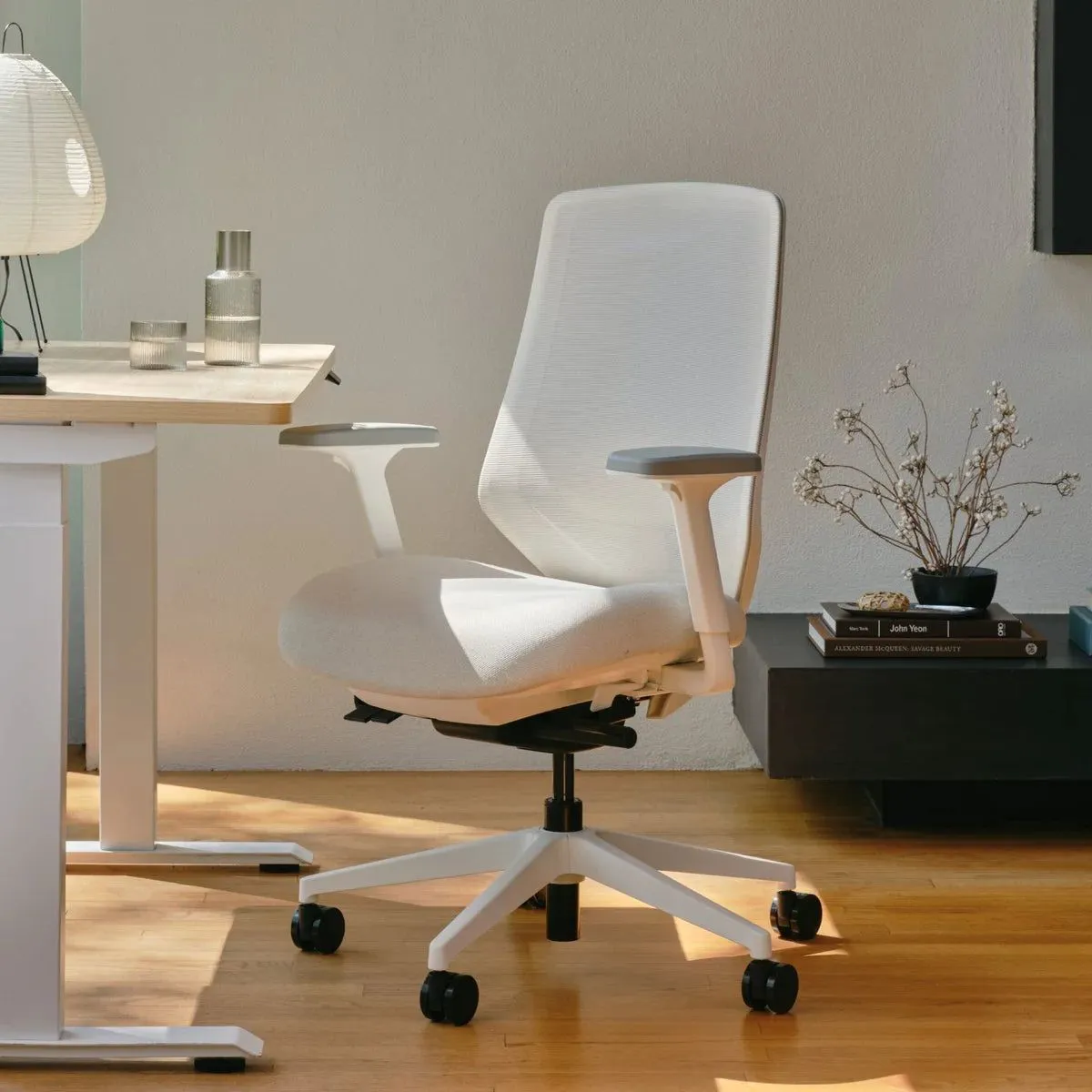
The Branch Ergonomic Chair Pro is the consensus pick across the editorial reviews we surveyed. CNET ranks it best overall, Architectural Digest names it best ergonomic, and the brand sits at the top of every "comfortable, looks decent, doesn't cost two grand" list for a reason. It packs 14 points of adjustment — seat height and depth, four-way armrests, adjustable lumbar height and depth, headrest, tilt tension, recline lock — into a chair that retails just under $500 with a high-density foam seat and Italian double mesh back.
In testing, what stands out is how cleanly the adjustment levers ladder into one another. There is a learning curve out of the box (the AD review calls it out as a "learning curve with adjustment levers"), but once dialed in for a single user, it stays put. The seat cushion is on the soft side of medium and breaks in toward plush over the first month.
Where it falls short: the wheels are nylon casters that fight thick rugs, and the headrest sits a touch low for users above 6'2". A swap to roller-blade-style wheels solves the first problem for about $25.
Pros
- 14 points of adjustability rare under $500
- Adjustable lumbar height and depth (most chairs only adjust depth)
- Italian double-mesh back is breathable and durable
- 7-year warranty
Cons
- Nylon casters under-deliver on thick carpet
- Headrest sits low for users 6'2"+
- Adjustment levers take a session to learn
2. Eurotech Vera — Best Back Support
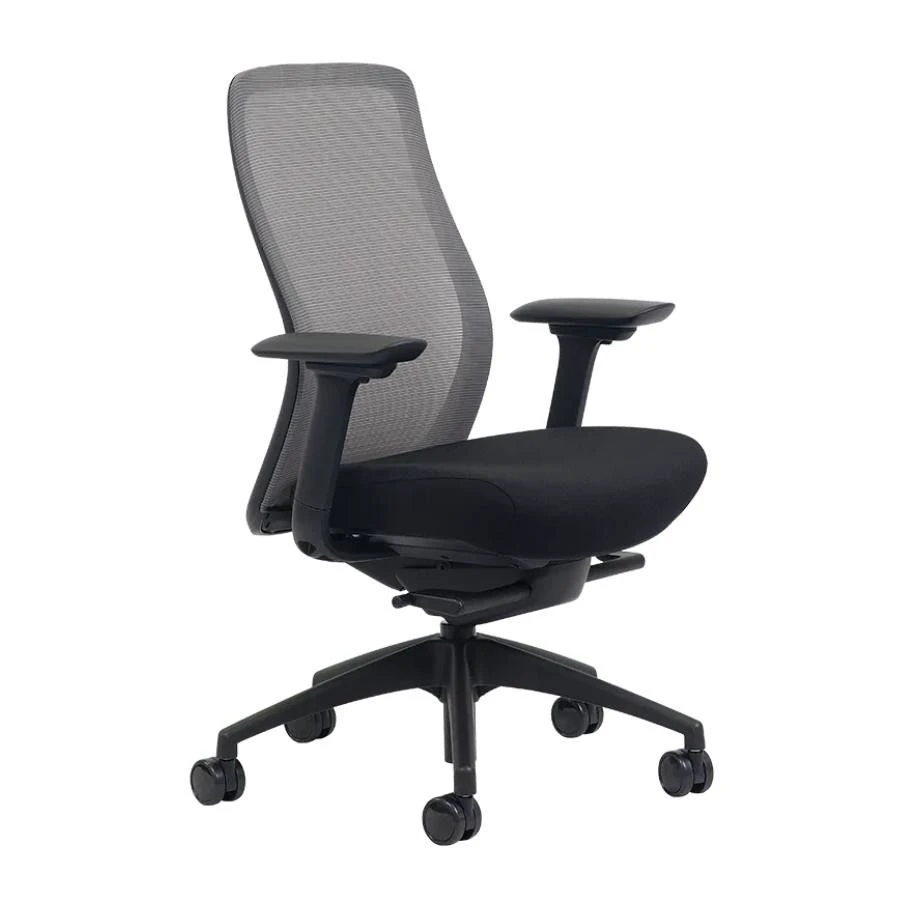
BTOD founder Greg Knighton — who has tested over 200 office chairs since 2018 — calls the Eurotech Vera "the chair I recommend without question if you can stretch your budget into the $400 to $500 range and you're sitting eight or more hours a day." It is a back-support-first chair. The hammock-shaped backrest is sculpted to such a specific lumbar curve that adjustable lumbar would be redundant — the backrest does the work.
The seat pad is thicker and softer than most chairs in this price tier, more like sinking in than sitting on. The four-way adjustable arms are standard fare, and the seat slider for depth adjustment is the differentiator at this price. The trade-off is that you cannot move the lumbar where you want it — if your low back is non-standard (an existing injury, an unusual torso length), this is not the chair.
Eurotech offers lifetime warranty on components and five years on foam and fabric, plus a 60-day free return policy through BTOD. The chair ships fully assembled in under ten minutes.
Pros
- Sculpted backrest is exceptional out of the box
- Soft, thick seat pad you sink into
- Seat slider for depth adjustment
- Lifetime components warranty
Cons
- No adjustable lumbar — fit is take-it-or-leave-it
- Arm pads run firm
- Only one color (black) widely available in US
3. Steelcase Series 1 — Best Warranty
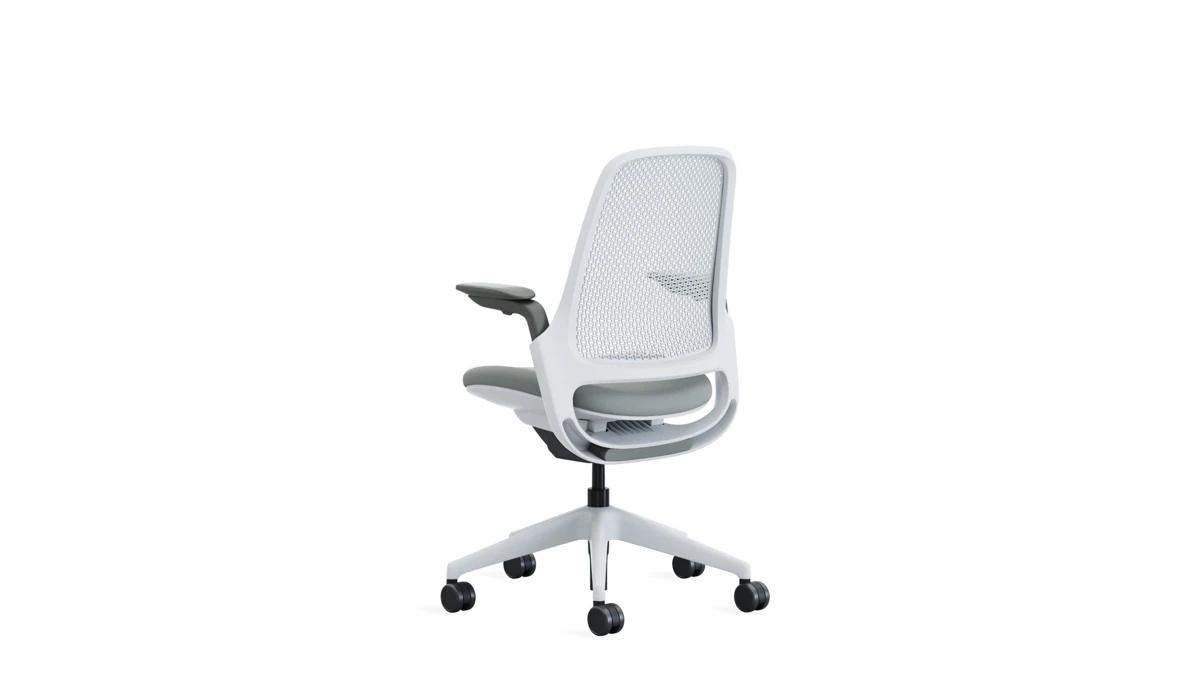
The Series 1 is Steelcase's entry-level chair and the only commercial-grade office chair from a Big Three brand (Steelcase, Herman Miller, Haworth) that consistently lands at or below $500 new. It carries Steelcase's full 12-year warranty — the same warranty as a Leap V2 or a Gesture costing three times as much.
What you get for the price: weight-activated synchronous tilt (the chair adjusts recline tension automatically based on your body weight), seat depth adjustment via the LiveBack contoured back, four-way adjustable arms in the upgraded SKU, and the kind of build quality you can hear when you sit down. What you give up versus the Leap V2 above it: a less aggressive lumbar system and a narrower fit range (best for users 5'4" to 6'2").
Caveat: configuration matters. The base Series 1 ships with 2D armrests and fixed lumbar — to get 4D arms and adjustable lumbar, you may need to upgrade SKUs, which can push the total past $500. Verify the configuration before ordering.
Pros
- Full 12-year Steelcase warranty
- Weight-activated tilt mechanism
- Available in 12+ colorways
- Commercial-grade build for 24/7 use
Cons
- Base configuration has 2D arms only
- Adjustable lumbar is an upcharge
- Less plush than the price suggests
4. Autonomous ErgoChair Pro — Most Adjustable
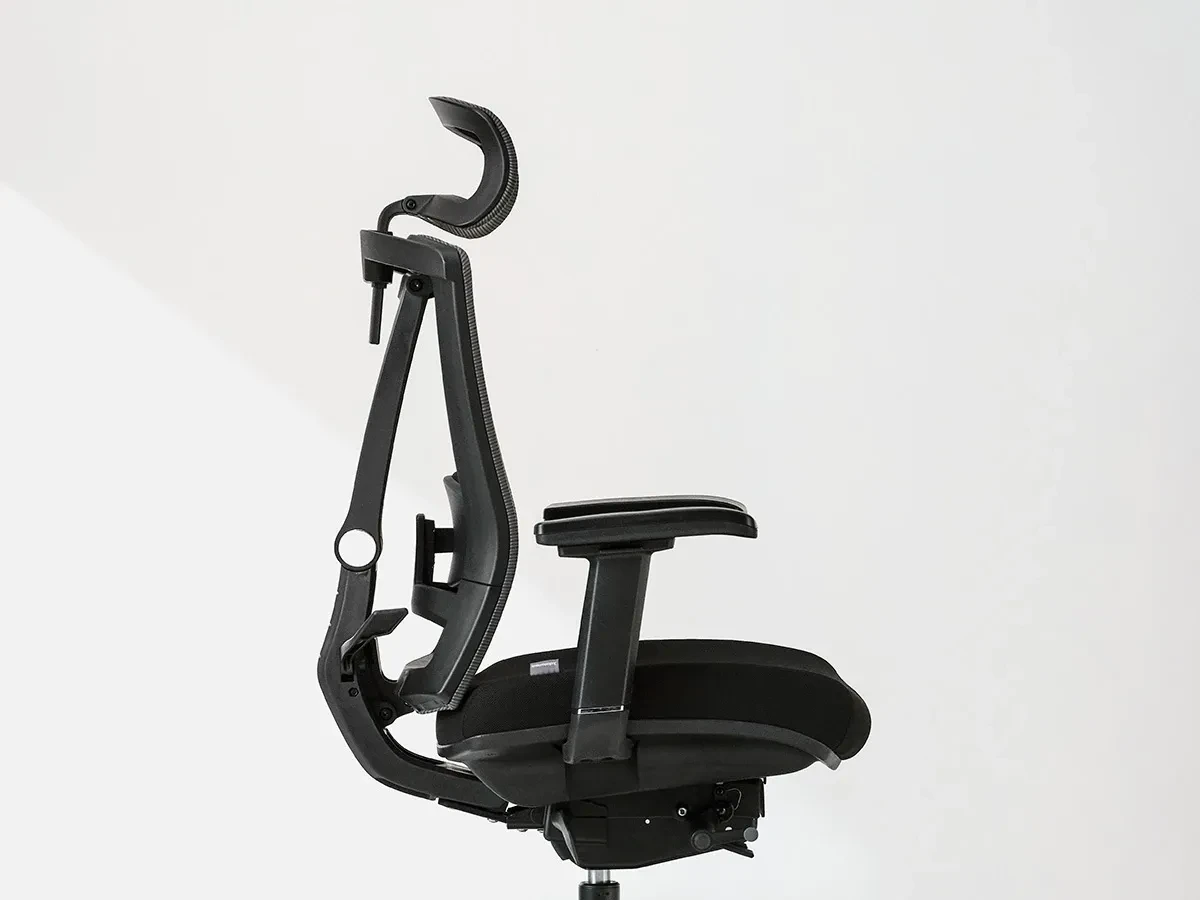
The ErgoChair Pro is the spiritual successor to the ErgoChair 2 that anchored this list in earlier years. It is the maximalist's chair: nine points of adjustment, 300-lb weight capacity, breathable mesh back, 22-degree recline range, and a price that sits in the $400s when on sale (which is most of the year).
Where it differentiates from the Branch Pro: the back tilt limiter is granular (five lock positions instead of the Branch's three), and the synchro-tilt mechanism feels slightly springier — better for people who like to rock between focused and relaxed postures throughout the day. The headrest articulates further forward, which suits long-necked users better than the Branch.
Trade-offs: assembly is more involved (closer to 45 minutes than 20), the warranty is shorter than Branch's, and the foam padding compresses faster than premium-tier chairs. Autonomous's customer support is also a known soft spot per long-form reviews.
Pros
- Nine adjustment points — most in the price tier
- 300-lb weight capacity
- Articulating headrest reaches farther forward
- Frequently on sale in the $400s
Cons
- Assembly is fiddlier than peers
- Seat foam compresses faster over years 3+
- Warranty shorter than Branch or Steelcase
5. HON Ignition 2.0 — Best Value Mesh
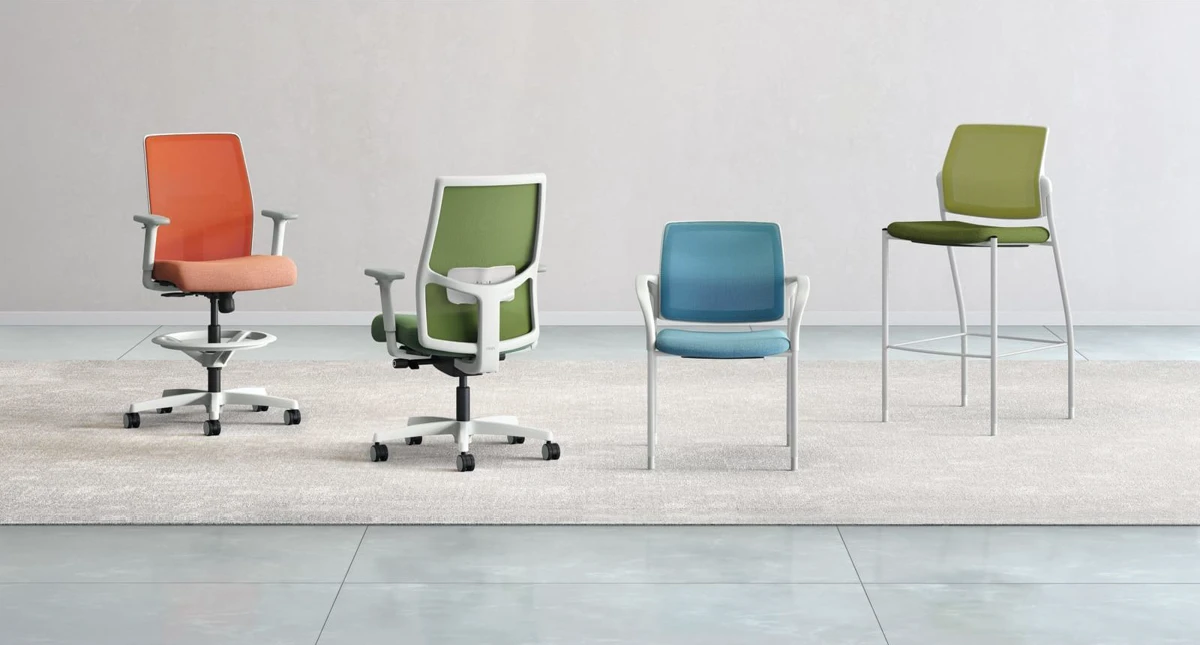
The HON Ignition 2.0 has been the corporate-procurement chair of record for the past decade, and it sits comfortably under $400 retail. It is a no-frills mesh task chair from one of the largest contract furniture brands in North America — meaning when something breaks, replacement parts are easy to find.
CNET specifically calls it out for accommodating bigger bodies (their 6'1", 270-lb tester reports it holds up under daily use), and the adjustable lumbar, seat-depth slider, and four-way arms cover the ergonomic essentials. The mesh back ventilates well in hot rooms, and the fabric seat options resist staining longer than memory-foam alternatives.
Where it falls behind the pack: the armrests adjust up and down but not in or out, and the aesthetic is unapologetically office furniture. If your home office shares a wall with your living room, the Ignition is not the chair to soften the visual.
Pros
- Frequently under $400
- Replacement parts widely available
- Holds up well for users 250 lbs+
- Breathable mesh back
Cons
- Armrests don't pivot in/out
- Looks like a corporate procurement chair
- Warranty terms vary by reseller
6. SIDIZ T50 — Best for Posture
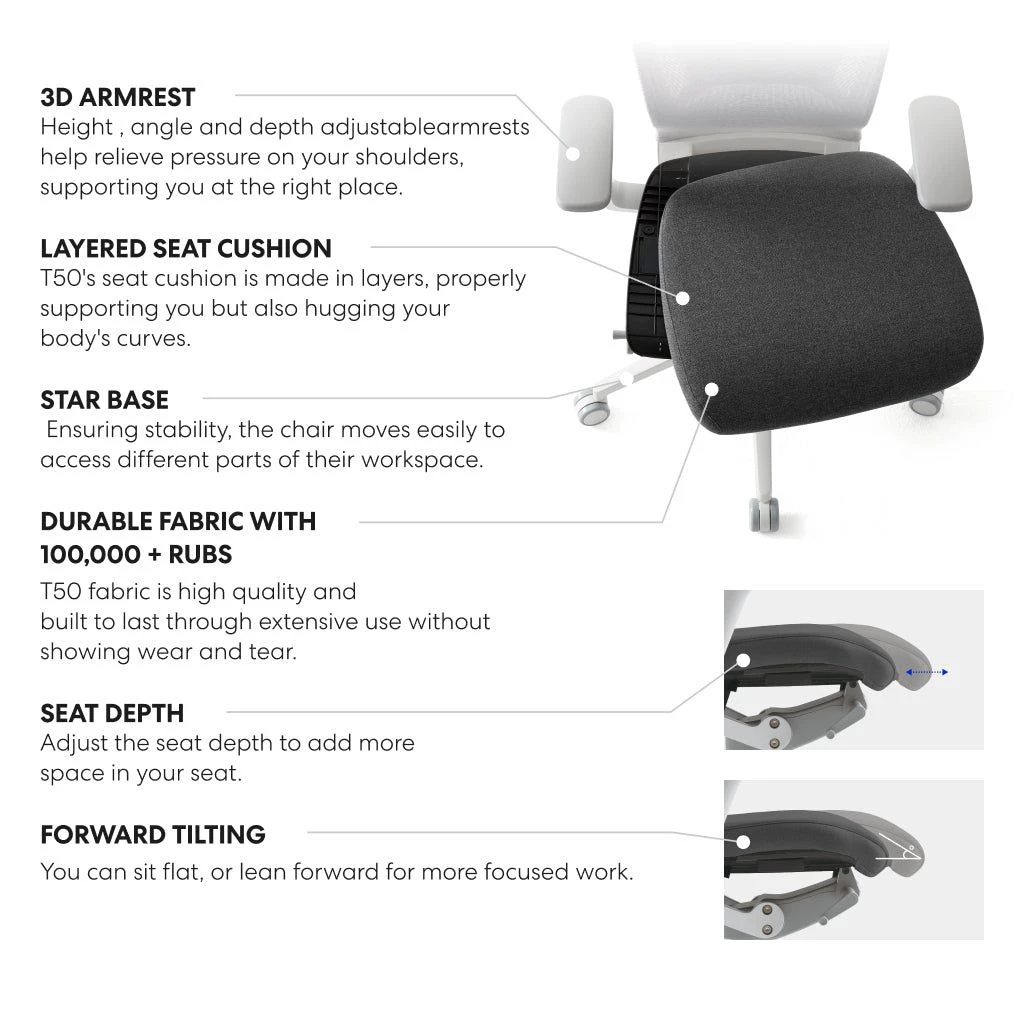
The SIDIZ T50 is a Korean import with cult status among Reddit's r/OfficeChairs crowd. It is named for the S-curve backrest, which is engineered around the natural curvature of the spine. For users with mild postural issues (forward head, slumped shoulders) who don't quite need a medical-grade chair, the T50 is the most defensible choice in the $400-500 band.
Adjustability is broad: seat depth slider, three-way headrest, adjustable lumbar height and depth, four-way arms, and a back tilt mechanism with multiple lock points. The seat is firmer than the Eurotech Vera but softer than the Steelcase Series 1 — a middle path that holds up across body types.
Two known drawbacks: the recline tension dial is positioned awkwardly on the underside of the seat (you'll grope for it), and Sidiz's US distribution is patchier than the major brands, so lead times can stretch. Buy through a US authorized dealer to keep warranty coverage clean.
Pros
- S-curve backrest matches spinal alignment
- Adjustable lumbar height and depth
- Three-way articulating headrest
- Strong Reddit/long-tail review consensus
Cons
- Recline tension dial is awkward to reach
- US lead times can stretch 2-4 weeks
- Less brand-name recall in the US than HON or Steelcase
7. Haworth Breck — Best Premium-Feel
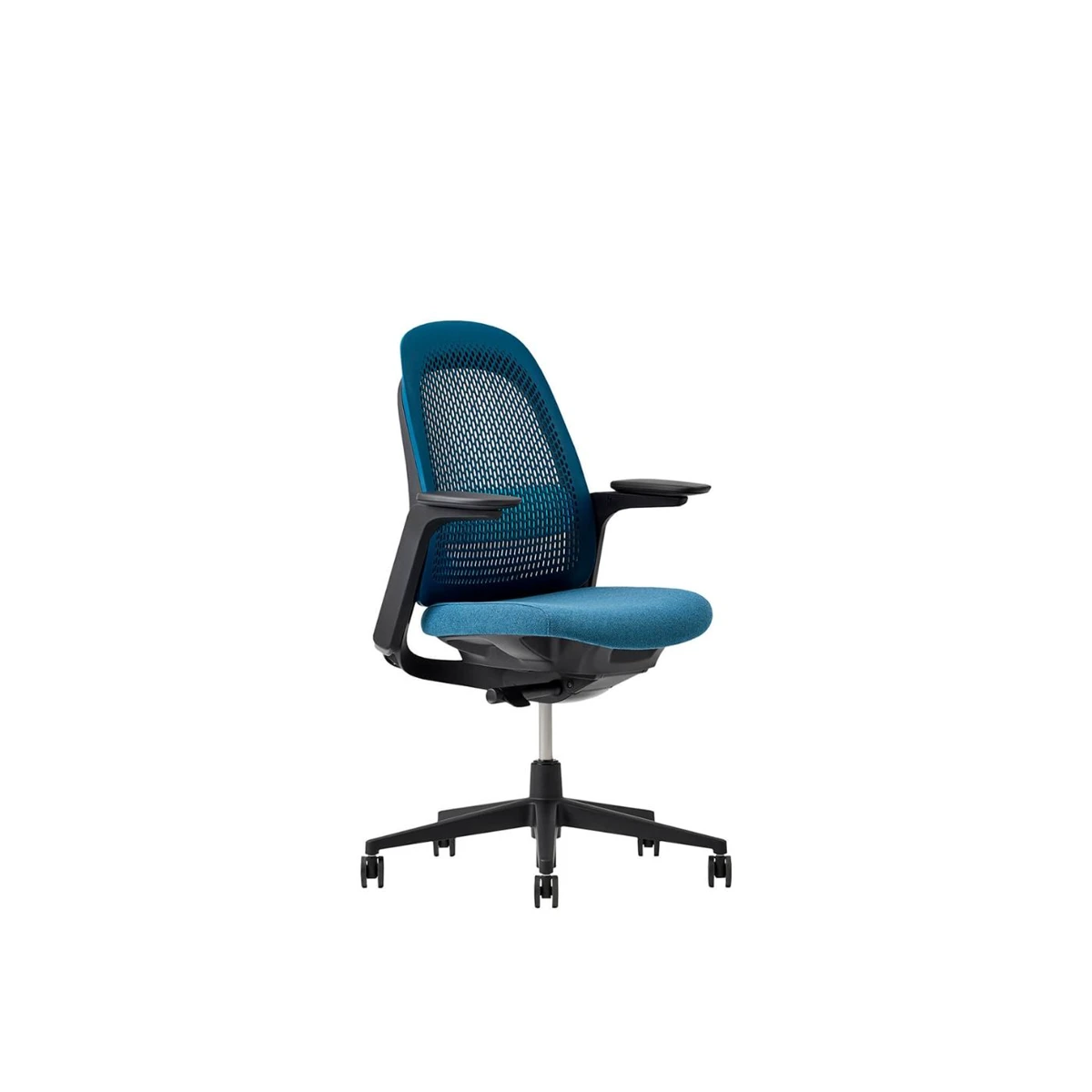
The Breck is the dark horse on this list. Released by Haworth — the same brand that makes the $1,500 Fern — the Breck delivers Big Three ergonomic engineering under $500, and Architectural Digest's testers called out that it ships in only a few minutes' worth of assembly. The Haworth manual is among the clearest in the category.
Adjustability is full-stack: seat height and depth, lumbar support, four-way arms, tilt and tilt tension. The 12-year warranty matches Steelcase and Herman Miller, which is unusual at this price. AD's review noted the chair feels like "a high-priced chair that costs over $1,000" — high praise from a publication that lives in the premium tier.
Caveats: lighter users may struggle to depress the height paddle (it's calibrated for adult body weight), and the armrests are non-locking — you may need to nudge them back into position periodically through the day. Neither is a deal-breaker, but both are worth knowing before you order.
Pros
- 12-year warranty matches premium-tier chairs
- Sub-five-minute assembly
- Adjustable lumbar plus four-way arms
- 325-lb weight capacity
Cons
- Lighter users struggle with the height adjustment
- Armrests don't lock and drift over the day
- Color options limited compared to Steelcase
How to choose your office chair
If you take nothing else from this guide, take this checklist into your decision:
- Sit-time matters more than money. Eight-plus hours per day at a desk justifies a premium chair; two hours a day does not. Match the chair to the workload.
- Adjustable lumbar > fixed lumbar. The Eurotech Vera is the exception that proves the rule. If you have an existing back injury, prioritize chairs where lumbar height and depth both adjust.
- Mesh back is not optional in warm rooms. Even premium foam backs trap heat after two hours. If your office is hot, mesh wins by default.
- Four-way arms support typing. Arms that adjust up/down and in/out and forward/back and pivot reduce wrist and shoulder strain measurably more than two-way arms.
- Trial the chair. Every chair on this list has a return policy of at least 30 days. Use it. Your spine knows in two weeks what reviewers cannot tell you in 2,000 words.
Frequently asked questions
Is it worth spending close to $500 on an office chair?
If you sit at a desk eight or more hours a day, yes. A $150 chair that fails in 18 months costs about $100 per year and rarely supports your back. A $450 chair built to commercial-grade standards costs around $45 per year over a 10-year lifespan, and it is engineered to protect your spine. The per-year math nearly always favors the better chair, and the spinal-health math always does.
What is the most important feature in an office chair under $500?
Adjustability — specifically, adjustable lumbar height and depth, plus four-way (or better) armrests. A chair you can dial in to your body will outperform a more expensive chair you cannot. Backrest shape is the next priority; mesh ventilation matters in warm rooms but is otherwise a preference.
How long should an office chair last?
A commercial-grade chair built for 8+ hour daily use should last 10 to 15 years. Cheaper chairs typically fail in 18 to 24 months because they use stamped steel parts, low-density foam, and plastic bases. Warranty length is a good proxy: a 7-year or 12-year warranty signals the manufacturer expects the chair to last that long under normal use.
Are mesh chairs better than foam-padded chairs?
Mesh chairs ventilate better and tend to feel less swampy in warm rooms, but foam padded seats are more comfortable for long stretches if the foam is high-density. The best of both worlds is a mesh back with a foam seat — every chair on this list except the West Elm-style executive options uses this combination.
Can I use a gaming chair as an office chair?
Technically yes, ergonomically no. Gaming chairs prioritize bucket-seat shape and head support, which is the opposite of the neutral-spine, weight-distributing posture that long-form sedentary work requires. If you sit eight hours a day, choose a dedicated ergonomic office chair.
What about refurbished premium chairs?
A properly refurbished Steelcase Leap V2 or Herman Miller Aeron through a reputable refurbisher (BTOD, Crandall Office Furniture) often costs $500-700, comes with new foam and casters, and includes the original 12-year warranty. If your budget can flex 20 percent above $500, refurbished is often a better long-term investment than new at the cap.