
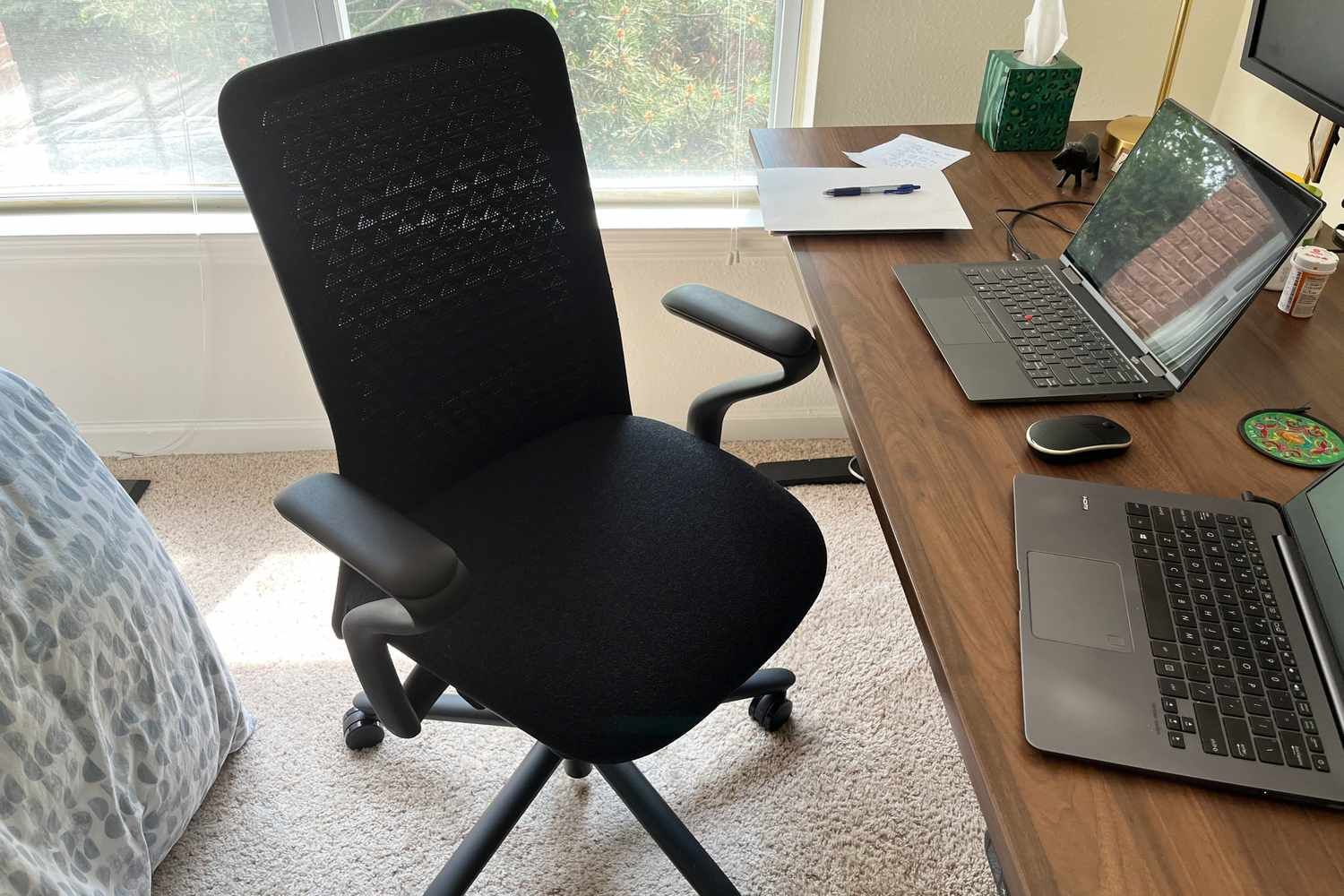
If you're 5'6" or shorter and your feet dangle, your thighs press into the seat pan, or your shoulders hike up by the end of the day, the chair is fighting you. Most office chairs are built around a "median" user — taller torso, longer femur, wider shoulder span — and the petite frame ends up perched on something that was never sized for them. The fix isn't a pillow or a footrest workaround. It's a chair with a low enough minimum seat height, a short enough seat pan, and arms that come in narrow.
This guide covers six chairs that meet that brief in 2026, ranging from premium task seating (Steelcase, Herman Miller) to budget specialists (Sihoo, BTOD). Picks are drawn from the editorial consensus across BTOD, Office Logix Shop, and the Google AI Overview's cited sources — all three lean heavily on the same handful of models for users under 5'6".
How we picked
We weighted three specs above marketing copy:
- Minimum seat height. A chair that won't drop below 17" pushes a 5'2" user's feet off the floor every time. We targeted 15.5" or lower wherever possible.
- Seat depth. Standard depth is 18–20"; petite users generally need 16–17" or an adjustable slide. Pressure on the back of the knee is the giveaway that the pan is too deep.
- Arm width and height. Arms that don't pull inward force shoulders to abduct — the source of most "my upper back hurts" complaints. Inboard-adjustable armrests, ideally 4D, are non-negotiable.
Brand-level fit data was cross-checked against the SERP AI Overview's spec table and individual product listings.
At-a-glance: 6 chairs for petite users
| Product | Best for | Firmness | Trial | Score |
|---|---|---|---|---|
| 1Steelcase Leap V2Task chairEditor's Pick | Best Overall | 50 | 30-day (used market varies) | 9.4 |
| 2Herman Miller Aeron Size ATask chair | Best Mesh | 50 | 30-day | 9.2 |
| 3Sihoo M59ASTask chair | Best Budget | 50 | 30-day | 8.4 |
| 4Steelcase AmiaTask chair | Most Adjustable Budget | 50 | Varies (used) | 8.8 |
| 5Herman Miller SaylTask chair | Best Compact | 50 | 30-day | 8.3 |
| 6BTOD PetiteTask chair | Best Specialist | 50 | 30-day | 8.6 |
1. Steelcase Leap V2 — Best Overall
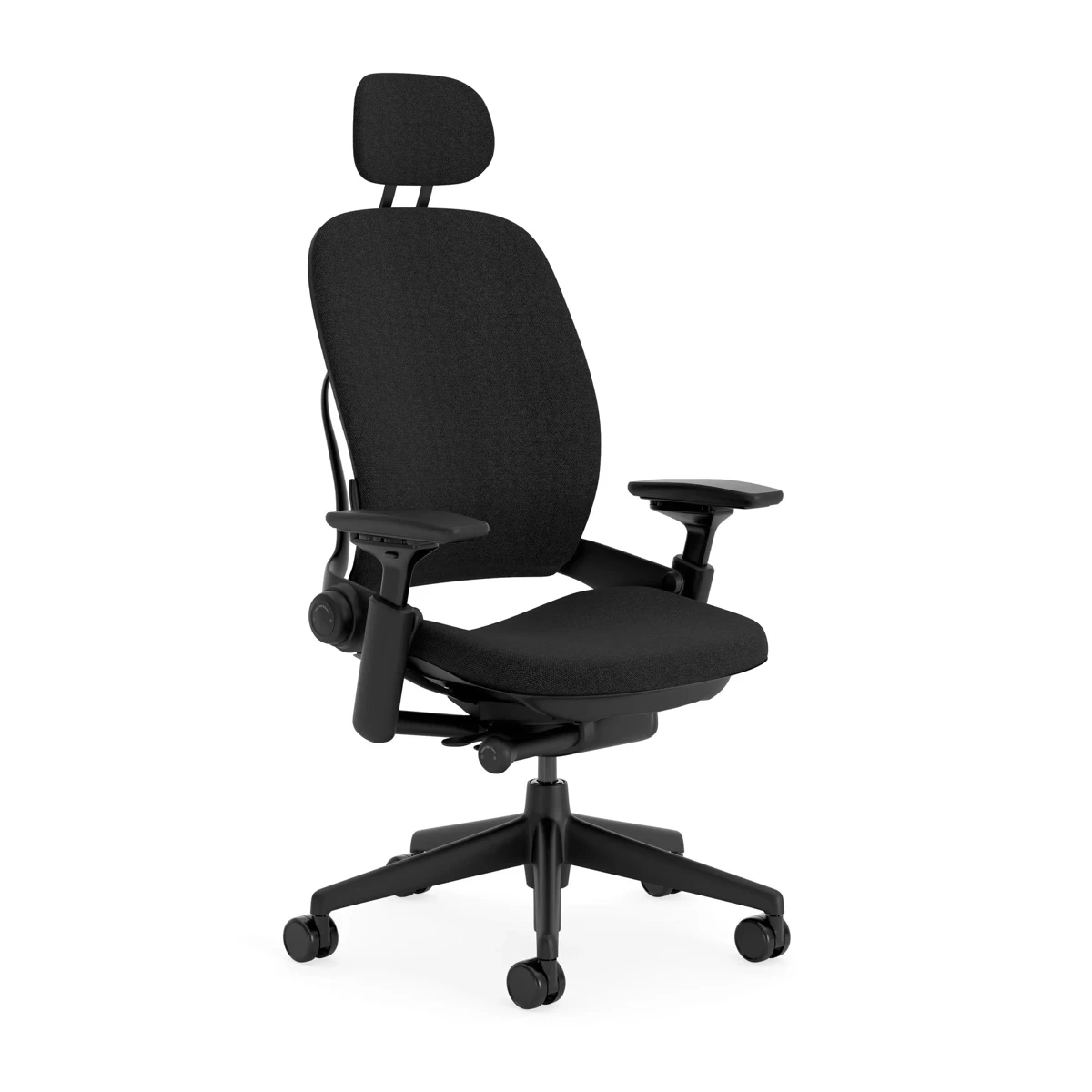
The Leap V2 is the chair almost every editorial reviewer puts a petite user in first. Its minimum seat height drops to roughly 15.5" — low enough for most users down to about 5'2" to sit with feet flat — and the LiveBack mechanism flexes with the spine instead of forcing a fixed lumbar position. The 4D arms move down, in, and forward to clear a small frame, and the seat slider trims the pan depth by about two inches for shorter femurs.
What seals it: Steelcase warranties the V2 for 12 years on a chair that's been in continuous production for over a decade, so support, parts, and a deep used market are all easy to access. It's not cheap new, but a remanufactured Leap V2 typically lands well under retail.
Pros
- Min seat height ~15.5" fits down to 5'2"
- LiveBack flexes with the spine
- 4D adjustable arms pull inward
- 12-year warranty, huge used market
Cons
- Expensive new
- Looks utilitarian
2. Herman Miller Aeron Size A — Best Mesh
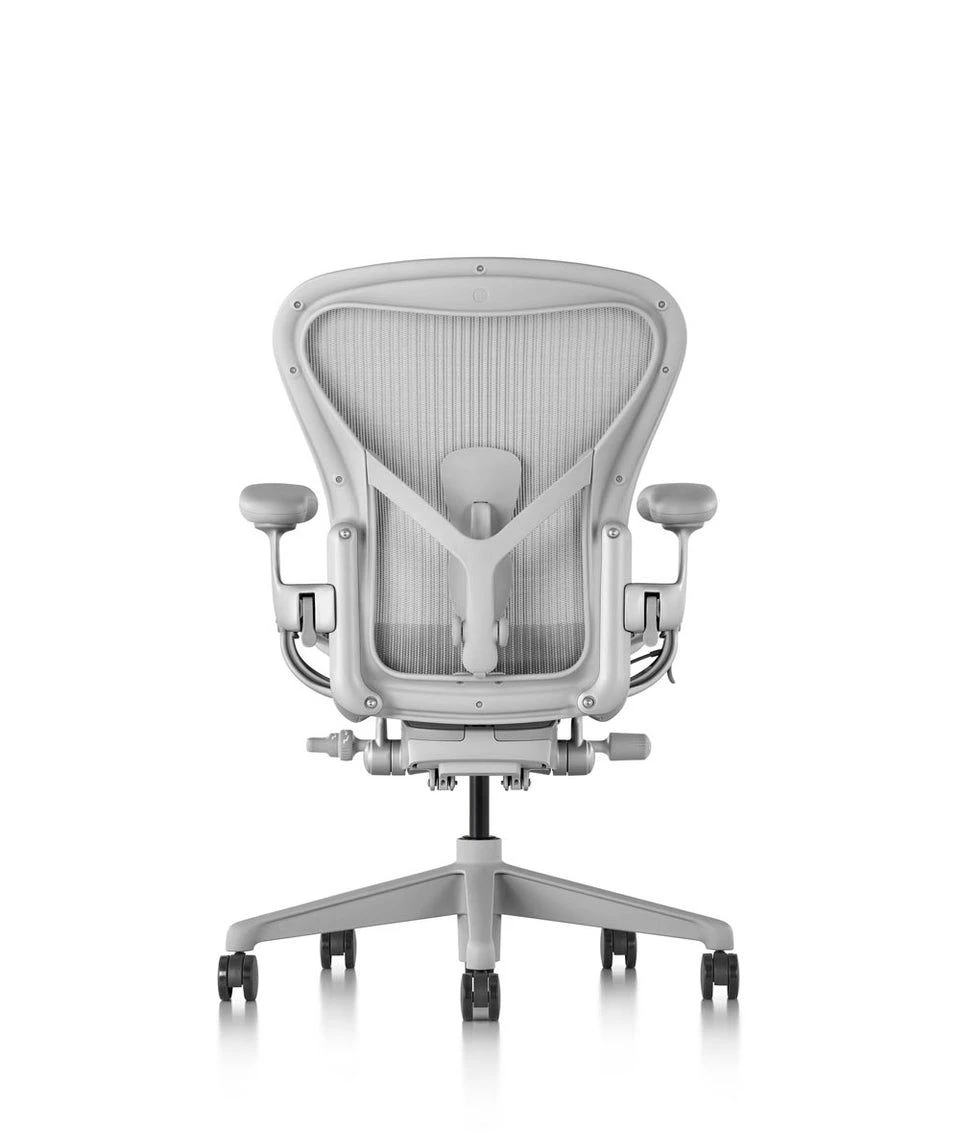
The Aeron's three-size system is the reason it ranks for petite users at all. The Size A is genuinely scaled smaller — narrower seat, shorter back, lower minimum height — and not just a marketing label. The 8Z Pellicle mesh distributes weight without the pressure points that foam pans cause for lighter users, and PostureFit SL supports the lower back without crowding the mid-spine. Per the SERP AI Overview, the Size A is the standard premium-mesh pick for users between roughly 4'10" and 5'4".
Trade-off: the Size A is harder to find used than the more common Size B, so secondhand pricing isn't the bargain it can be on the larger size.
Pros
- Size A genuinely scaled for petite frames
- 8Z Pellicle mesh, no foam pressure points
- PostureFit SL lumbar
Cons
- Size A harder to find used
- Premium pricing
- Polarizing aesthetic
3. Sihoo M59AS — Best Budget
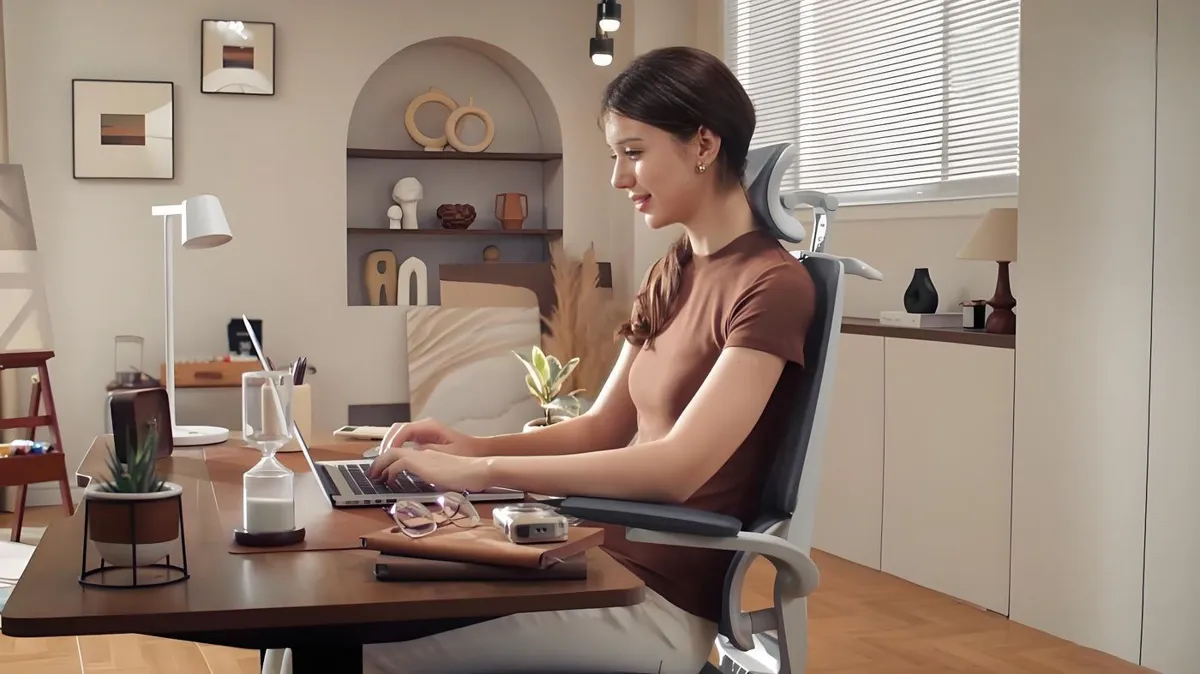
The Sihoo M59AS is built specifically for petite users — Sihoo's product copy advertises a 4'11"–5'6" fit window — and it carries the adjustments you'd otherwise pay 5× for: adjustable seat depth, adjustable lumbar, headrest, and 3D arms. Build quality won't match a Steelcase, and the mesh tension is firmer than the Aeron's, but the chair clears every entry on a petite-fit checklist for a fraction of the price.
A frequent caveat in user reviews: the included lumbar feels aggressive at first; a few weeks of break-in (or a slight dial-back of the depth) usually fixes it.
Pros
- Built specifically for 4'11"–5'6" users
- Adjustable seat depth, lumbar, headrest
- Strong value under $400
Cons
- Build quality below Steelcase/HM
- Lumbar feels aggressive at first
- Shorter warranty
4. Steelcase Amia — Most Adjustable Budget
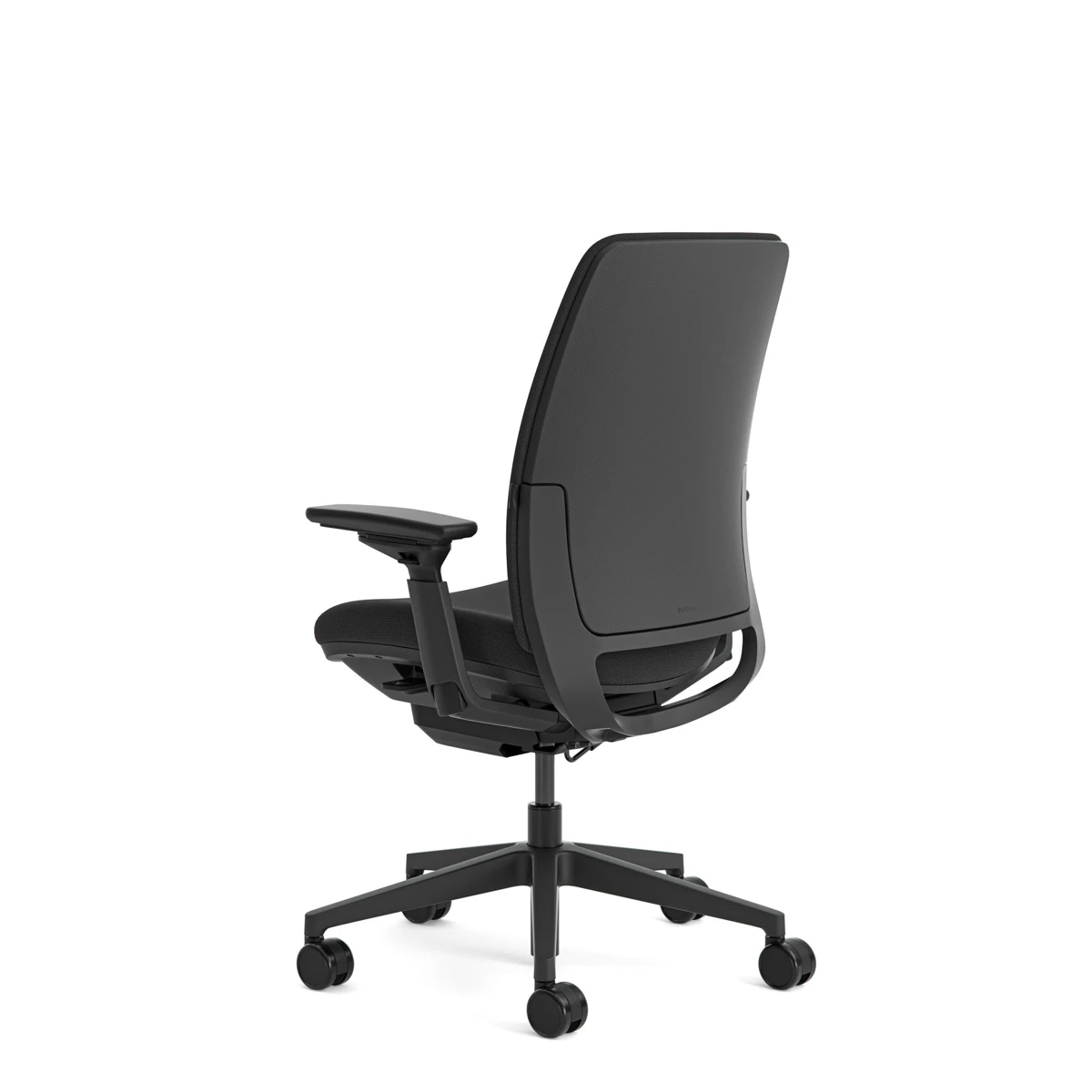
The Amia is what petite Steelcase users tend to buy when a new Leap is out of budget but the remanufactured market is solid. Its LiveLumbar adjusts independently of the recline — useful when the petite user wants firmer lower-back support without the rest of the back tilting back — and the seat slider matches the V2's range. Minimum seat height is similar to the Leap, and the arms swing inward for narrow shoulders.
It doesn't have the V2's spinal-flex magic, but for a buyer prioritizing adjustability per dollar, the Amia consistently shows up in the editorial top five (Office Logix, BTOD, The Modest Man).
Pros
- LiveLumbar adjusts independently of recline
- Seat slider for shorter femurs
- Robust remanufactured market
Cons
- No LiveBack flex mechanism
- Less iconic resale value than Leap
5. Herman Miller Sayl — Best Compact Footprint
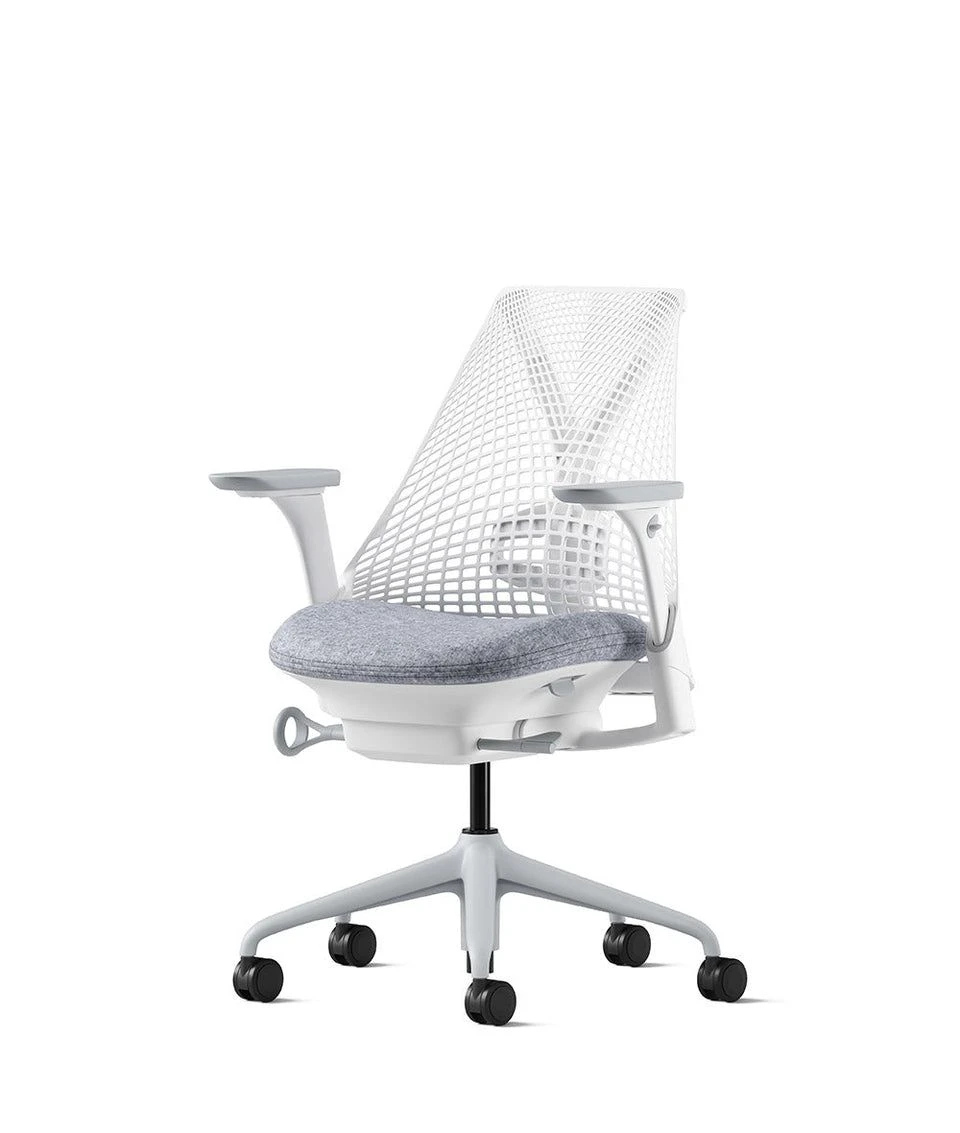
For a small room or a desk wedged into a bedroom, the Sayl's footprint matters as much as its fit. The "unibody" suspended back is narrower than the Aeron's frame, the chair weighs less, and the minimum seat height is in the same range as the Leap and Amia. Lumbar adjustment is more limited than the others in this list — petite users with chronic lower-back pain should probably size down to an Aeron Size A — but for working users without a specific pain complaint, the Sayl is a strong everyday seat in a small package.
Pros
- Lightest chair in this list
- Narrow back for small rooms
- Distinctive look
Cons
- Limited lumbar adjustment
- Not ideal for chronic lower-back pain
6. BTOD Petite — Best Specialist Pick
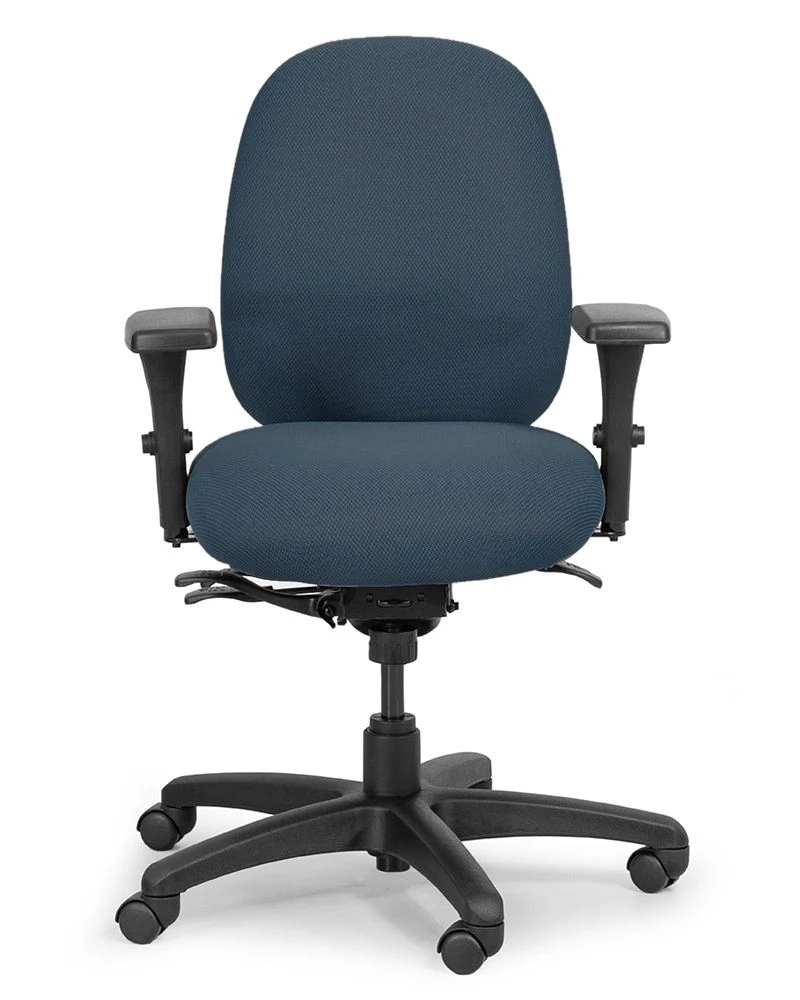
If specs are the entire conversation, the BTOD Petite wins on paper: minimum seat height around 15", seat pan around 16" deep, and arms that pull inward farther than most. It's purpose-built for users under 5'4" and skips the "scaled-down standard chair" compromise. BTOD's editorial team — who write the chair-petite content others cite — picked it as a sub-$600 mainstream alternative to the Steelcase and Herman Miller routes.
It's harder to try in person than the Steelcase/Herman Miller options, but BTOD's return policy and detailed spec photography make a remote buy reasonable.
Pros
- Min seat height ~15"
- Shallow 16" seat pan
- Sub-$600 specialist pick
Cons
- Hard to try in person
- Smaller used market than Steelcase/HM
How to choose
A 30-second triage:
- Under 5'2" or chronic lower-back pain → Aeron Size A or BTOD Petite. The aggressive seat-height range and tailored seat depth do the most work.
- 5'2"–5'6", no specific pain → Steelcase Leap V2 (or a remanufactured one) is the safe pick. Highest editorial consensus, longest warranty, deepest used market.
- Budget under $400 → Sihoo M59AS. The only sub-$400 chair that consistently shows up in petite-fit lists.
- Tight room / small desk → Sayl. Narrowest back, lightest weight, same low seat range.
If you're between two picks and can't try them in person, prioritize seat height first (it's the one spec that can't be padded around) and arms second.
Frequently asked questions
What seat height should a short person look for in an office chair?
As a rule of thumb, target 16" minimum seat height at 5'6", 15" at 5'2", and 14" for users under 5'2". Most standard chairs only drop to 17", which leaves a petite user's feet dangling — the source of most fatigue and lower-leg numbness.
Is the Herman Miller Aeron Size A good for short people?
Yes — the Size A is the smallest of the three Aeron sizes and is genuinely scaled down (not just a marketing label). It's commonly recommended for users between roughly 4'10" and 5'4". The Size B is the standard and won't fit petite frames as well.
Can a footrest fix a chair that's too tall?
Partially. A footrest restores feet-flat posture, but it doesn't fix the other two problems a too-tall chair causes for short users: a seat pan that's too deep (pressure behind the knees) and armrests that don't pull in enough. Get the chair right first; use a footrest only if the chair's minimum height still doesn't reach the floor.
What's the best budget office chair for a short person?
The Sihoo M59AS is the consensus budget pick — it's the only sub-$400 chair that consistently appears in editorial petite-fit lists, and it includes adjustable seat depth, lumbar, and headrest. The Steelcase Amia (remanufactured) is the next step up if budget allows.
Why does seat depth matter for short people?
Standard chairs have 18–20" seat depth, but petite users with shorter femurs typically need 16–17". Too deep a pan presses into the back of the knees, restricts circulation, and forces the user to either slouch forward or perch on the front edge — both create lower-back strain.